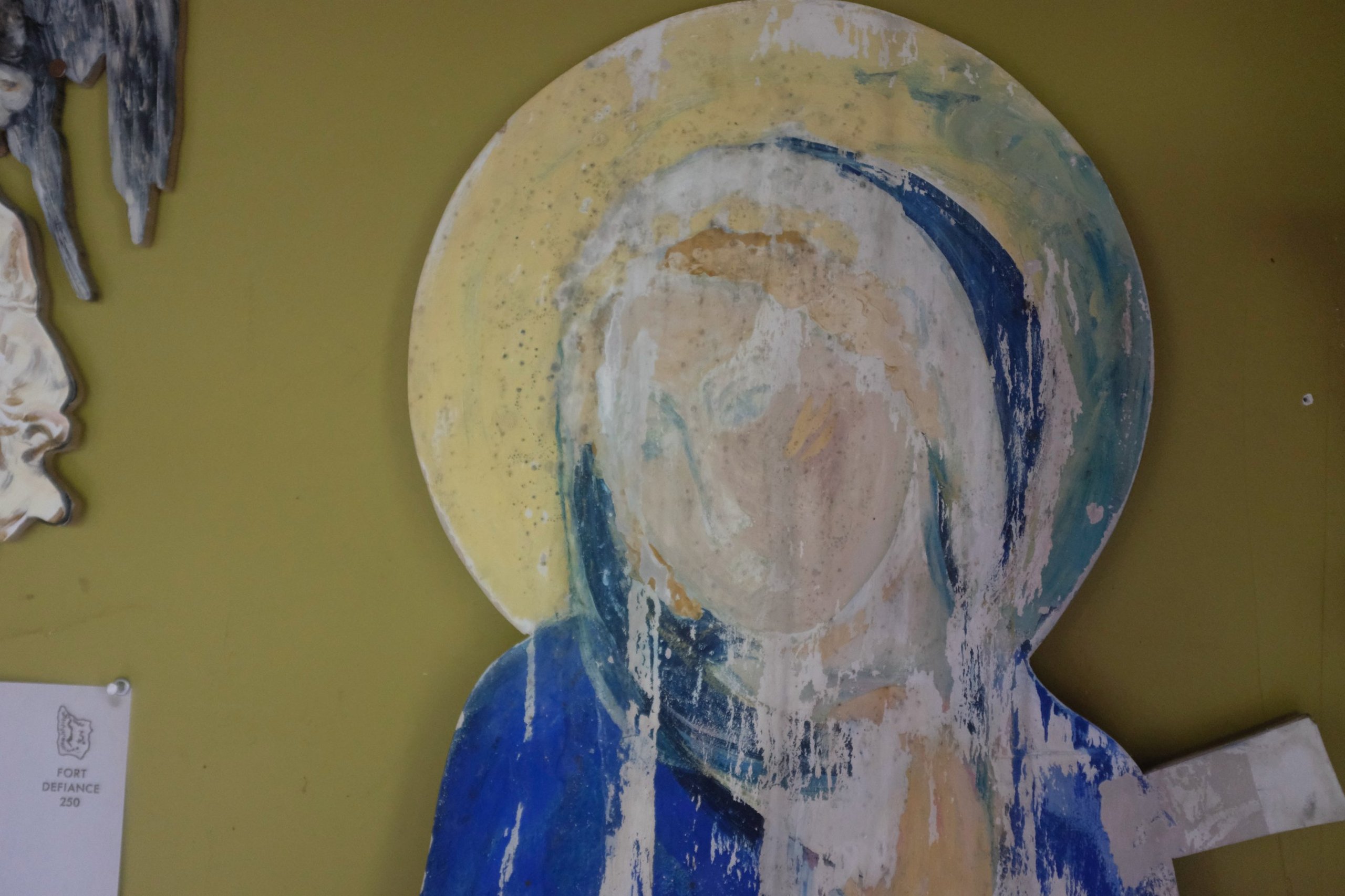
Justin Neely, a multidisciplinary artist, had spent 12 years in the 19th-century warehouse near the end of Van Brunt Street when it was ravaged by a five-alarm fire on Sept. 17 and 18, 2025.
For some time, he severed his connection to the building, to Red Hook itself, alienated by not just the loss of such a significant part of his life but also the rapid changes in the neighborhood at large.
But on the one-year anniversary of Red Hook’s arguably worst disaster since Superstorm Sandy, Neely returned to the building—his first visit in seven months.
“I wanted to go and mark the moment. It was a personal, memorial, reflective gesture,” he told the Red Hook Star-Revue.
Neely was one of dozens of artists who rented studios in the warehouse, which was owned and managed for years by the O’Connell family. Some lost decades of their own artwork; others, like Neely, lost thousands of dollars worth of equipment; others, still, lost personal belongings they’d stored in a place they considered a home away from home.
In the months after the fire, the Star-Revue interviewed several artists about the recovery, grief, and their future as artists.
A year later, as the anniversary came and went, we followed up with three of them: Neely, Smith Banfield, and Bettina Magi.
***
At first glance, there isn’t much about the warehouse on 481 Van Brunt St. that reveals its fate, save for the forest-green construction fence keeping unauthorized visitors from accessing the property.
But as you look more closely, you see the blown-out windows, soot, and the traces of the gallons and gallons of water that poured down the brick walls. And through the broken windows, you can see the sky through the open roof, created by the fire and subsequent recovery and stabilization work.
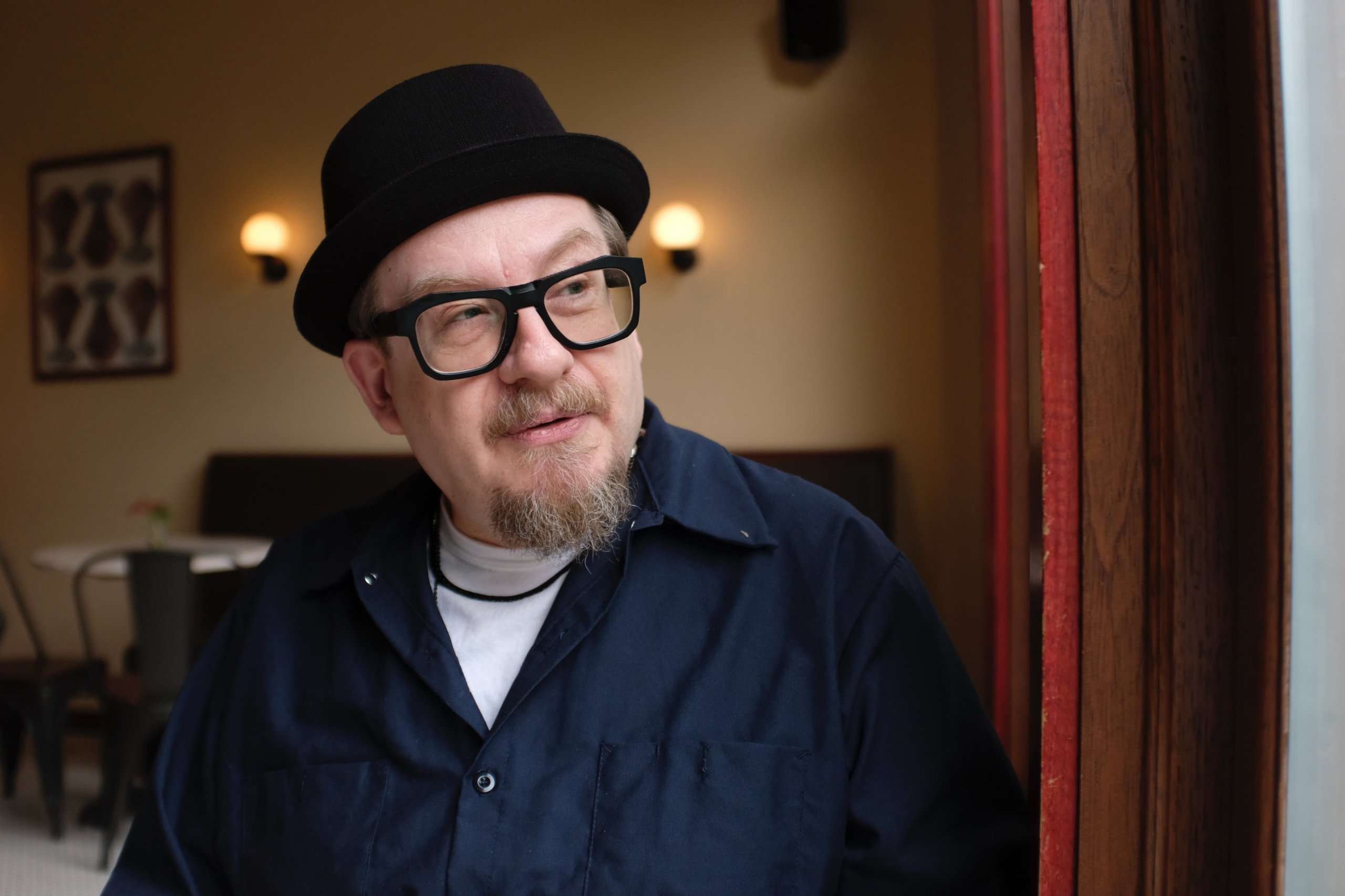
“I walked down to take a look at what had gone on with the building, and it looked frozen in time in a lot of ways,” said Neely, recounting his anniversary visit.
The fire scattered people. But through efforts on various ends, in particular by Megan Suttles, founder of the collaborative art space Hot Wood Arts, the fire also brought some people closer.
Suttles started Second Thursdays Artist Hangouts a few months before the fire, in March 2025, but the gatherings found new meaning in the wake of the fire.
“When I was in my studio and they were in theirs, we didn’t sit around and talk except if there was an opening or an event or something,” Magi, a painter who rented a studio from Hot Wood Arts, said. “Because of Megan’s sense of wanting to keep us all together, I have been able to get to know and socialize with so many of the artists. That definitely has been a silver lining.”
Magi has lived in Red Hook since the 1990s. Her house, a two-story home with a basement and backyard, is as much home as art studio, with paintings and collages lining the walls.
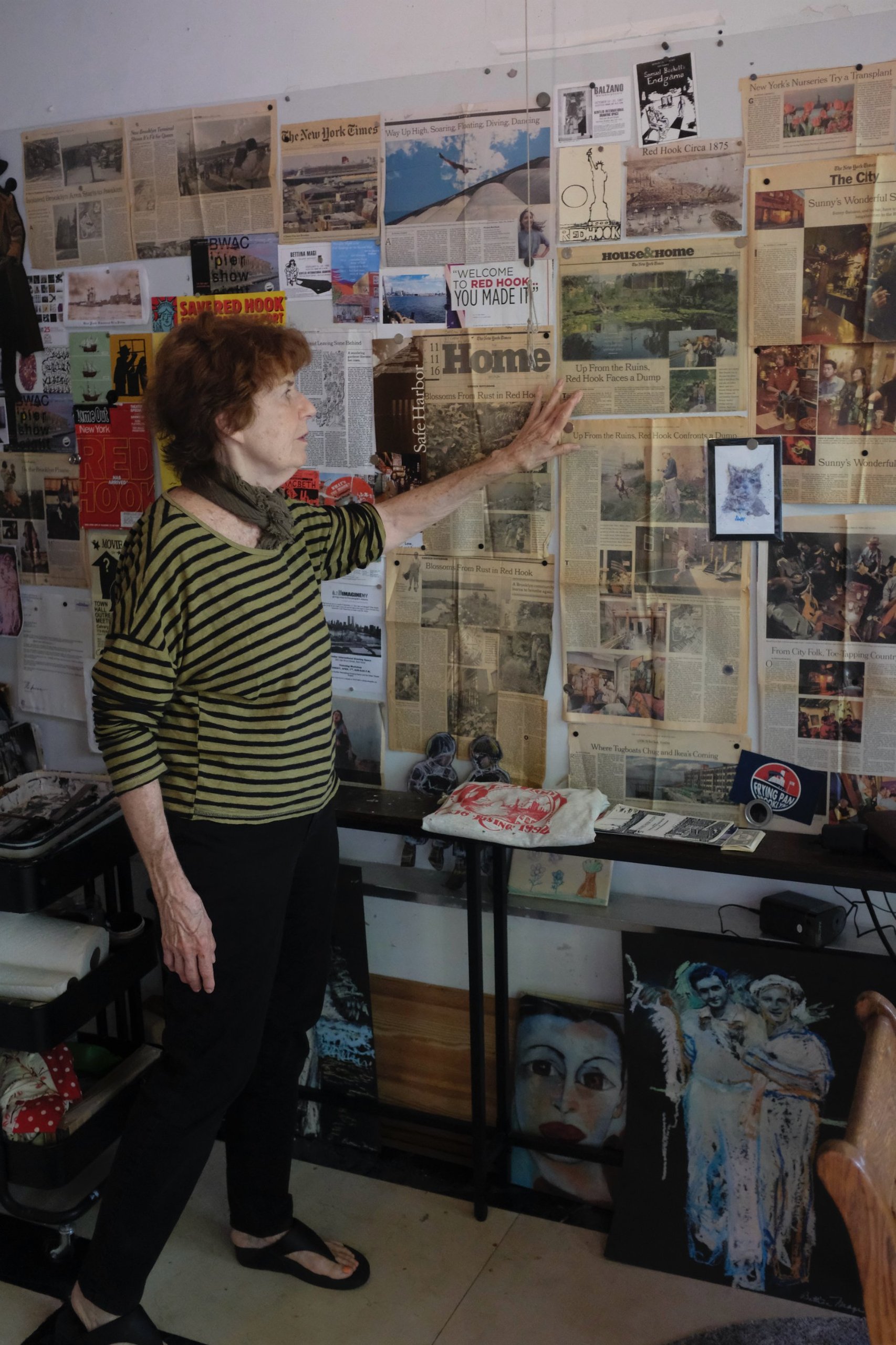
She’s nostalgic about the past, she said, in particular about her parents and their Italian heritage. Her father came to New York as a nine-year-old boy in 1914, taking his first steps on US soil on Ellis Island.
The nostalgia is reflected in her art: Magi’s first serious painting was based on a sepia photo of her and her parents, and other photos of her mother and father have been recurring motifs for the past 30 years. But when she spoke to the Star-Revue in October 2025, she thought she’d lost those images in the fire.
It turns out that they, along with slides from her wedding and some paintings, all survived largely unscathed, save for some mold on the canvases.
The aftermath of the fire is full of unlikely recoveries. When Neely went into his studio in the weeks after the disaster, he was surprised to find that an album of photos from a 1989 trip to the Soviet Union had survived in a drawer he didn’t usually keep them in; had they instead been stored in the next set of drawers, they would have been enclosed by mold that had glued the drawer shut.
That doesn’t mean they didn’t lose things that mattered: Several of Magi’s paintings were unrecoverable, and while Banfield was able to save her father’s ashes, many of his possessions—and other keepsakes of hers—were not salvageable. Neely estimates that he lost $70,000 to 80,000 worth of uninsured equipment.
Unimaginable losses, compounded at the time by the uncertainty of what would come next.
“Aside from feeling a little overall rudderless, the disruption to daily life is really, really more significant even than I thought it was initially,” Neely told the Star-Revue in October 2025.
A year later, Neely is no longer in crisis mode, but the fire, in addition to some personal hardships, has meant he’s still finding his way back.
“This week, and for a lot of weeks previous, I feel pretty tired. I’m still worn out,” Neely said.
He has started attending art events again, after “a long while” of staying away. A friend of his, who had the studio on the opposite side of the corridor, had recreated a show exhibited at Hot Wood Arts a few days before the fire. Neely admits he had to be persuaded to go, feeling reluctant about reliving memories from those days and weeks.
“It actually felt better than I expected to be around a small group of people who could directly relate to everything, and yet were putting something on that was really well done,” he said.
After the fire, he remained in touch with several of the artists in the building, and for months he attended Suttles’s artist hangouts.
“But at a certain point, I … it wasn’t like I decided, ‘Well, I’m not going again,’ but my ‘yes’ turned to ‘maybe,’” Neely said. “Going to those started to feel a little bit like an opportunity to get down.”
In early summer, he started a new project, a series of film screenings in his home. Neely studied film as an undergraduate student, so this was a return to the roots of sorts.
“It wasn’t a deliberate choice to start over, but that I think is what works about it. It was just purely passion-driven and it was also establishing a regular social connection to a great friend,” he said.
The path to creating again looked different for the three artists. When the Star-Revue met Banfield in late October 2025, she hadn’t been in front of a canvas in six weeks. She was studying painting at the time, and was only a few months from graduating when the fire took most of the portfolio she had amassed in class.
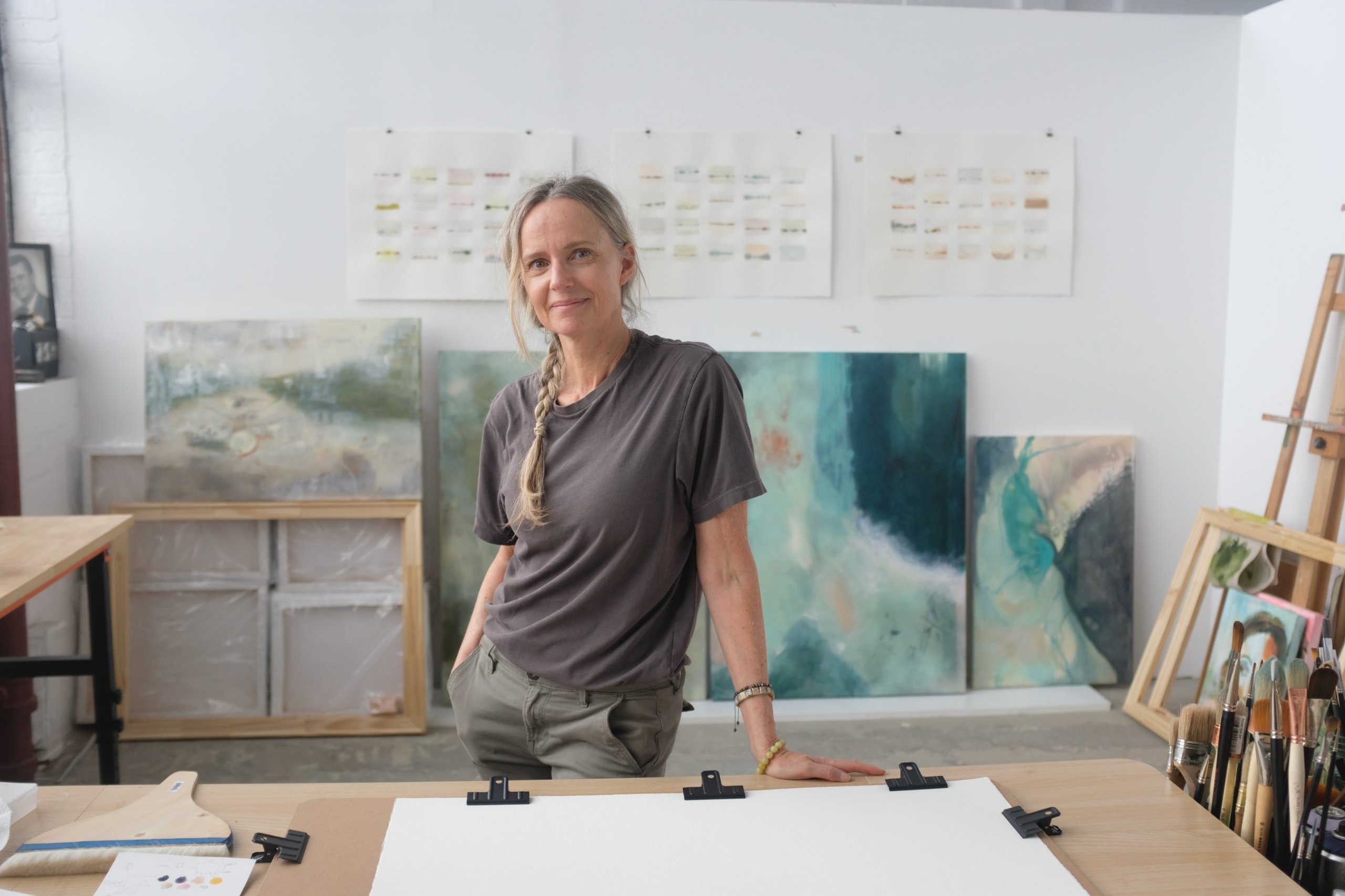
“For a while there was a sense of, everything I made is gone. I lost 250 paintings. I have got to get back to 250 paintings,” she said when we met her again a few days after the anniversary.
Banfield quickly got to work finding a new studio, and ended up signing a lease for one in Sunset Park, by the Brooklyn Army Terminal.
With a new space secured, she went back to her old studio where she proclaimed to herself that she was moving on. The artwork she lost was behind her.
“It’s not like I feel like a part of me is missing or anything. I looked at [her old paintings] just the other day, and there was a moment of pride. I made it. It’s in me. If I want to do something similar, I could do it again,” she said.
In fact, the fire allowed her to refocus her artistry—her studies had focused on oil and acrylic—and get back to the medium she felt most at home with: watercolor. It altered her creative path in other, more surprising ways, too.
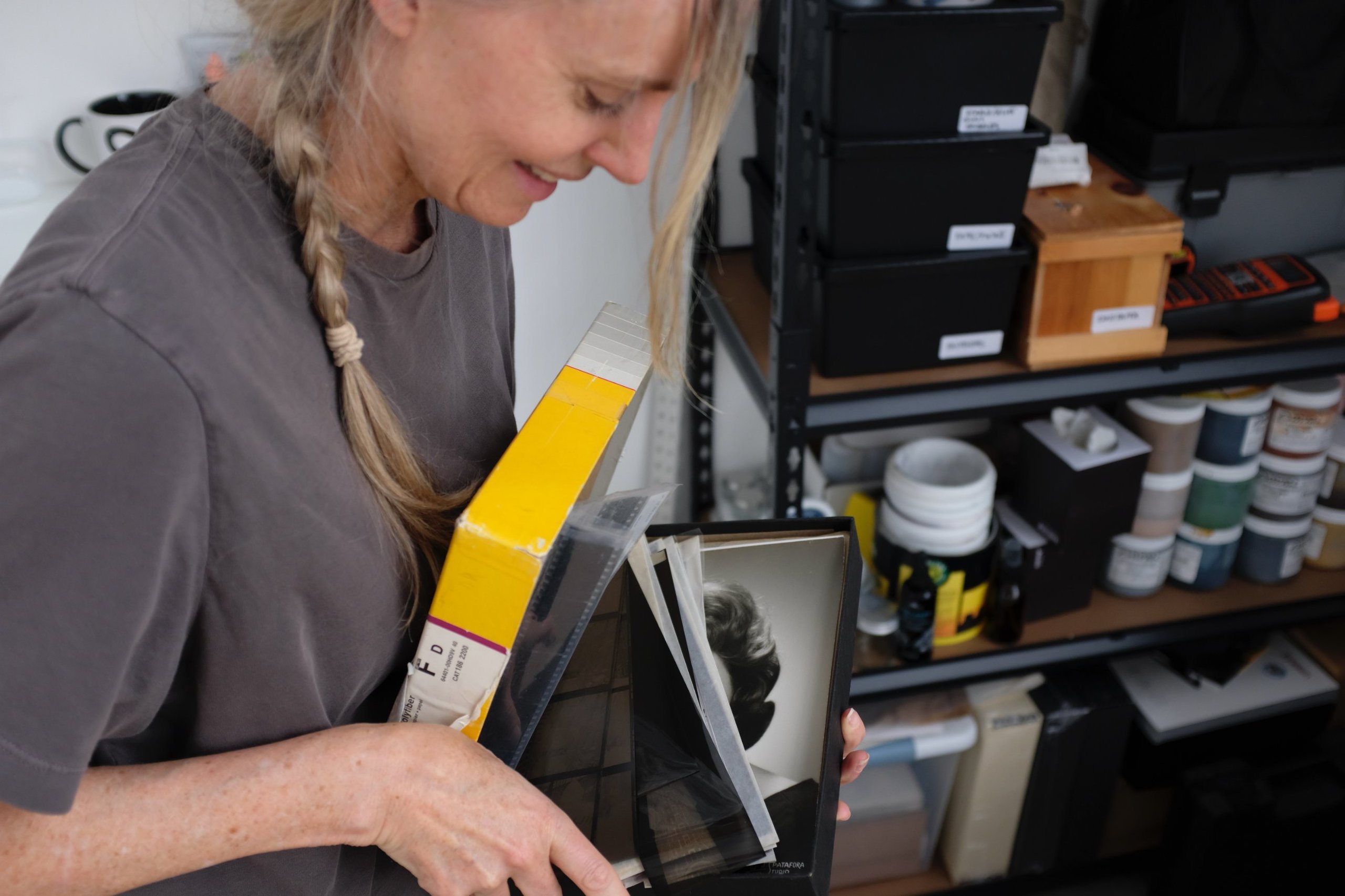
Banfield’s new studio bathes in sunlight, which has given her the opportunity to work with more subdued colors.
In her old studio, which completely relied on lamps, she painted with stark, bright colors, as if subconsciously compensating for the lack of natural light. It wasn’t until she began to paint in her new space that she realized that her true vision was unachievable without daylight.
“Being in this space, it really shows my true color, and wanting to get subtlety. It was a little harder to get the subtleties across in my old space,” she said. “These earthy tones are what are pulling me in, and I don’t think I had one painting like that in my old space.”
Banfield has a studio warming Oct. 17-18 as part of Sunset Park Open Studios.
Magi also has a new studio, in the building on the pier that makes up the very end of Van Brunt Street. On the way, she walks by the burned warehouse. The hole in the roof is a bittersweet reminder of what was.
But she also got something she didn’t have in the warehouse on 481 Van Brunt St.: a view over the harbor. Now she sees the Statue of Liberty every time she looks out the window, the same monument her father saw when he arrived in America more than a century ago.
“All you see is your window and the water,” Magi said. “It feels like you’re on a ship. It is so beautiful.”
News from the neighborhood.
Red Hook & Gowanus
Want more news and features like this straight to your inbox? Subscribe to our newsletter below.
Author

Discover more from Red Hook Star-Revue
Subscribe to get the latest posts sent to your email.