Since the advent of VHS, discerning moviegoers have known that “made for television” and “direct to video” were kisses of death – signals the movie they were about to see, God help them, was the lowliest junk. Nascent cable channels and the dustiest recesses of Blockbuster were where the schlockiest horror, hardest soft-core, and cheapest action flicks were dumped by sleazy producers and their tax-shelter grindhouse distribution houses. Established networks were no better, plugging summer primetime holes with hacky melodramas and cashing in on holidays with cheesy live-action greeting cards.
But in the days before basic cable and home video rentals, made-for-TV fare was something else entirely. During the Golden Age of American TV, networks broadcast live films that gave directors like Arthur Penn, Sidney Lumet, and John Frankhenheimer entry into the industry. And in Europe, television became a medium of opportunity for restless geniuses. Roberto Rossellini, Jean Renoir, and Rainer Werner Fassbinder transformed cinema with Rome Open City (1945), The Rules of the Game (1939), and The Marriage of Maria Braun (1979), respectively. And, as a new series at the Museum of Modern Art shows, they found opportunity in television.
“I think when people hear ‘TV movie,’ they think of a Lifetime Original Movie and not the work of an auteur,” says Theo Harrison, Film Traffic Coordinator at MoMA’s Department of Film. “They certainly don’t think of a film by Renoir or Rossellini, whose most famous cinematic works are before the Golden Age of Television.”
Along with Emily Rago, Harrison organized the 10-film series Television Movies: Big Pictures on the Small Screen, which runs at MoMA from February 19 to 28. It takes as its jumping off point Television U.S.A.: Thirteen Seasons, a 1963 program of 54 films, episodes, and commercials that found the institution reckoning with the importance and metastasization of TV. “Television is the first new medium to be invented after the founding of the Museum of Modern Art in 1929,” Richard Griffith, the curator of MoMA’s film library, said in 1962. “The question at once arose, what should be the relation of the Museum to this complex combine of entertainment, marketing and reportage?”
Nearly six decades later, TV – and its place in culture – has only gotten more complex, as ABC, CBS, and NBC has given way to dozens of networks, hundreds of cable channels, ever more streaming services, and YouTube. So while Television U.S.A. took a wide view of TV content, Harrison and Rago necessarily could not. “Organizing a program of ‘television’ would be like organizing a program of ‘movies,’” Harrison says. “There needs to be some sort of internal thematic connection beyond the medium.”
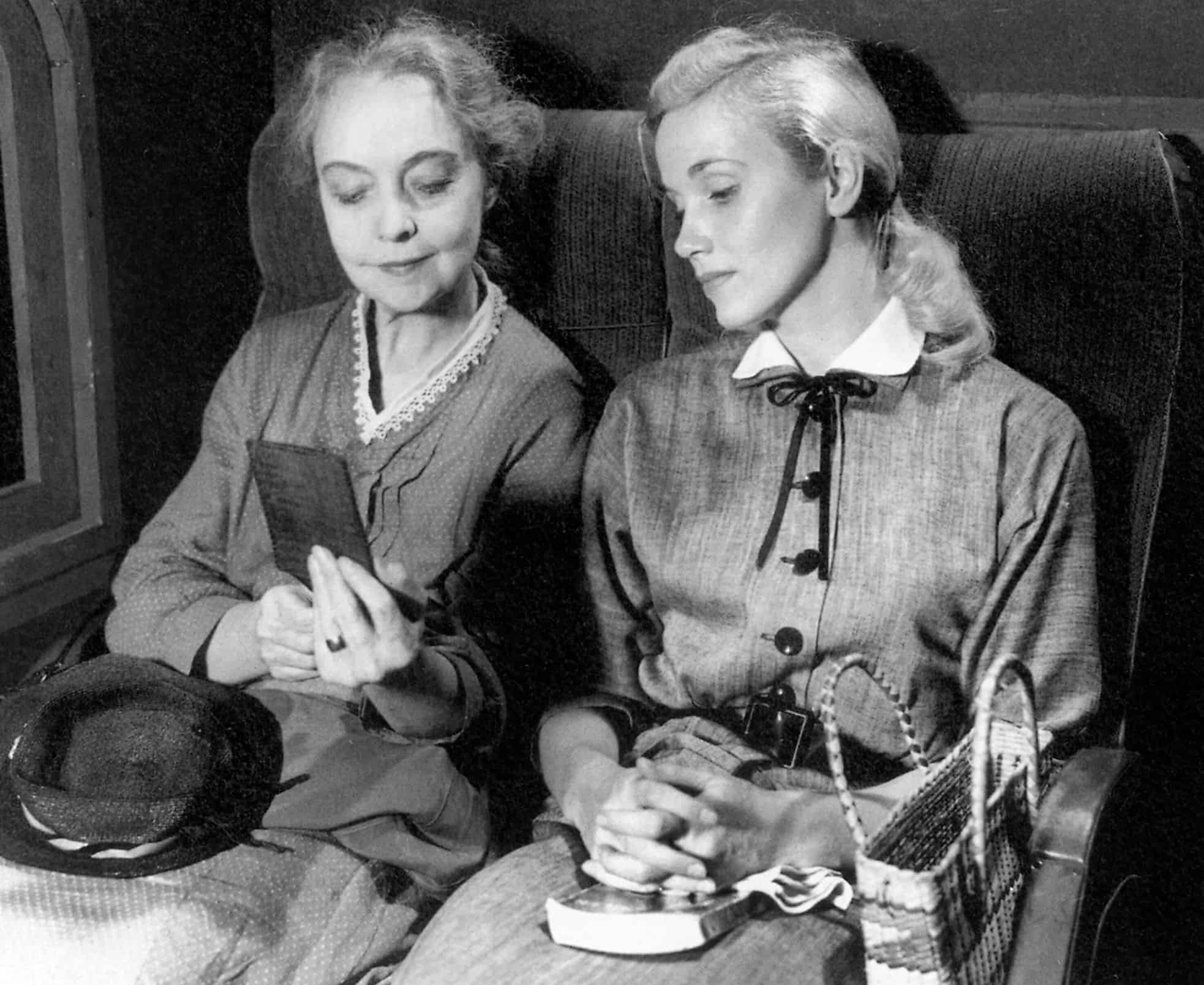
That connection is feature-length worked made for TV. Two titles in Television Movies – The Trip to Bountiful (1953) and Tosca (1955) – came from the Television U.S.A. program, while the rest were pulled from MoMA’s collections to give the public a kind of snapshot of its holdings. “Some titles had issues of completeness, color fading, or other quality problems that forced us to cross them off,” Harrison says. “Some titles were simply not good movies!”
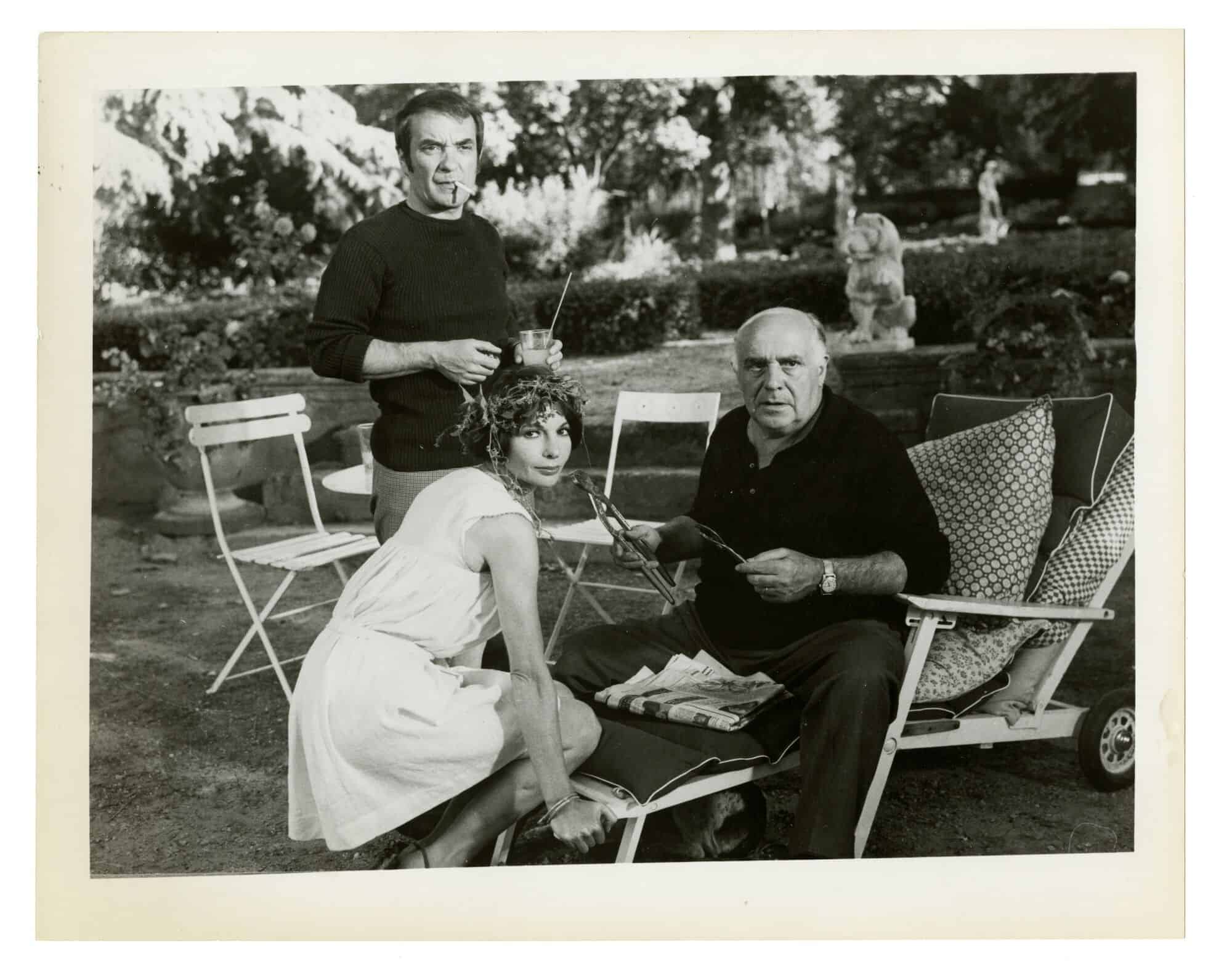
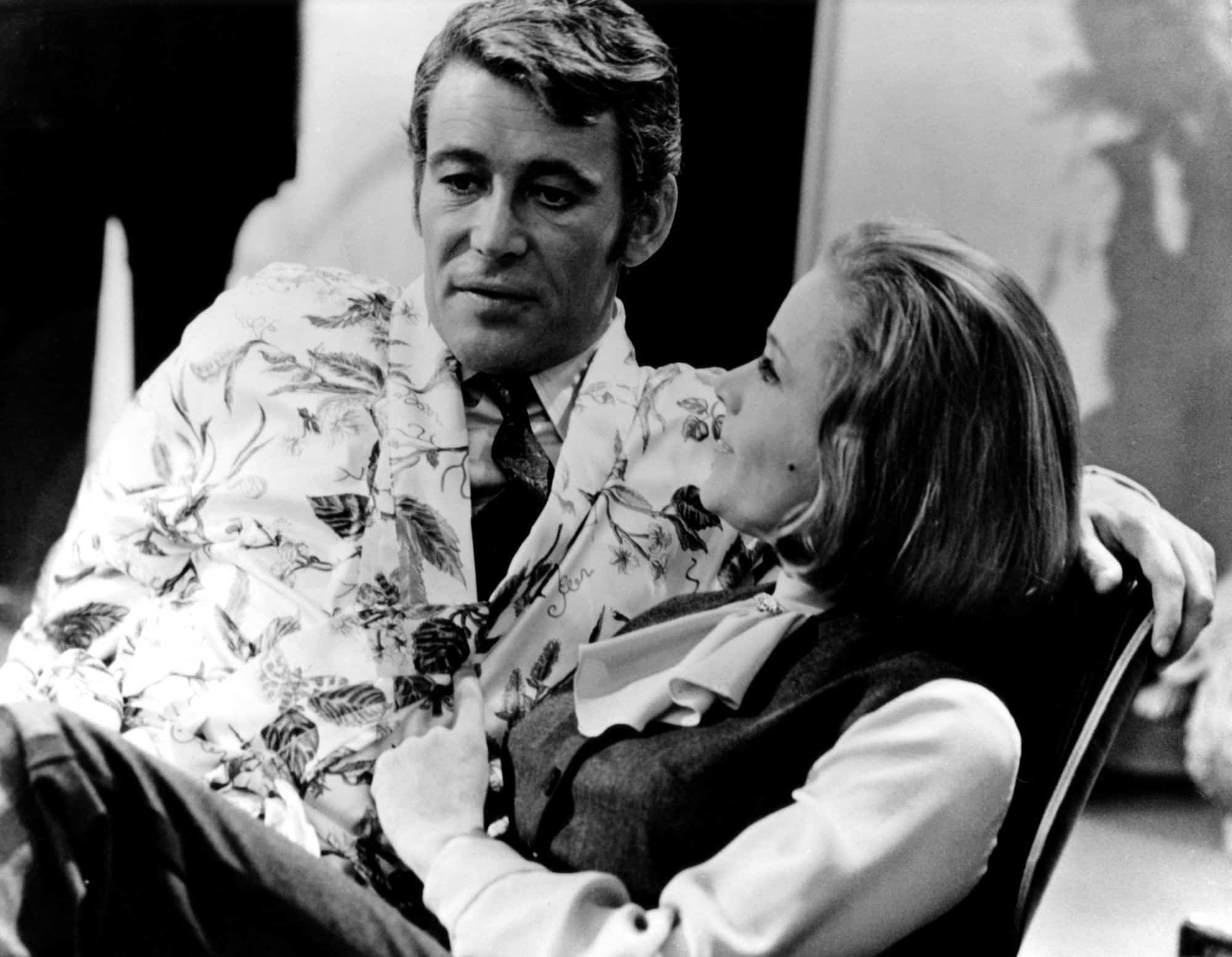
What made the cut includes Present Laughter (1967), written by Noël Coward; The Glass Menagerie (1973), starring Katharine Hepburn; Meantime (1983), written and directed by Mike Leigh; and Inside (1996), directed by Arthur Penn. And then there are the films by Rossellini (Cartesius, 1974), Renoir (Le petit théâtre de Jean Renoir, 1970), and Fassbinder (Angst vor der Angst, 1975).
“I had no idea these world-renowned filmmakers played a role at all in television filmmaking,” Rago says. “It was beyond humbling to watch these films, especially the multiple Fassbinder television movies I was unfamiliar with.”
Fassbinder made ambitious films for TV (the eight-and-a-half hour Eight Hours Don’t Make a Day, 1972; the 15-hour Berlin Alexanderplatz, 1980) while also making theatrical work. “Rossellini’s television career is rather fascinating,” Harrison says. “He famously announced in 1962 that ‘cinema is dead’ and that he would start making films for television, specifically historical epics that educated the general population. He felt that television allowed him to reach more people than cinema.”
Television was quite different 60 years ago, and Rossellini’s decision was met with skepticism, as if he were abandoning his art for something low and vulgar. But even in today’s era of peak TV, his justification for moving to a different outlet – and the reaction it inspired – would resonate with some of today’s top directors who have found a new path to financing and viewers in Netflix.
The company, launched as a direct-mail-DVD-rental rival to Blockbuster, soon moved into streaming catalog titles (that is, previously made movies and shows) directly to viewers’ homes. When it began making its own content, it tended to be more TV (House of Cards, The Crown). But when Netflix began producing its own films in 2015, studios, filmmakers, theater owners, and viewers had to reevaluate their vocabulary. Are Netflix originals movie-movies or made-for-TV movies? Most will watch on their televisions, but what if they download content to their phones? What if a title gets a limited theatrical run? What do we call it then?
These questions have become an existential crisis for old-guard Hollywood over the last two years as Netflix has disrupted both distribution and definition. In 2018, Alfonso Cuarón’s masterful Netflix-produced Roma played in a handful of big-city theaters (occasionally in the prestigious 70mm format) and gained considerable Oscar buzz. The industry openly wrung its hands: What does Roma mean for the future of filmmaking and moviegoing, and how do you reward it?
No less than Steven Spielberg weighed in, pushing to disqualify any film distributed online from Oscars contention. “Once you commit to a television format, you’re a TV movie,” Spielberg, who broke out with the made-for-TV Duel, told ITV in March 2018. “You certainly, if it’s a good show, deserve an Emmy, but not an Oscar. I don’t believe films that are just given token [releases] in a couple of theaters for less than a week should qualify for the Academy Award nomination.”
 Netflix, naturally, hit back. “I love the theatrical experience and we’re not in conflict with anyone, I think we’re a complement to each other,” Chief Content Officer Ted Sarandos said in February 2019. “[Roma] is awesome on the big screen, but most of the world does not have access to do that. What I want to do is connect people with movies they’re going to love. And they’re going to love Roma … on their phone, they’re going to love it on a huge big screen.” And the company responded by throwing money – a lot of it – at marquee filmmakers. After Paramount balked at its ballooning budget, Netflix produced Martin Scorsese’s The Irishman, which was released in 2019. The company also backed Noah Baumbach’s Marriage Story and City of God director Fernando Meirelles’ The Two Popes. All three had limited theatrical runs, raked in Oscar nominations (19 in total), and helped further confuse Hollywood about what makes a movie “made for television.”
This idea that Scorsese, Baumbach, or Cuarón are slumming it on Netflix is absurd, of course. Their films look like the hundreds of millions of dollars Netflix spent to make them, and not the on-the-cheap fare flogged by the Hallmark Channel. But let’s not forget: They went to Netflix out of necessity. As Scorsese’s experience with Paramount proves, these films would never be greenlit by a 21st-century Hollywood addicted to grinding out Avengers, Star Wars, Transformers, and Fast and Furious movies. (What is the Marvel Cinematic Universe if not big-screen episodic TV?) And the result is people saw The Irishman – a lot of people. Netflix announced in December that The Irishman was watched by 26,404,081 accounts globally within seven days of being available to steam.
Even if The Irishman and Roma were TV movies, Scorsese and Cuarón would be in good company – as Television Movies proves. “Ultimately it depends on creative intent,” Harrison says. “I have a hard time labeling The Irishman a TV movie since it was clearly always intended for theaters. I have an easier time labeling El Camino: A Breaking Bad Movie” – which was also released by Netflix in 2019 – “as a TV movie since it’s a continuation of a TV show.”
And while he says this debate ultimately didn’t inform programming Television Movies – it was always about offering a MoMA TV sampler – he thinks it has something to add to the conversation. “I hope Television Movies reminds people that TV has been used by the great directors of the world since the medium first emerged,” he says. “It’s not a new phenomenon at all.”
Television Movies: Big Pictures on the Small Screen runs at the Museum of Modern Art, 11 W. 53rd Street, from February 19 to 28. Visit moma.org for more information and the complete screening schedule.
Author

Discover more from Red Hook Star-Revue
Subscribe to get the latest posts sent to your email.