
While campaigning for the mayoral race in 2013, Mayor de Blasio made frequent stops in and around Red Hook. He made lots of campaign promises to these neighborhoods, including better transportation for Red Hookers.
The promise that put him on the map – the promise that took him from last place to first among candidates – was the promise to save Long Island College Hospital (LICH). From August through December in 2013, he gave a very good impression that he would.
Just after his term began in January 2014, he signed his Pre-K deal with Governor Cuomo in nearly the same breath he abandoned the hospital. Now – two years later – when he is promising to fix Red Hook’s transportation woes, I have to question where his intentions are – and who they REALLY help.
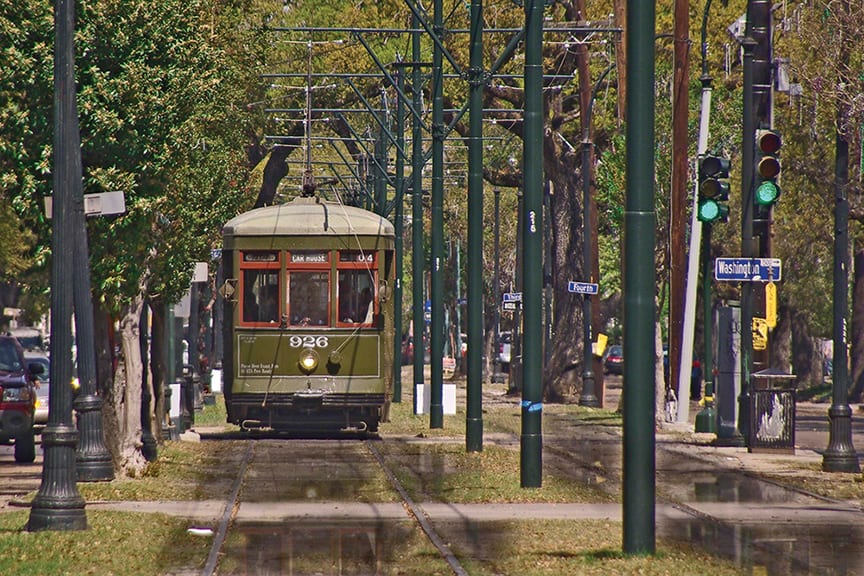
I grew up near a city whose streetcars are arguably one of the most well-known in the country, second only to San Francisco. New Orleans trolley system is the oldest in the country, dating back to 1835. The city operates four different lines, and has plans for several others, including one slated to open this year.
Streetcars are an integrated part of New Orleans’ history and spirit. They played a role in the Civil Rights Movement in the 1950s. When their workers went on strike for better wages in the 1920s, sandwich shops would feed the hungry strikers with leftover scraps for the “poor boys;” the term “po-boys” was coined after them. Tennessee William’s most treasured work, A Streetcar Named Desire, was set in the French Quarter of New Orleans. The streetcar – named the Desire Line – ran through the Quarter down Bourbon Street to Desire Street from 1920-1948.
The trolleys are historic. Some of the cars that still run today date as far back as the 1890s. The more modern cars have been built in the likeness of the 1920s versions. After Hurricane Katrina, the City of New Orleans spent up to $1 million per car for repairs.
As a kid, I remember a ride on the trolley was one of my favorite parts of visiting New Orleans. Handing a quarter to the driver. Sitting by the open windows admiring the beautiful houses and century old oak trees. Not on my way to a destination, but the pure enjoyment of the journey. It’s an experience; I still look forward to riding the trolleys when I visit.
But as much as I love Nola – and the streetcars – they are not built and maintained for commuters. New Orleans’ light rail is a tourist attraction. Much like Ellis Island, which was once a historic point of immigration in New York, is now a tourist’s landmark. The existing trolley lines in Nola all run through or into the French Quarter, the city’s most well-known area.
The city of New Orleans is approximately 169 square miles. The French Quarter is just bigger than half of a square mile. The population of New Orleans is slightly less than 350,000 people. The streetcars carry 21,600 people every day- a mere 7% of the population, excluding tourists. There are 22.3 miles of trolley tracks in the city, all running to or through the French Quarter.
In the impoverished city of New Orleans, “let’s be clear” – as de Blasio loves to say – about whom the trolley lines serve. They feed the historic and tourist areas of New Orleans, the economic lifeline of an otherwise poverty-stricken city.
This trolley is not an effective solution to the traffic woes of Red Hook; it’s a tourist attraction. It will certainly bring people to, and through, Red Hook. It will boost the local economy, bring tourists to Brooklyn, and speed up gentrification. But it is not a solution – or even part of the solution – to the needs of the community.
The streetcars will bring more foot traffic, but it also requires sharing our already limited access to transportation. Red Hook has already been touted as a “destination” place; more people will be arriving at our secluded destination. Real estate values may rise, forcing the people who built this neighborhood to less expensive neighborhoods.
I am not against the trolleys; I think it’s a really cool think to incorporate into this city of many wonders. It will be an experience. But I think we should be clear of what the trolleys really are – and what they really mean for Red Hook.
Author

Discover more from Red Hook Star-Revue
Subscribe to get the latest posts sent to your email.
One Comment
If City really wanted to improve and integrate Red Hook’s access to MTA service it would create dedicated and frequent bus service to local subways.