

Nostalgia slop, from AI-generated trash to IP-leveraging franchise flicks, is belched out so regularly our culture practically runs on the stuff. From the outside, Obex, Albert Birney’s lo-fi, black-and-white ‘80s-set 90-minute valentine to pre-Internet culture, might be mistaken for more of the same, albeit in an indie vein, especially with a press pitch that insists the film is “inspired by Mario, Zelda, and Final Fantasy.” But the kind of nostalgia that promises is warm, golden hued empty calories, and it’s immediately clear that Obex is none of those things.
From the opening credits, which begin as if someone loaded a floppy disk into a yellowing Macintosh with the film’s requisite half dozen production company logos rendered as low-res graphics with chunky 8-bit sound effects, Birney taps into the vibes and, yes, familiarity associated with everything from David Lynch and John Waters to Tron and Poltergeist to chain letters and The Oregon Trail. But he uses them to more imaginative ends, drawing on our history with this pop culture stew to both evoke a bygone era and say something about our contemporary condition.
Conor (Birney), a reclusive computer enthusiast living in Baltimore who makes a living creating ASCII portraits (images created through sequences of keyboard characters) for $5 a pop, gets sucked into a mysterious Legend of Zelda-like video game he orders from a cryptic ad in a computing magazine.
For the first 45 minutes, Birney — who also directed and, with Pete Ohs, co-wrote and co-edited Obex — immerses us in a liminal space that (sometimes literally) bleeds between uncanny familiarity and ambient dread. Conor’s life is dominated by screens — his work computer, another in his bedroom he uses to lull himself and his dog to sleep through karaoke and chiptune white noise, a stack of three TVs in his living room fronting a wall of VHS tapes and playing news reports — and the dissonant soundscape of fuzzy static, keyboard click-clacks, and droning news anchors flatly reciting recaps of this or that tragedy. Add to that the incessant buzzing of a 17-year brood of cicadas and what Birney creates is a Lynchian environment of both eccentric domesticity and nerve-shaking anxiety.
(He really goes in on Lynch with tight Blue Velvet-like shots of cicadas emerging from the ground, molting, and in their death throes, as well as discomfiting Twin Peaks-esque dream sequences involving a car ride with Conor and his dead mother down a dark, shadowy stretch of blacktop.)

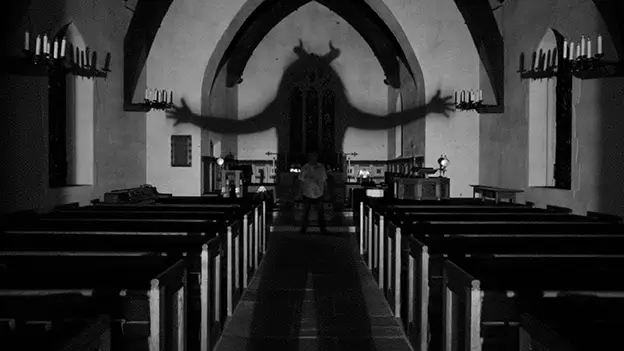
The second half of Obex takes place within the video game of the same name. The previously clean-cut Conor now has a bushy beard as he finds himself in the fantastical world of the game, on a quest to rescue his dog Sandy after she was abducted by the soul-eating big bad Ixaroth, a humanoid figure with a snarling animalistic demon head who glows an incandescent bright white. Where once he was alone, now he has friends: an elven shopkeeper, who is also the woman who buys and delivers his groceries in the real world; a leather jacket wearing figure with an RCA Victor TV for a head.
Where his biggest obstacle had been cicadas getting into his home, in the game he’s confronted by truly horrific scenes of death and punishment. And as he contemplates what it means to be happy, what it means to be alive, he confronts a kind of afterlife, one without and one with Sandy. Befitting the scenario of being trapped in a computer game, this section of the film is cleaner, binary, more, well, black and white. That relatively straight-edge sensibility (inherent to most fantasy stories) can’t compete with the previous section’s unforgiving, Eraserhead-like sensory experience, and it suffers as a result.
Yet when we get to the other side, we feel like we’ve been through something with Conor — something authentic and new. His journey, both actual and metaphysical, isn’t an excuse for a trip down memory lane, nor is he an avatar for the old familiar faces. For most of Obex, we feel as if we’ve been dropped into a low-budget movie made in the mid-1980s, one that can’t (and won’t) avoid the stories and ideas in the zeitgeist but instead metabolizes them for its own end. Making a period piece that doesn’t feel like a period piece is an exceedingly difficult task that has claimed many filmmakers’ efforts. Obex is the rare example of pulling it off.
But Birney also has his mind on the contemporary — particularly screentime and the need to unplug and touch grass (or, in this case, beach sand). When Conor, the recluse whose interactions with other people occur by talking through closed doors, leaves his house to walk his dog, it feels like the world has been reborn. It’s a heroic achievement made possible by turning off the TVs and computers and reconnecting not only with the physical world but with himself. Inside the machines are nightmare valleys of death lorded over by soul-sucking demons. Real life might be swarming with cicadas, but it’s the world and it’s alive. Conor needed that reminder.
In this era of AI and always-on screens, we do, too.
Obex opens in theaters on January 9.
Author

Discover more from Red Hook Star-Revue
Subscribe to get the latest posts sent to your email.