
Miles Davis is more than a musician, he’s an icon. The aspects of that shifted through the years and eras of his life, and that continues in his afterlife—his centennial is May 26. The fashion figure has vanished from popular culture since the end of The Gap’s mid-1990s campaign showing Miles (and Jack Kerouac, Steve McQueen, and others) wearing khakis. Now gone, the aesthetic mercurialness cut short, the music that comes out is no longer mysterious but archival. The icons are now the albums: Sketches of Spain, Kind of Blue, Bitches Brew, all objects in the public imagination; On the Corner, Jack Johnson, and other electric period albums captivating the self-consciously hipper listeners.
Musicians have been making their own versions of these icons for years. That’s how the arts work, from Renaissance painting studios to writers learning by reading their favorite authors, new generations learn techniques and pick and choose aesthetic values from preceding ones. Jazz is no different, and musicians have always learned to play not just by listening to their favorites but transcribing their solos and playing along with them; for horn players emulating their tone, you can hear the saxophonists who’ve listened to a lot of John Coltrane, the trumpet players who shaped their tone and phrasing after Miles.
Along with that have been decades of tribute albums, contemporary musicians honoring those from before by playing the music of their elders—or the same music their elders played—in some kind of balance between recreation and inspiration. That’s the tricky part, making your own music that shows where you came from while sounding like yourself, not the musician who inspired you. That can be an immense problem with a figure of the greatness and historical stature of Miles Davis, one of the most important musicians of the entire audio recording era, regardless of genre. What makes Miles so complex to emulate is that underneath the style and the notes were two fundamental values: always keep changing because you’re moving toward your ultimate realization as an artist; and always keep your personality well-defined and distinct from others.
How do you pay tribute to that? Much less through the tunes and much more through the values. Tributes always come from good intentions, but not every musician has the wisdom and taste to get past imitating Miles’ content and gestures and find and express what’s underneath. There’s a whole and often misguided school of recreating one of those icons, the Miles/Gil Evans collaboration, Sketches of Spain. It’s a pretty tough thing to tackle because Evans’ arrangements are singular recompositions of the original classical music, explicit and detailed, and playing them is like an orchestra playing Beethoven—there’s only so much different you can do. With Beethoven, you don’t want to do too much that’s different, but in jazz, you absolutely do! The Sketches of Spain tributes trip up even the best, like trumpeter Nicholas Payton, who usually has a much-needed irreverent take on the tradition. There’s just not much he, or saxophonist Dave Liebman on his own such album, can do, which is soloing over the original arrangement. Others are redundant recreations of the original—why?
Paying tribute
The electric era is another challenge to tackle, because the music Miles was making then was pretty much free jazz with a hellacious, serrated groove underneath, music that stopped but wasn’t about getting to any kind of ending. This stuff is incredibly compelling and deceptive. Wadada Leo Smith—one of the greatest post-Miles trumpeters—and guitarist Henry Kaiser tackled this with their Yo Miles! project, but those albums are disappointing. Bassist Michael Manning’s playing is plodding, Kaiser is rhythmically stiff, and the talent—including John Medeski and Lukas Ligeti—never gels. Yet when Smith plays his own stuff with his electric band, like on Najwa (TUM Records), he’s not playing Miles but is paying tribute to him, by continuing the electric legacy. If you want to say something to honor Miles, you need to start with your own voice, and then actually have something to say.
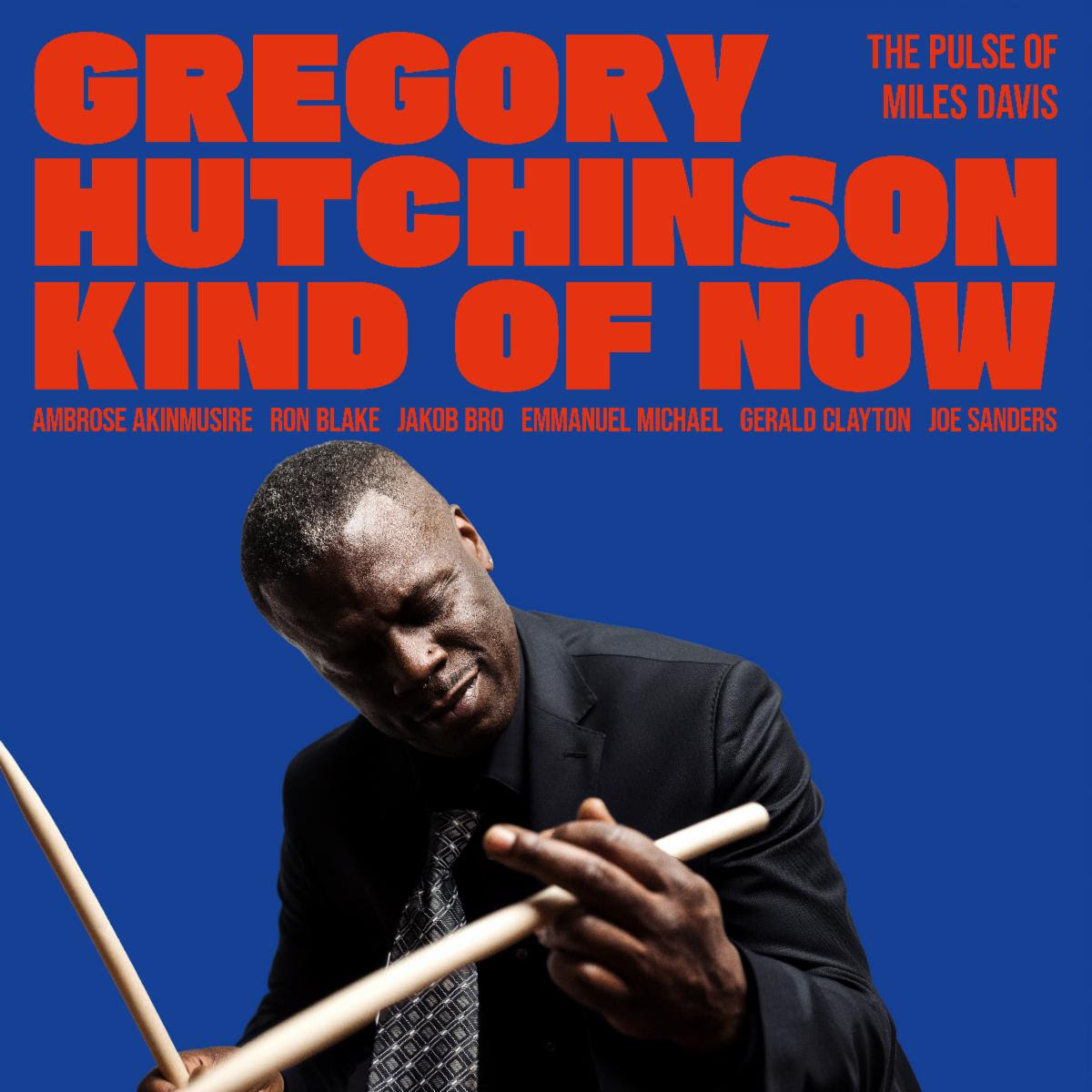
That’s the divide between two new albums, drummer Gregory Hutchinson’s Kind of Now: The Pulse of Miles Davis (Warner Brothers) and Directions & Expressions, in Posi-Tone Records “Blue Moods” series. Hutchinson’s is a model of how to make a tribute album that both honors the original artist with understanding and honesty, while Directions & Expressions is close to the exact opposite.
What makes Hutchinson’s album so good—and it is very good—is that it’s not Hutchinson and band (trumpeter Ambrose Akinmusire, tenor saxophonist and bass clarinetist Ron Blake, pianist Gerald Clayton, bassist Joe Sanders, and with contributions from guitarists Jakob Bro and Emmanuel Michael) playing Miles Davis, it’s the band making their own music with material Miles either created or made famous. That means opening with “Ah-Leu-Cha,” the horns swinging on top and Hutchinson channeling bebop through modern, post-Tony Williams rhythms.
That opening track is an unusual choice in the context of the rest of the album. It’s followed by “Fran Dance,” with a delicate, wistful intro from Clayton and expressive pedal work. From there the album concentrates on Miles modal music and beyond, with imaginative, personal arrangements and approaches to “Fall,” “Orbits,” “Waterbabies,” and “Black Comedy” from Miles’ incredible mid-1960s albums. There’s an intelligent, atmospheric “Bitches Brew,” and some original drum miniatures, but what really shows Hutchinson’s deep, if-you-know-you-know thinking is “Circle in the Round.” This was never an official track from Miles, rather a studio experiment not released until an eponymous 1979 Columbia compilation. It’s a fascinating key to Miles’ avant-garde electric period, a near half-hour minimalist/drone piece, and it’s astonishing Hutchinson picked it for this album, much less the fantastic, moody, Pat Metheny-ish arrangement he gives it.
Ordinary
Directions & Expressions, from Posi-Tone’s house sextet, on the other hand, is completely conventional and forgettable. The material spans bebop—“Boplicity” as a samba—hard bop, some of the 1965-1968 era, and has a couple surprises in “Générique” from Miles’ classic soundtrack to Louis Malle’s 1958 film Ascenseur pour l’échafaud and “La Suite De Kilimanjaro,” but there’s few surprises in the playing, which is polished but undistinguished modern jazz. Pianist Art Harihara works in some expressive stacked harmonies and modulations, but there’s no personality, neither Miles’ nor the ensemble’s. That’s the Posi-Tone way, producer Marc Free putting out one album after another of generic, formulaic, paint-by-numbers jazz.
Along with Kind of Now, there are several older Miles tribute albums that are more than worth your time, that have something to say in the musicians’ own voices. The best is Joe Henderson’s 1993 Verve album, So Near, So Far (Musings for Miles), with Henderson, guitarist John Scofield, bassist Dave Holland, and drummer Al Foster putting their own stamp on tunes Miles wrote. There’s an interesting transfer of knowledge on this one, the rhythm section all post-Miles, Henderson adding his tough-minded and elegant views. Cassandra Wilson’s Traveling Miles (Blue Note) has her turn tracks from Miles’ albums into terrific, personal vocal material, pulling in “Run the Voodoo Down,” “E.S.P.,” and “Seven Steps to Heaven.” She also sings “Time After Time,” which Miles played so beautifully, and adds some originals.
Finally, a sleeper that surprised me and may surprise you. In 2011, saxophonist Bob Belden put out Asiento on the RareNoise label. This is, of all things, a complete response to and reworking of Bitches Brew, and it’s great. With Matthew Garrison playing some scintillating funk bass, and turntablist DJ Logic in the ensemble, Belden takes Miles’ themes and turns them into more formally direct vehicles for slicing funk, rock, and plenty of atmospheric abstraction. The Weather Report-ish “John McLaughlin” is a study in possible musical histories that goes both back and forward in time. Recorded live, this is an album you will play again and again.
Discover more from Red Hook Star-Revue
Subscribe to get the latest posts sent to your email.