
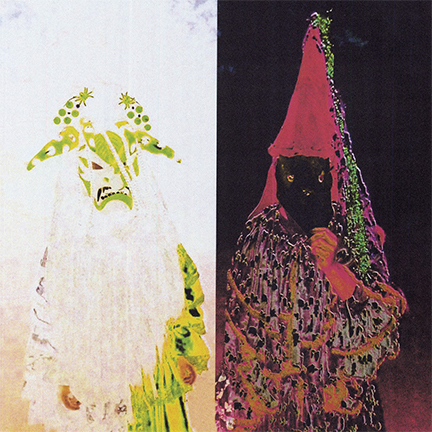
It takes two to bang on. The shambolic, chaotic, somewhat cataclysmic duo have released a number of albums, Eps, and splits over the last 15 years, most on small labels in their Brazilian homeland. The new Cicatrizes do Futuro is their second on the Idaho-based Neurot Recordings (following 2019’s Metaprogramação), which with hopes will bring greater attention in o norte to their techno power assault. Punk, grind and complex rhythms compete for sonic space, melodic fragments bubbling up now and again through the thick no-wave electroclash mix.
The press release includes a description of the concept behind the new album (LP, CD, and digital out May 29) that’s about two-thirds the length of the lyric sheet, which, in Portuguese, totals about 300 words total for the nine songs. That doesn’t really mean much, except maybe that it’s OK to go on feel: industrial grind heavy on reverb and processed beats, a dark, driving dub generally sounding about 15% human. The force is strong with this one.
To pluck again from the product description, Cicatrizes do Futuro is “a visceral diagnosis of a world intoxicated by its own fictions of power, tracing the anatomy of a systemic grand deception and exploring its mechanics of psychological, social, and material domination, the indelible marks imprinted on bodies and minds and its catastrophic consequences. It is a journey from the poisoned and addicted collective psyche to the desperate search for an antidote, while the future seems to be already cursed by the very forces that pretend to build it.” That’s a lot of concept. Personally, the abstraction of the lyrics works better for me. “Simulacrum” (in its entirety and in the provided English translation) goes “Asphyxiated by the images / Asphyxiated by language / Asphyxiated by reality / Suffocated! / In the battlefield / On the virtual of flesh / Emptied symbols / Emptied symbols! / Suffocated / Living in this world-simulacrum.” Dark, sure, and the music is too, but it’s infectious, coming on hard in a rush of danceable rhythms.
Banging on slowly and fiercely in San Francisco is the synth-and-drum duo My Heart, An Inverted Flame, delivering a slab of electronic, tectonic, symphonic doom rumbling so heavily you might not notice there are no guitars—and little by way of vocals, for that matter. Their sturm und drang hits with deep, percussive outbursts and washes of drone what sounds like amp feedback even if it is created inside a console. The Inverts emerged as a pandemic project with Plague Notes, Unnamed, Unknown, A Finger Dragged Through Dust, which was quickly followed by a series of nine digital EPs under the common title A Collection of Essays, Attempting to Describe in Intricate, Exhaustive Detail, Everything That Was Ever Wrong with the World. Cheery bastards. The new My Death Is More Beautiful Than Your Life is a rare for them physical product (CD, limited cassette, and download out May 15 from Crucial Blast), although it should be noted that in 2023 they released a lathe-cut, single-sided, vinyl 8”, limited to 50 copies. The new set carries on quite nobly, pummeling through a very good 80 minutes during which momentary passages of tonality feel downright like revelry.

Hailing from Salt Lake City is the altogether quirky twosome it foot, it ears, who look to have released three previous records going back to 2011, and who have succeeded at the enviable effort of largely eluding the internet. They perform an endearing, neurotic blend of math rock and no wave that’s reminiscent of DNA or early Talking Heads but closer to the excellent and underlooked Come On. Alienation, apocalyptic fears and everyday concerns occupy ifit’s new Tip Toe Loops (self-released CD, limited cassette, and download out May 15) in 13 tight, angular songs, not a one over three minutes. With precision playing and sparing but clever deployment of effects, the songs are both airy and intricate. The lyrics are often generally enough to create an unnerving abstract unease, enough so that even an exclamation like “Can I use the microwave? / Gonna brave flavor pack” seems terribly wrong.=

Electro blipmares from Paris. The French/Italian four-piece FRANTX sound decidedly more contemporary than does it foot, it ears, but are similarly disorienting, likely because I don’t speak French. They’re super-cute and vaguely anxious, technicolor techno masking what seems to be a disaffected detachment. All four members provide (processed) vocals and synth textures on their debut IDUTYDU (LP, download from Carton Records May 22), although there’s also occasional acoustic guitar and tuba as well. A slow chaos ensues, as on “Pingu Trauma,” in which a robot sing-a-long interrupts what sounds like a cartoon ensconced in a blanket of scorn. There are little melodies at times, but there’s not often much going on in song form. Still, it manages to keep a poppish feel aloft, like comic sans illbient. The lyrics might point a different direction, but that said, the album’s final track, “Fly Communication,” delivered in accented English, is about our inability to converse with bugs, even when they say they understand. Communication is overrated.
Another soldier’s things. When Tom Waits released Bad as Me in 2011 (his most recent album of new material to date), the song “Hell Broke Luce” practically paralyzed me on first listen. The barroom bard is beloved by listeners befuddled by his obscure verses, but that song felt frightfully real. The “Luce” of the title is a war veteran with PTSD and there’s no romanticizing his plight. It’s so pointed, so clear in meaning and messaging, it’s absolutely, undeniably an anti-war song. The closest he’d previously come to such sentiment was in “Soldier’s Things” (from 1983’s Swordfishtrombones), a heartbreaking ballad about selling the possessions of a husband who won’t be coming home.
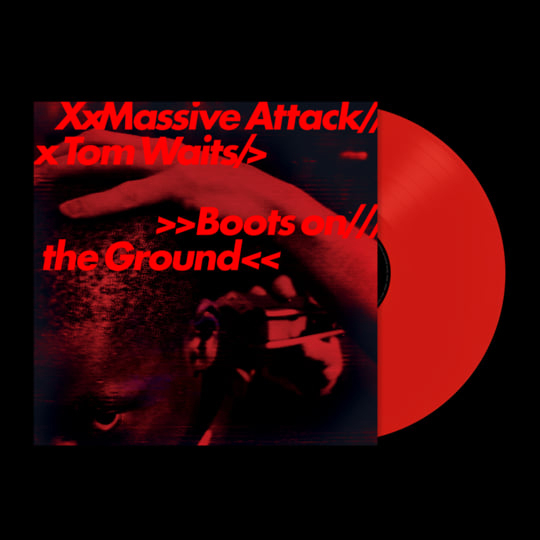
Last month, the unlikely pairing of Waits and British trip-hop pioneers Massive Attack (who themselves haven’t put out a new album since 2010) released “Boots on the Ground” to streaming media (except Spotify), with a 12” single to be released by PIAS in July. The song has the pounding, permeating feeling delivered so well on “Luce” but this time, the protagonist is an antagonist. The narrator is a Marine and the setting is a war zone, a “machine gun war” in the United States. The narrator has been trained and conditioned (“Mold your world, a soldier’s just clay”), and the mission accepted and internalized (“I kill a brown man I never ass knew / choked on spit and then he turned blue”). Coming from the POV of an agent of violence, it’s a different kind of hard-to-take than Waits’s previous doses of reality. Time will tell if it has a similar lasting impact, but it’s a powerful piece, whether or not it’s a forever song.
Discover more from Red Hook Star-Revue
Subscribe to get the latest posts sent to your email.