Forty-something years of making it up, on the spot, in front of an audience. That’s Keith Jarrett’s legacy of improvised solo piano concerts on ECM. It’s an enormous and important body of musical work, a break—within the mainstream—with be-bop and hard bop conventions and the creation of an entire new idea of modern piano jazz. The first step was the solo studio album, Facing You, Jarrett’s first release on ECM in 1971. But that was like the first shovels—though deep ones—in a ground breaking ceremony for a new building. The foundation took shape with the early albums of Jarrett in the concert halls of Europe, Solo-Concerts: Bremen/Lausanne (1973) and especially The Köln Concert.
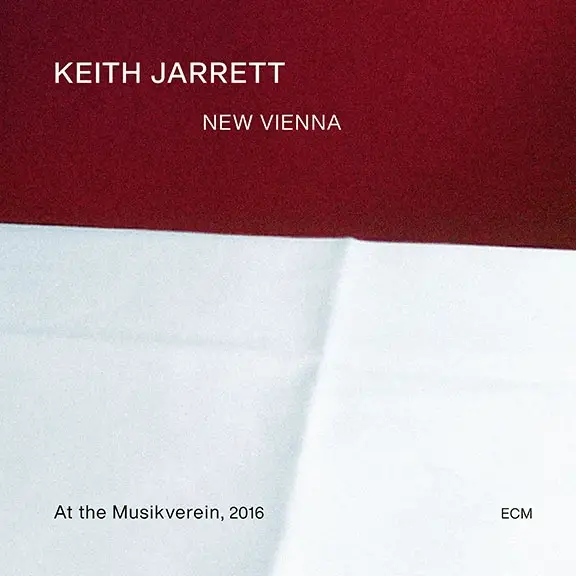
This ongoing history is available on streaming music platforms. In one of the few intelligent uses of those services, this spring ECM organized Jarrett’s live solo output by date and performing location, and uploaded it in decades-long “Solo Piano Concerts” collections, though in order to include the 2020s they’ve taken archival releases and placed them in this decade as long as they were released this decade, like the recent New Vienna, which is a 2016 concert, and also the best of these performances from the final years of his playing career. This totals about thirty-five hours of music and is certain to expand as ECM made a habit of recording Jarrett’s solo concerts, knowing there would be gems to pull out for later release.
The Köln Concert was released in 1975, and it changed music and the music business. For the latter, it has sold four million copies, according to Jarrett biographer Wolfgang Sandner, meaning, as The Penguin Guide to Jazz on CD notes, “ECM has been dining out on it or, to be fairer, recording others on the proceeds” for decades. As much as Manfred Eicher, ECM is the house that Jarrett built, and the importance of the label for modern jazz makes him one of the most important musicians in the history of the music.
And that’s just the business side. Musically, Jarrett (who sadly suffered two strokes in 2018 and can no longer perform) is one of the all-time titans, a virtuoso of technique, expression, and imagination. He has more than 100 albums to his credit. Not all of them are classics, but outside of his stint with Miles Davis’ electric bands in the early 1970s, he’s made consequential music with his American quartet of Dewey Redman, Charlie Haden, and Paul Motian, his European group which established the reputation of the great saxophonist Jan Gabarek, and his Standards Trio, with Gary Peacock and Jack DeJohnette. That last put out almost two dozen of the finest piano trio albums in jazz, and is supplemented by two live albums with Peacock and Motian, At the Deer Head Inn (1994), and this year’s archival complement The Old Country: Live at the Deer Head Inn, which is even better than the first installment.
Jarrett has been a musical star who, like Davis, has an enormous fandom outside of jazz. People who don’t listen to jazz have copies of Kind of Blue and The Köln Concert because these are albums you have in a proper music collection. And that’s remarkable and nearly impossible to believe, because Jarrett’s and ECM’s success is pegged to a little more than an hour of free improvisation.
Making it up on the spot
In the niche that is jazz, there’s a smaller niche of free improvisation, music that is not only structured in real-time but can, and often does in Jarrett’s case, have absolutely no pre-preparation of musical material before the playing happens. It’s also one thing to do this in the studio, with alternate takes and editing, another thing to do this in front of an audience—that’s tightrope walking without a net. It’s music that is completely contingent on the moment, and for The Köln Concert expanded by the circumstances that include the concert being booked by a teenager promoter, Jarrett’s own physical exhaustion and pain from a hard journey and a back injury, and an inadequate piano that confined him to the middle range of the instrument (there’s a dramatization of this coming in October via the German film Köln 75 which tells the story of how eighteen-year old Vera Brandes created this concert).
The Köln Concert is ravishingly beautiful and has a passion and soulfulness to it that explains its appeal. That and its popularity has a subtle but meaningful radicalism. The popular notion of free improvisation is that it is dissonant, raucous, frenetic, with a contrast between Jarrett and his rough contemporary and other great improvising pianist, Cecil Taylor. But improvisation is a method, not a style, and one that almost every musician in history has practiced to some extent. That Taylor often used written material to direct the music before the playing started, and Jarrett approached these concerts with nothing in mind ahead of time shows that the range of improvisation is the range of human music making, that the practice can produce the driving torrents of dissonant information from Taylor, and the steady pulse and consonant harmonies and phrases from Jarrett. New Vienna and a great new archival release from Taylor and drummer Tony Oxley, Flashing Spirits (Burning Ambulance), show this.
The other side is that as the decades go along, Jarrett can be just as “free”—seemingly chaotic and dissonant—as Taylor (just as Taylor could carve out a gentle, ballad-like improvisation whenever he wanted). Jarrett is usually slower paced, not just tonal but organizing consistent chord changes and melodic phrases—making up songs on the spot—and the resonant harmonies, regular rhythms, and steady vamps he ramps up with gradual crescendoes, are expressive and satisfying in old-fashioned ways.
They also have a great deal of sonic beauty, emotional appeal, and tremendous sophistication. What Jarrett does is extremely difficult to pull off. The paradox of him improvising for forty-five or so minutes in a tonal manner and using recognizably repeated material to build the type of form where the listener is not just following him but can anticipate where the music will go, is that the appeal is in the simple sound, but it takes enormous sophistication and complexity to get there. Because the thing is, you have to keep it interesting, and the less material, the harder that is.
Listening through all this music, not everything is on the same level—the Ferrara concert originally collected on A Multitude of Angels (2016), heard in the stream of his improvising life, comes across as a particularly weak date, with Jarrett vamping endlessly in search of something, a lot of effort going into very little results. But the peaks, like Köln, Paris, the early Bremen/Lausanne dates, and the new release, surpass Mount Everest. And even in knotty situations, like the 2016 Budapest date, where he seems to wrestle with Bartók, he can pull out the encore of “It’s a Lonesome Old Town” and transform it into a kind of lost 19th century European sonata. Through the years, Jarrett played Handel, Bach, and Shostakovich (often extremely well) along with jazz, and especially in the 1990s bits of those phrases and cadences bubble up in his playing. But a close listening to the 1970s and 1980s shows that those elements were already there in his playing, they’re just more fragmentary and a little generic. He was already listening to this music, if not practicing it.
Monologue with life
What is consistently wonderful about all this is how alive it is. Not just live music preserved in recordings, but something of an ongoing, real-time monologue about life itself. In a world inundated with albums of specific tracks, prepackaged beats and samples, multiple songwriting and producing credits, technological engineering to an almost blinding sheen, this is a quiet and also deeply radical notion. There are profound implications about the value of individual voices that are the opposite of decadent American institutions that decide who matters and dismiss the rest. As he says in the Keith Jarrett: The Art of Improvising documentary, “Music is the result of a process the musician is going through …”, and listening to him play through his years, our years, is a statement that this process of life itself is worth everything.
Author

Discover more from Red Hook Star-Revue
Subscribe to get the latest posts sent to your email.