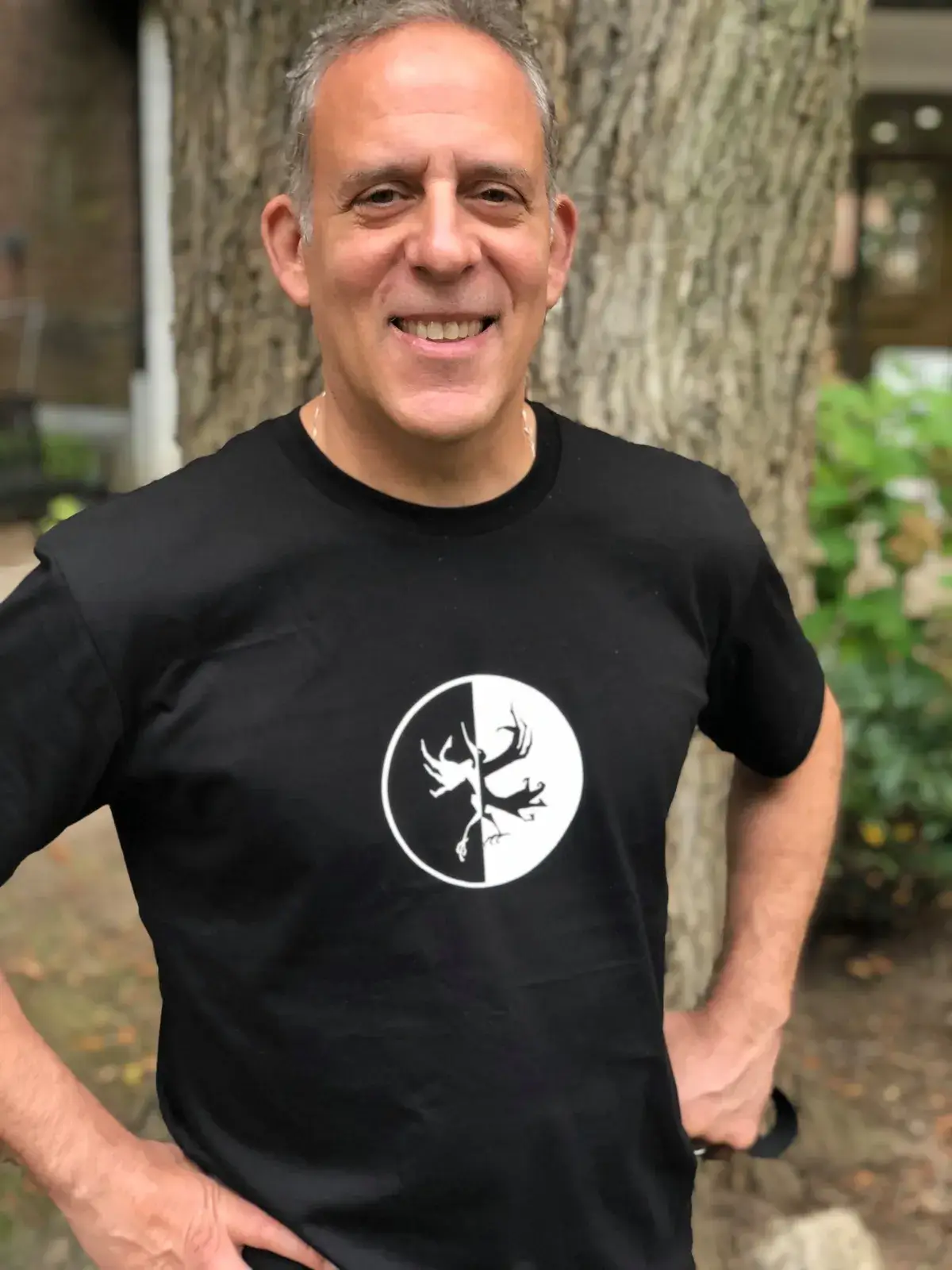
Mike Fiorito’s latest book, “UFO Symphonic: Journeys into Sound”—his eighth, and a finalist for the National Indie Excellence Awards—isn’t only for people who “believe in aliens.” Blending memoir, testimonials and ideas from thinkers like psychologist Carl Jung and philosopher Aldous Huxley, the Brooklyn author taps into the idea of music as a universal language: one that connects us to each other, to different versions of ourselves across time and to the unknown. We spoke over Zoom; our conversation could have gone on for hours and is maybe still going on somewhere. These excerpts have been edited for length and clarity.
When did you first start thinking of music not just as sound, but as a form of communication?
I’m a musician. I tend to obsess over music, playing things over and over. I’ve always been drawn to it, not just for how it sounds but for its culture. Where does it come from?
My interest in UFOs led me into philosophy, the nature of reality, consciousness—some of the deeper wisdom traditions. I was a philosophy major in college, so I came to this through mythology, Jungian psychology, physics. But I didn’t find much that explored music through that lens. That’s part of why I wrote this book.
You reference the film “Close Encounters of the Third Kind,” where music is the medium aliens use to communicate. How old were you when you first saw that movie, and what stood out to you?
A lot of people interested in this topic bring up that movie. It’s a touchstone. I was born in 1966, and the movie came out in ’77. I was already into science fiction. My dad noticed and got me a subscription to Omni magazine. Movies like that shaped my interest. I used to think, of course there must be other intelligent life. How could we be the only ones?
There’s a scene where you describe an acid trip at 18, listening to the Allman Brothers’ “Blue Sky.” What do you remember hearing in that moment?
It’s very “bro music,” but there’s a sensitivity for those who really listen. What stands out is the deep emotion. That song has a lullaby quality, especially in the guitar solos. It’s in a major key—minor keys tend to sound sad to our Western ears—and “Blue Sky” is all joy. It just took me somewhere.
That’s what the best music does. You don’t just listen; you go on a journey. It’s an emotional, almost out-of-body experience. Music can take you back to a first date, or to being a kid. What your dad played, how it made you feel, back to a world that isn’t there anymore. That’s really what the book is trying to say.
You write about the Neapolitan songs your father used to play: how you hated them as a kid, but how they now help you feel close to him after his death. What do you hear now when you listen to those records?
I’m completely transported. My father died young. He was 61, and I was 24. He was deeply interested in that music. It harkens back to the homeland. It’s not like standard opera. It has dialect, Arabic scales, semitones.
When someone dies, you need time to recover. I started reading books I thought he would’ve liked, writing about my Italian American experience. That’s when my writing really began.
There’s this notion of retrocausality: that the past or future can shape the present. I think my dad probably wanted me to be a writer. When I was young, that path wasn’t obvious. I think he called from the past to give me a present for the future.
In your books, you return often to the people and places of your past: your best friend, your father, growing up in the projects in Queens. How has writing this book changed the way you see them?
I used to be afraid to say where I came from. But now those places feel almost mythological. You develop a different relationship to the past. These things become precious.
You explore big metaphysical questions but always through personal stories that form what you call “a symphony of voices.” What made you decide to include other people’s stories alongside your own?
Many people don’t want to talk about this stuff. I wanted to make space for it. I was curious to hear what others thought.
A lot of these experiences are linked to grief. It’s like something punctures your perception: an accident, a near-death experience, the loss of someone close. It knocks you off your reality.
People make fun of those who talk about these things. But these people aren’t crazy. They’re not psychotic. Something happened. I was surprised by how moving many of the stories were.
You write about dreaming of UFOs. What do those dreams feel like?
They feel spiritual—a shower of light coming down on you. You’re captivated by something extraordinary. There’s something divinatory about them. I think they’re valid encounters. There’s some kind of elevated, magical feeling. I’ve had them most of my life.
Since finishing this book, have you experienced any changes in how you listen, what you’re hearing or how you think about sound?
I’d say I’m paying more attention now. I’m also working on something that goes deeper into the subject. I’m still writing, still figuring it out. That’s the joyful stage. And I continue to listen deeply.
Author

Discover more from Red Hook Star-Revue
Subscribe to get the latest posts sent to your email.



One Comment
Michael Quinn, did you know Michael Point in Houston?