Concrete, the gray, rough material made of rock, sand, and water, might not be sexy, but it sure as hell is important. The material is a vital component in modern infrastructure due to its versatility and durability. “Concrete is the most widely used construction material on Earth,” explained Alexios Shaw, co-founder and chief financial officer of Ionic Order, a marine precast concrete manufacturer. Ionic Order is the newest tenant at the Brooklyn Marine Terminal, beginning production only a year and a half ago in 2024. Uniquely, it produces precast concrete, meaning they mix, mold, and test the concrete on-site before delivering it to clients.
While only a small share of concrete production worldwide, pre-cast concrete is quickly growing in popularity. “Often it is more practical or much more cost-effective to produce the concrete off-site as a prefabricated piece and install that relative to pouring it in place,” explains Shaw. This can generate thousands of dollars in savings for companies, both in transportation and time saved.
Ionic Order is also singular for becoming the only concrete manufacturer approved by New York State Department of Transportation (NYSDOT) in five years. This is no small feat; there are only eight manufacturers approved statewide, and Ionic Orders is the only company to be authorized within the five boroughs. Once granted, NYSDOT approval is transformative for manufacturing companies. “If they’re certified for New York State, they’re certified everywhere” says Ryan Camberdella, operations associate at Ionic. This is largely due to the rigorous auditing process and quality control checks, which took the company a year and a half to undergo. When put together, lowered costs and quicker timelines have massive impacts on citywide infrastructure projects, many of which are panned for their ballooning costs and long construction schedules.
Ionic Order’s operations take place out of the Red Hook Container Terminal, which spans about 60 of the 120-acre port along Columbia Waterfront. There, the company has a high-capacity, fully electric, concrete batch plant with an in-house quality control team that tests each and every product on site. The team of 17 works across two and a half acres and have full use of the container cranes to load products offsite.
Times are changing at the port—last year, New York City Economic Development Corporation (EDC) dismantled four of the iconic blue and red cranes that tower over the shoreline. Years of disinvestment, as well as damage from Hurricane Sandy, rendered the cranes defunct and out-of-service. While the cranes will not be replaced, EDC will electrify the two remaining ones as part of an $18 million investment that includes restoring Piers 7 and 9, as well as demolishing two deteriorated warehouses. Longterm, EDC has plans to modernize the port and integrate it into its Blue Highways plan, a freight plan that encompasses barge use to move consumer goods between ports along the East River.
While Ionic Orders will not officially be part of Blue Highways, the company is drawing inspiration from the plan for its business model. The Terminal offers the company uninterrupted use of the East River and New York Harbor, which allows it to use barges and short-haul delivery to transport concrete products instead of trucks.
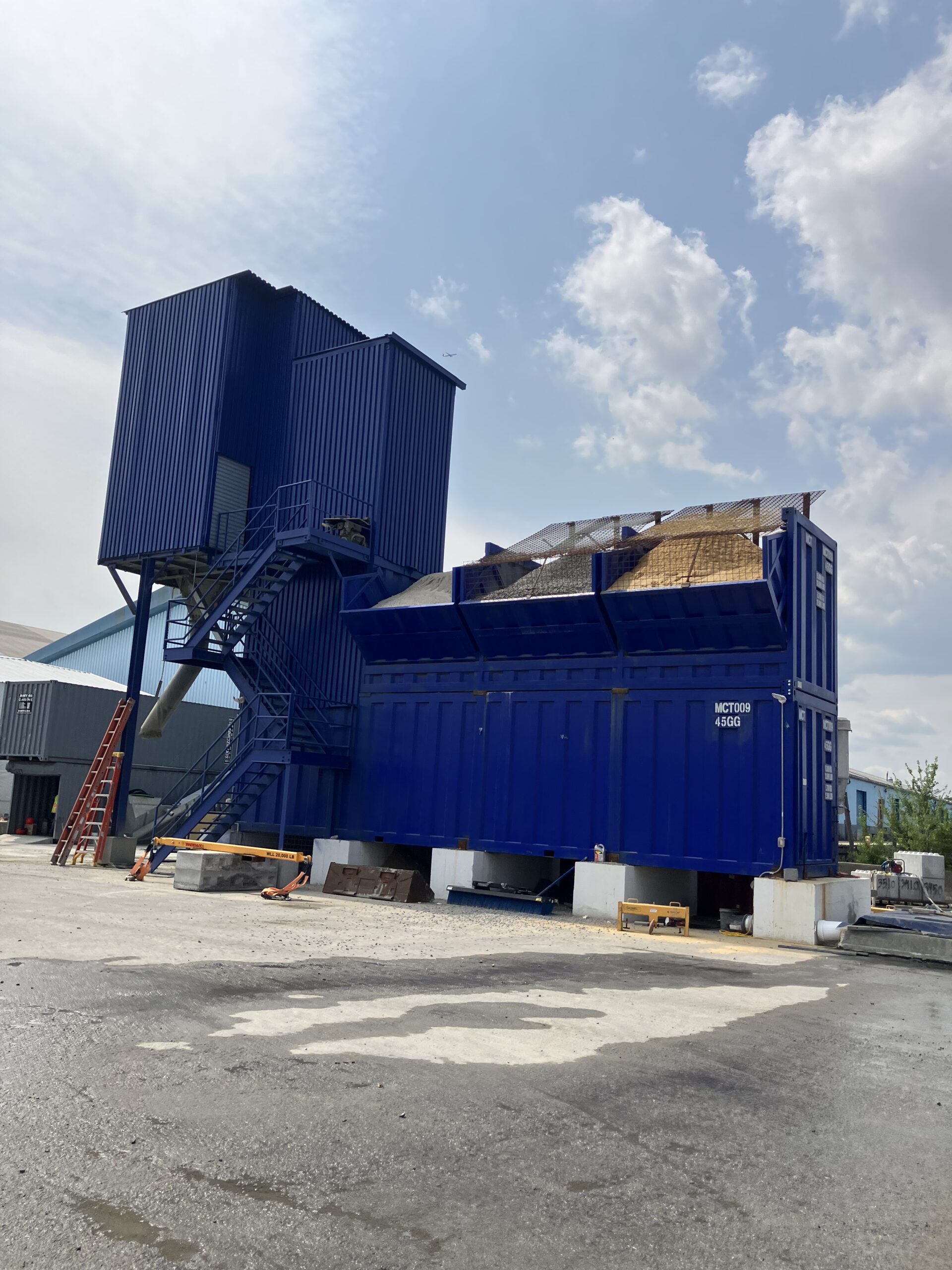
Waterfront access also allows Ionic Order to stay true to its sustainability goals in an industry with a massive carbon footprint. Not only is cement carbon-intensive to make, but producing concrete requires trucking aggregates and materials, as well as trucking out the finished product. “And we essentially are cutting down dramatically on both because most of our aggregates come by barge, and then we’re either shipping out by vessel or we’re doing a short-haul truck. So if we’re delivering to Southern Brooklyn, it might be two miles, whereas otherwise it’s usually anywhere from 50 to 80 miles of some of the densest urban terrain on Earth,” Shaw shared.
For Ionic, the goal is to prioritize the local. The company began as a manufacturer for offshore wind. In 2024, Governor Hochul announced two offshore wind projects, one of which would be the largest project to date in New York State. The project, Sunrise Wind, will generate enough clean energy to power 600,000 homes once live. Around the same time, New Jersey was in the process of constructing four major offshore wind projects, only one of which will go live in 2028 (developers dropped out in 2025, citing political conditions).
After studying the supply change, Shaw realized “many of [the concrete products] are either being trucked from New England, which is very expensive and carbon intensive, or literally being brought from Europe on ocean-bound vessels.” The founders saw an opportunity to contribute to the State’s sustainability goals, while keeping the economic impact in their own backyard.
“But pretty quickly, with Trump, it became clear that we had to pivot,” Shaw explained. While offshore wind had become popular nationwide as a clean energy source during the Biden administration, it was targeted by President Trump. He swiftly pulled permits for projects after his inauguration in 2025. Notably, this included large scale projects in upstate New York and along the New Jersey shoreline.
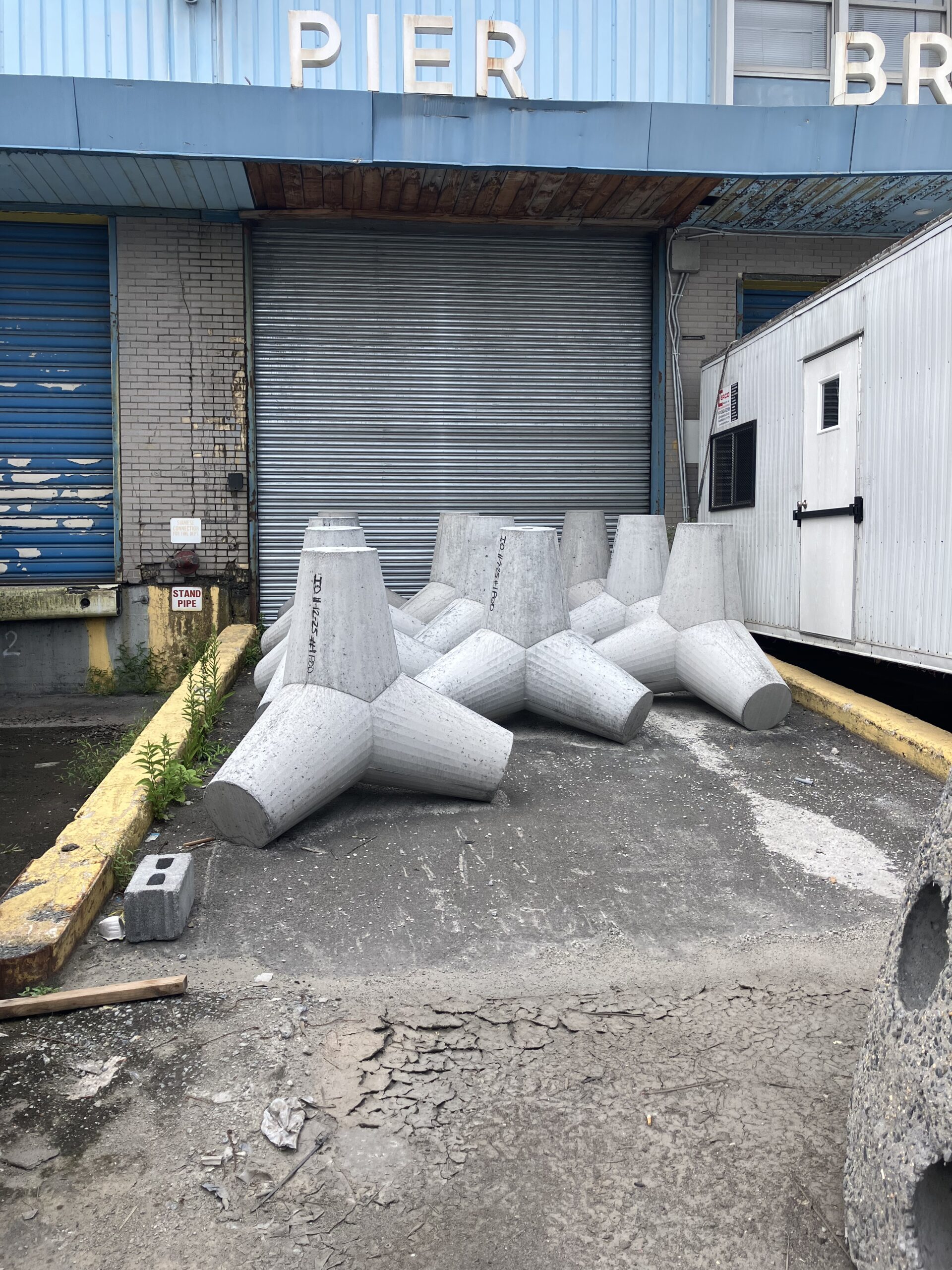
As the renewable energy market slowed, Ionic Order pivoted into water restoration. Concrete is an important feature in marine life restoration and a key part of coastal infrastructure. The company began manufacturing tidepools, pile caps, armor blocks, oyster disks, tetrapods, and seawalls, among other products. Luckily, the concrete has found an easy home with local partners like Billion Oyster Project, whose positive impact on NYC’s waterways has been staggering. For Camberdella, “That’s what we try to promote the most because we’re on the harbor, we’re in Brooklyn … It’s unique and also you feel good about what you’re making because you know you’re helping the environment.”
The NYSDOT approval only furthers this mission; Ionic Order is now qualified to manufacture precast concrete products for transportation projects city and statewide. This means New York can see the direct benefits of sustainable manufacturing for marine restoration and clean energy investments, all while keeping costs low and the carbon footprint small. The company also partners with local manufacturers, including a fellow Red Hook Container Terminal tenant and Apollo Tech Construction, located two blocks down on Bowne Street.
Despite the current fickleness of the federal government towards offshore wind projects in the country, and the proposed changes to the Red Hook Container Terminal, Ionic Order feels capable of weathering the future. “I think we want to keep investing in this facility and growing our facility and growing our team here in Brooklyn,” says Shaw. “And I think in 2027, we’re hoping to work on several high-profile local coastal projects and other backyard city projects.”
News from the neighborhood.
Red Hook & Gowanus
Want more news and features like this straight to your inbox? Subscribe to our newsletter below.
Author

Discover more from Red Hook Star-Revue
Subscribe to get the latest posts sent to your email.
One Comment
is this an Onion article or for real?