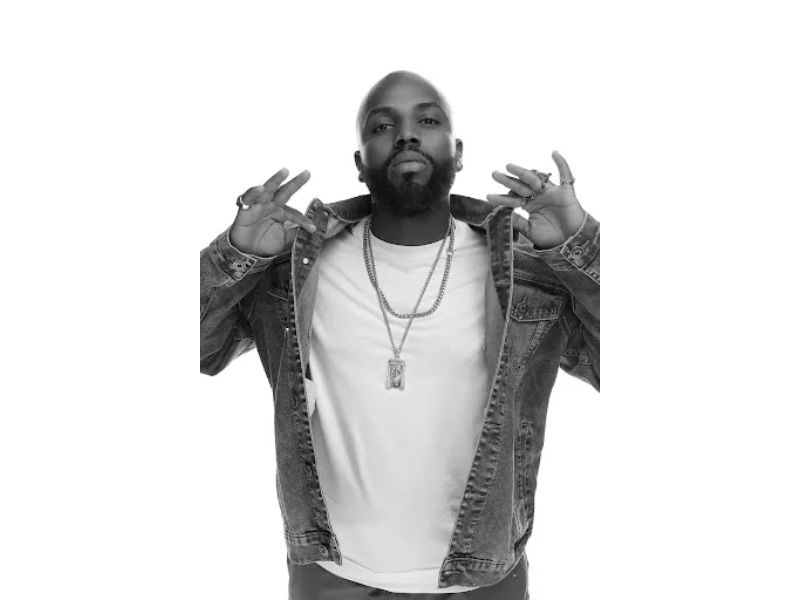
The story of the independent music artist is usually marked with challenges and hopes of eventually ‘making it big,’ and of course, signing a record contract with a major label. For rapper J.R.Clark, his path as an independent artist has brought challenges, but also success without a major label deal. Here’s how J.R.Clark found stability and success as an independent artist.
Roderick: Hi J.R, it’s a pleasure to speak to you.
J.R.Clark: Of course, thanks for doing this interview.
Roderick: So J.R, let’s talk about your origins, where are you from?
J.R.Clark: Well, I grew up in Virginia—Newport News/Virginia Beach.
Roderick: I don’t think Virginia gets enough recognition for the artists it produces.
J.R.Clark: For sure, we have Missy Elliot, Timbaland, Pharell, Pusha T. The list goes on.
Roderick: When did you know you wanted to be a rapper?
J.R.Clark: I was actually a studio engineer at first, but I got tired of recording people [laughs].
Roderick: What made being an engineer tiring?
J.R.Clark: Folks couldn’t pay their studio bill, so in my mid-20s I decided to pursue rap. I knew song structure and concepts, and I understood how to make songs.
Roderick: Who were some of your inspirations as a rapper?
J.R.Clark: When I first started rapping, I was on youtube typing ‘chill beats’, and this guy Curren$y kept coming up. I found out he was a rapper, and I started looking him up on Datpiff.
Roderick: You were a natural then?
J.R.Clark: Musically, for sure, but I took my time to get my sound right. When I started, mumble rap was so big. I tried that sound and I was like, this is not for me [laughs].
Roderick: You’re currently an independent music artist. What has been the biggest challenge so far?
J.R.Clark: I can’t say there’s been just one challenge. I’ll say that as an independent artist you have to make more phone calls yourself. You have to be involved at almost every step.
Roderick: For you, what’s the biggest difference between being independent and signing to a major label?
J.R.Clark: The major labels have the money, and when they give you a budget you have to pay that back. For me, the difference is having the machine of a major corporation behind you. Music labels are businesses, I wish more artists understood that.
Roderick: When did you feel like you’d finally made it?
J.R.Clark: You know, I guess I feel that way right now. Independent artist life is great, I’d say just having stability in my career feels amazing.
J.R.Clark: I went shopping recently and bumped into Rick Ross and then Santana. We were all buying stuff from the same place. For me, it’s a reminder that you have the power to make your own dreams come true.
Roderick: That’s amazing. Have you had the chance to work or perform with any major artists recently?
J.R.Clark: Thanks. I performed with Pop Smoke and that was a big deal for sure. I just did the 420ish festival—everybody was there: Rick Ross, The City girls, Gucci Mane, you name it.
Roderick: I heard you went to Regent University? I know they have a law school, are you a lawyer?
J.R.Clark: No way, I’m not a lawyer [laughs]. I studied criminal justice as an undergraduate and got my masters at Regent University in government studies.
Roderick: What made you study criminal justice?
J.R.Clark: I knew of so many people, even family members in federal prison. I think it was my way of understanding how not to end up in the same place I’d seen others in.
Roderick: How does your education influence your music?
J.R.Clark: I’ve been formally educated and educated by life experiences and those influences end up in my music. I was in the streets at one point, so that’s part of my history. Today, I rap about how my life is now.
I’ve traveled to so many different countries, and I’m a business person too. I incorporate all of my experiences, I’m not just talking about the streets.
Roderick: Speaking of traveling, will you be taking your music abroad anytime soon?
J.R.Clark: I’m actually going to Colombia soon, but that’s for vacation with my family.
Roderick: Oh, do you speak Spanish?
J.R.Clark: I do actually, a lot of people don’t know that. My mom is Latina—-Haitian and Dominican.
Roderick: Very cool. You know reggaeton is making a comeback, and I feel like Latin music, especially from the Caribbean is really doing well right now. Ever think about making some reggaeton?
J.R.Clark: Yea! I just did a reggaeton song called “El Trafico.” But the Latin music I really love is more old school like bachata and salsa. I’m not sure Reggaeton is my lane, but it’s nice to branch out.
Roderick: So you have a new project out, an EP called, My State of Mind: The Prelude. Can you tell me a bit about what people can expect?
J.R.Clark: I wanted to make a project that was relatable, chill music that reflects everyday people—the things we go through. My State of Mind reflects where I am in life—the ups and the downs, the joy, everything really.
Roderick: I love that. Is there a song that you really connect with from the EP?
J.R.Clark: My favorite right now is “Perception.” I talk about everything, and the way the song hits straight on, it just sets the tone for the whole project.
Roderick: Any advice for an up-and-coming independent music artist?
J.R.Clark: If the music business is what you want to do, you need to study what you’re getting into. Second, you need to have some income to fund what you do—-your job, an investor, both, whatever. Third, understand what type of artist you want to be—-your image, style, and voice.
J.R.Clark: Focus on your music skills. Today, people are so focused on clout and fame. I don’t even tell most people I’m a rapper [laughs].
If music is what you want to do, be skilled at it. Clout doesn’t equal success. You can be very famous and very broke. An Independent music artist should focus on being talented, skilled, and successful, not just famous.
Roderick: What are your music business goals for 2022?
J.R.Clark: Um…maybe work with a major label, but the timing has to be right.
Roderick: Ok last question. What do you want your legacy to be?
J.R.Clark: Ultimately, I want to leave a legacy that says to others, you can own your stuff. I want to have inspired others to own their art, and build wealth.
Roderick: Hats off to you J.R. Thanks for taking the time to speak with me
J.R.Clark: My pleasure Roderick, thanks for having me.
Listen to J.R.Clark’s new EP: My State of Mind: The Prelude, now available on all streaming platforms.
Author

Discover more from Red Hook Star-Revue
Subscribe to get the latest posts sent to your email.

2 Comments
Pingback: J.R. Clark: Find Success and Stability's an Independent Music Artist & More Trending News - News Break
Pingback: J.R. Clark: Find Success and Stability’s an Independent Music Artist – cjstudents