Thanksgiving is arguably the most important meal Americans cook in their homes all year. It is also one of the few days that people take on an entire turkey. Needless to say, many people could use a little more practice.
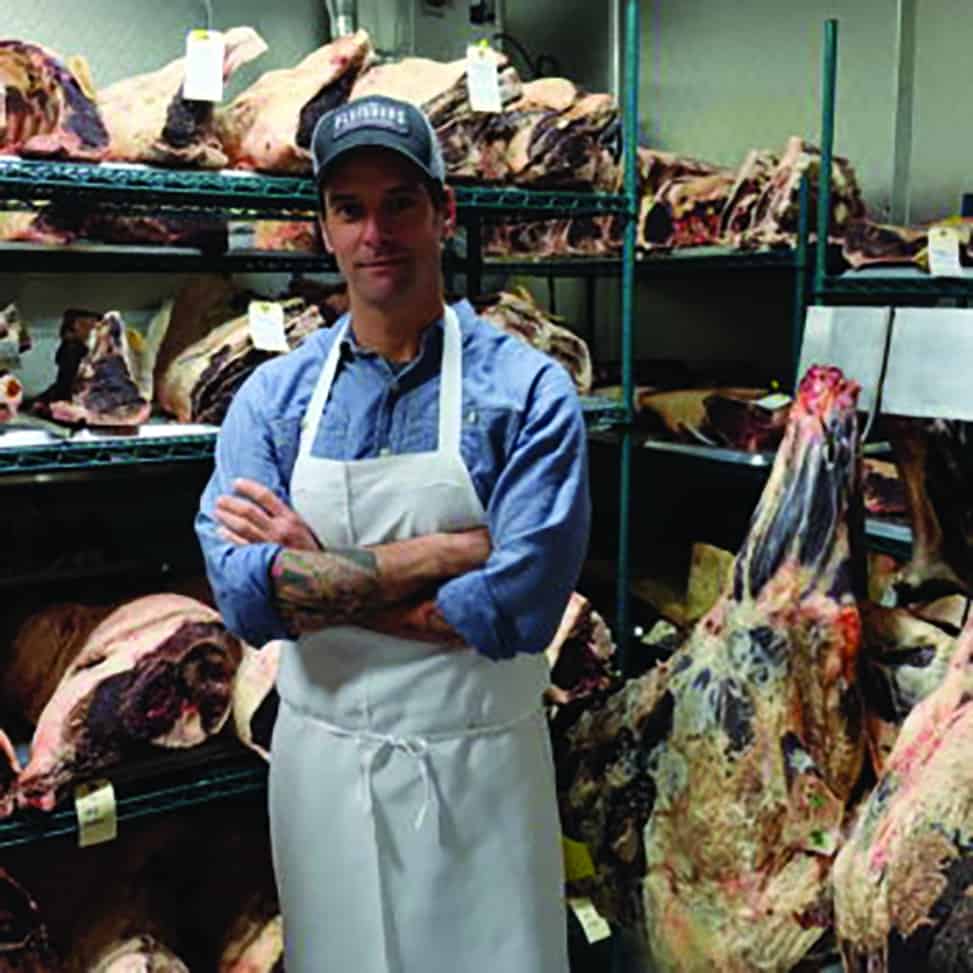
To offer people a little more insight into their holiday birds, Bryan Mayer, Director of Education at Fleishers Craft Butchery, opened up about his tips and tricks for choosing and preparing a turkey.
Broad-Breasted Turkey
One of the first questions people have to consider in their choice of bird is whether to buy a standard broad-breasted white turkey or a less common heritage turkey.
In the 1950s, the broad-breasted turkey first became the most commonly-raised breed and has held that role since. For many years, they have been the most well-known turkey variety, finding a home on most Thanksgiving tables.
“The broad-breasted turkey is your industrial standard, which accounts for your Butterballs,” Mayer pointed out, naming the type of turkey many people gravitate toward during the holiday season.
These turkeys, as their name would imply, are bred for their large breast size. Because of their disproportionate size, they are unable to procreate naturally and are often raised in an industrial setting, which raises concerns of animal cruelty – small cages, limited range of movement, and cheap feed, sometimes filled with animal bi-products.
Mayer points out that not all broad-breasted turkeys are raised in this setting. Fleishers makes a point of selling exclusively pasture-raised birds, meaning the turkeys live outdoors, with optional access to the indoors for warmth or safety. The birds are allowed to scratch and peck for bugs and grubs as they would do in the wild, while supplemented with vegetarian feed, a diet which gives the meat a more complex and slightly gamey flavor.
When asked what to look for, Mayer stresses that the best birds are pasture-raised and antibiotic free. However, he claims, nothing compares to a heritage bird.
Heritage Turkeys
Heritage turkeys, which Mayer uses for his own Thanksgiving dinners, differ from more common poultry in a number of ways.
Heritage turkeys, due to their more natural size, procreate freely. They are less standardized by industry, offering breeds indigenous to North America.
But most notably, they live longer and develop slowly. These birds have a life expectancy of 2-7 years and grow at a slower rate than their industrial cousins. Mayer notes that their slow growth rate and long lives cause them to be fattier, with a better texture and thicker skin, which keeps the meat juicy while cooking.
Though people are used to a blander bird, Mayer believes the flavors of a heritage bird offer a superior taste, sometimes buttery or nutty, and just the way a turkey ought to be.
However, because heritage turkeys live longer lives and thus take more time and effort to raise, they come at a higher price. At Fleishers, a heritage bird runs at $11.99 a pound, while a broad-breasted bird will go for $7.99 a pound.
 Cooking
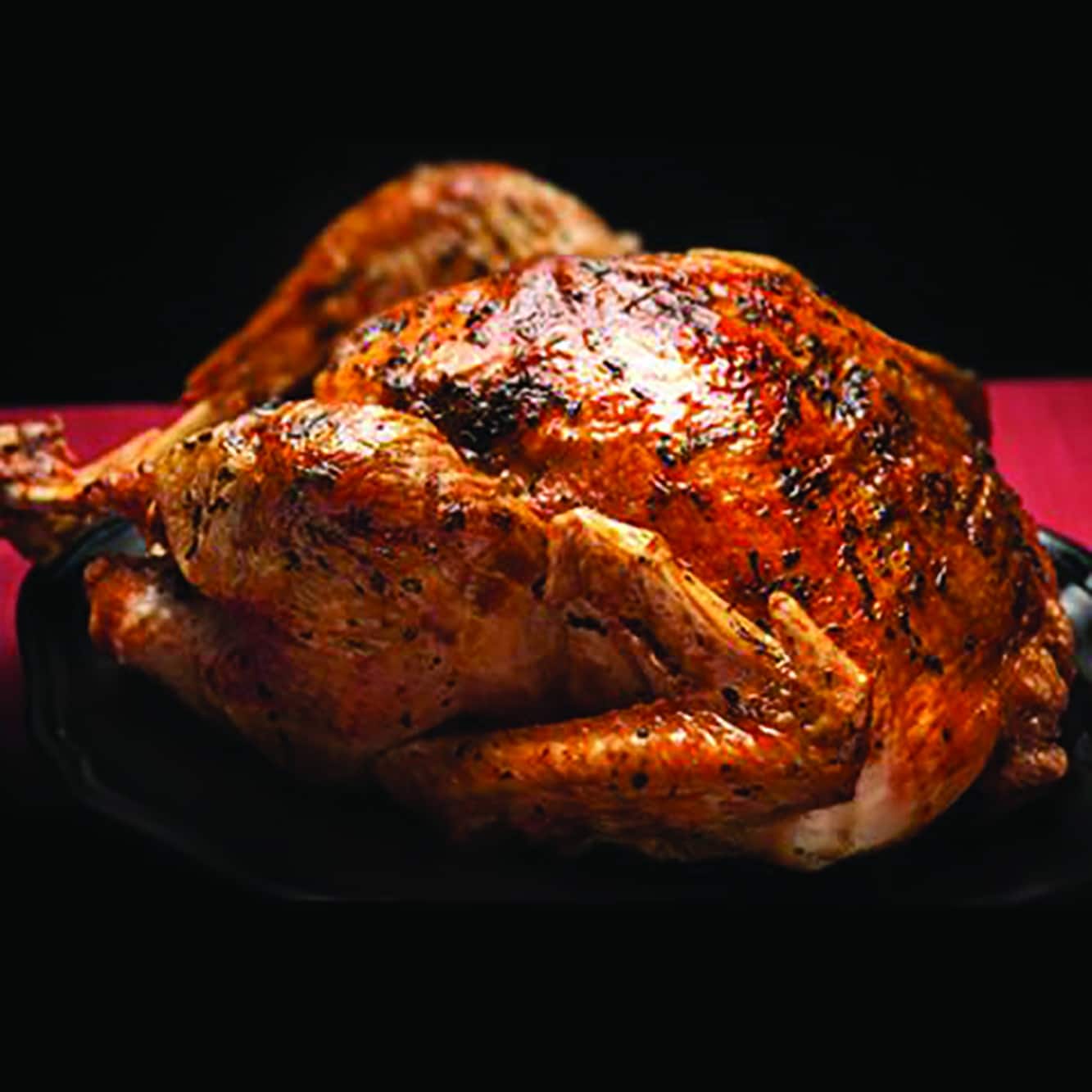
Against convention, Mayer prefers a method of cooking involving removing the turkey’s back and lying it down flat called spatchcocking. This method, he points out, allows the different cuts of meat to cook at the right temperatures – a hard goal to achieve – by giving people the flexibility to put the parts that cook longer on the edges of the pan.
The goal is to get the breast to 150 degrees and the thighs and legs to 160-170 degrees. “I check it multiple times because it cooks fast, maybe around an hour and a half.” Mayer says.
Mayer acknowledges that this method does take away from the dramatic presentation of a whole turkey, so he has a few tips for those set on keeping the bird whole, too.
If cooking traditionally, Mayer says, “You don’t want to use a deep-sided roasting pan. You want the whole bird exposed. Use a sheet pan with a wire rack for good air circulation.” This method also takes about twice as long, depending on the turkey size.
Brining and Prepping
Brining, a popular turkey preparation technique, is generally done by steeping the bird in salty water, for anywhere from a few hours to days. But Mayer prefers dry brining to wet.
“Wet brining is possible,” he says, “but the skin gets soggier and the water makes it less flavorful.”
Dry brining, done by coating the turkey with salt and leaving it in the refrigerator overnight, allows for more flavor, juicy meat, and crispy skin. Mayer even adds a little bit of baking soda to further encourage extra crispy turkey skin.
Whatever you do, Mayer says, “Stay away from butter.”
Though people often like to stick pats of butter into the turkey breast or slather it over the top of the bird, Mayer claims that this waters down the turkey and won’t settle into the muscle the way people hope it will. Instead, it causes soggy skin.
Alternatively, Mayer suggests making clarified butter or buying ghee – a type of clarified butter used in South Asian and Arabic Cuisines – which has all of the water cooked out and will not prevent the crisping of the skin.
Buying Your Turkey
You can preorder your holiday turkey from Fleishers online to pick up in one of their Brooklyn storefronts at 175 Van Dyke Street in Red Hook or 192 5th Avenue in Park Slope.
You can also call or stop by local butcher shops in your area, including G Esposito & Sons at 357 Court Street in Carroll Gardens; Paisanos Butcher Shop at 162 Smith Street in Cobble Hill; or Staubitz Market Meats at 222 Court St. in Cobble Hill.
Author

Discover more from Red Hook Star-Revue
Subscribe to get the latest posts sent to your email.