After years of talk and several failed attempts, it seems that the Brooklyn Marine Terminal (BMT) will finally get a long-overdue facelift. In May this year, the city traded a container terminal on Staten Island to the Port Authority for 122 acres along the Red Hook waterfront. The plan is to transform the Brooklyn Marine Terminal into “an asset for modern maritime jobs and vibrant mixed-use community hub,” according to the city.
What this entails exactly is yet to be determined and will be decided by a task force of elected officials, unions, waterfront stakeholders, Brooklyn businesses, workforce development, the adjacent community and the maritime industry. If all goes well, the task force will have a master plan ready in early 2025.
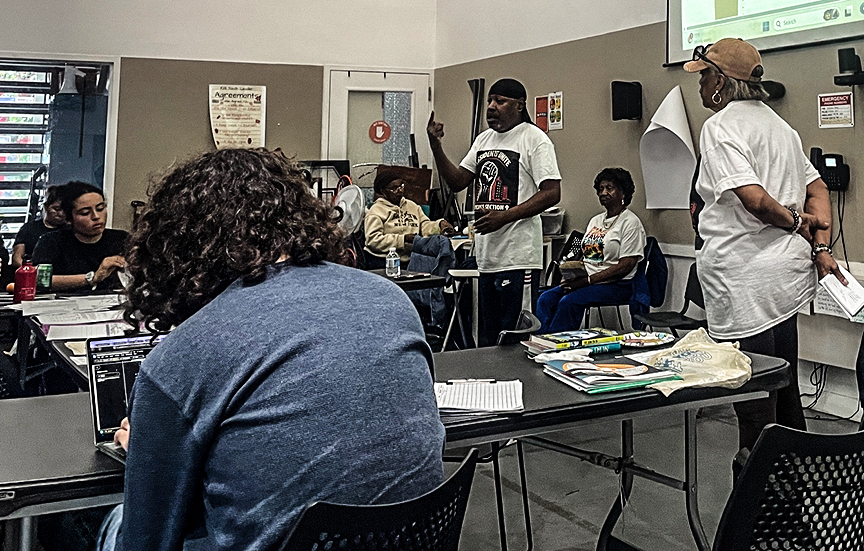
Input from the community will be an essential part of the planning process, according to the Economic Development Corporation (EDC), which leads the project on behalf of the city. While the truth in that claim has been called into question (including by this paper’s editor-in-chief, George Fiala), the EDC is holding a pair of public workshops for community members to share with the task force what they want to see in this “21-st century maritime port and mixed-use community.” The first workshop was held in Red Hook on Saturday, Sept. 28, and although it remains to be seen how much the community’s wishes will actually count in the end, Red Hook residents, local business owners and others interested in the future of the New York Harbor made sure that their questions, concerns and wishes would at least be recorded.
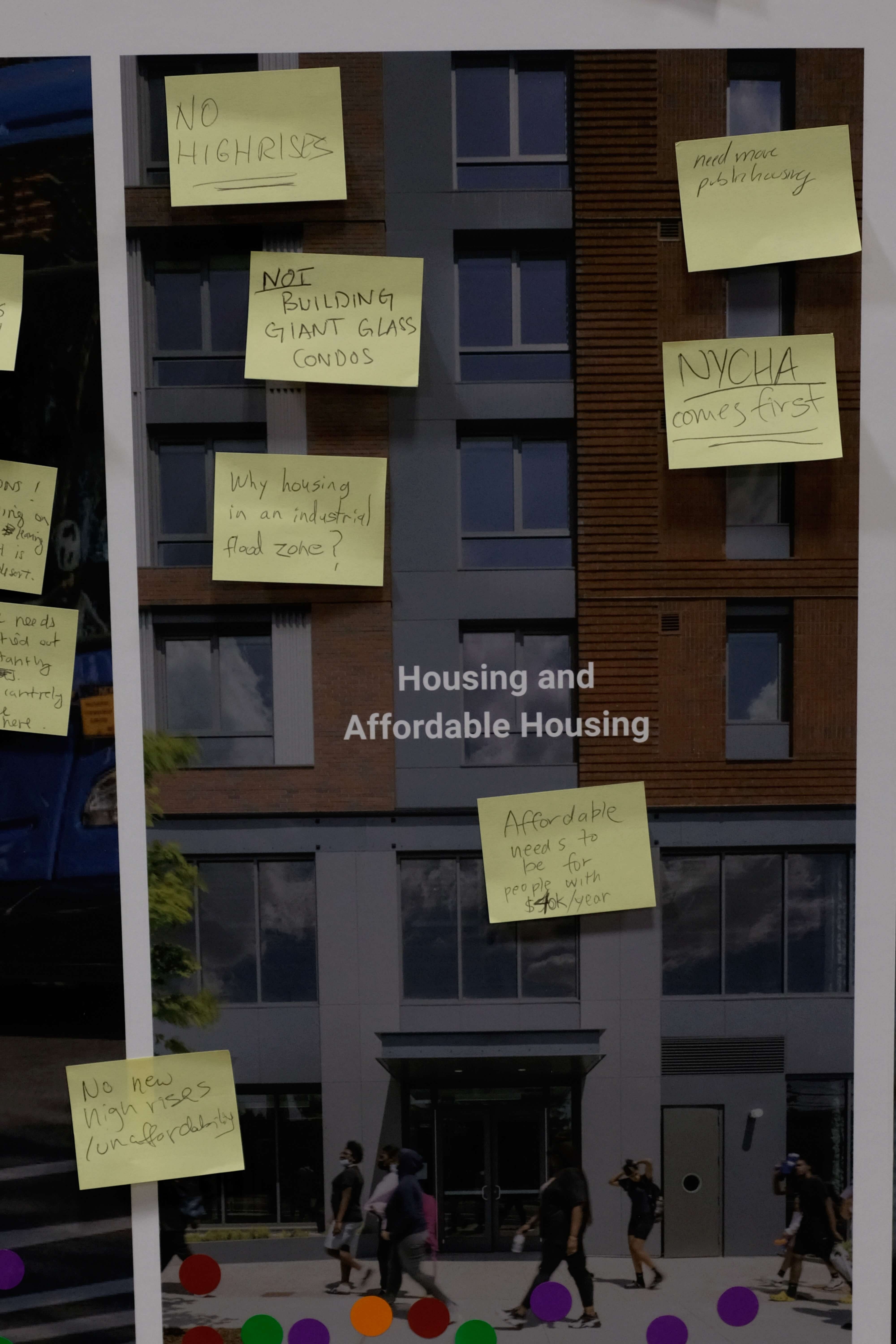
It was illuminating to review the hundreds of sticky notes attached to the maps and poster boards set up on the second floor of the Miccio Center. On one board, attendees were asked to share their priorities, choosing between areas like housing, climate resilience, truck traffic and maritime job growth. Based on the colored stickers — the colors signified your affiliation to the neighborhood: green for Red Hook residents, purple for people living in the surrounding communities, blue for Brooklyn Marine Terminal workers, orange for those working in the area, and brown for everyone else — truck traffic was a top priory for many; as was public parks and open space. One thing in particular stood out, however: Neighbors do not want Red Hook to look like downtown Manhattan. Post-it notes with “NO HIGHRISES,” “NOT (sic.) BUILDING GIANT GLASS CONDOS,” “No new highrises,” and “Why housing in an industrial flood zone?” had been placed on the board, highlighting the fear that some community members have that the Red Hook waterfront will be offered up to the city’s big real estate developers.
Climate resilience and sustainability were also frequent topics of conversation among attendees. Some post-it notes asked that adequate flood protection be prioritized, and Dr. Michael Menser, associate professor at CUNY and co-director of the NYC Climate Justice Hub, hoped that the redevelopment of the marine terminal would be an example of a just transition.
“How do we go to a more resilient renewable energy future in a way that enhances the opportunities of frontline communities who often get excluded?” said Menser, who also sits on the “waterfront, environmental justice, resilience” advisory group to the BMT task force. “How do you empower them and also bridge to the new economy that will promote renewable energy, reduce emissions, adapt to the new climate and address the racial injustices in the past, bringing that all together in one project? You can really do that in Red Hook.”
Some community members at the workshop, while hopeful, were worried about the pace of the planning. The redevelopment of the Brooklyn Marine Terminal is a massive and complex undertaking, where hot-button issues like a citywide housing shortage, flood risk, air pollution, blue-collar job preservation and historic injustices intersect, and several people noted that the timeline for the project seems overly optimistic and rushed. Cindy, donning a bike helmet as she crisscrossed the Miccio Center’s floor, said that she feared things would be missed because the project was moving so fast.
For much of the three hours that the public workshop — which was more of an open house than a workshop — the space was filled with people curious about the future of Red Hook’s waterfront.
“There’s a lot of conversations happening, connection happening among the community, which is nice to see, although it doesn’t feel that effective for finding consensus and talking about the deeper issues at play in this situation,” said Eve Marenghi, a Red Hook resident. She, like Cindy, had concerns about the timeline. “The best case scenario is that the people in charge of this process decide to slow it down so that we can foster deeper community engagement and create spaces where we can connect with each other and listen to each other and have more focused conversations where we get to the heart of how people feel.”
Mikelle Adgate, senior vice president in charge of government and community relations at the EDC, explained that the task force will get to make the final decision on how the city and state move forward on the redevelopment of the marine terminal. “And so that means that not just our elected officials, but neighborhood and resident organizations, industrial maritime organizations and community development groups, who represent such a wide variety of stakeholders across all of these neighborhoods, will be in the trenches with us as we’re learning about the site conditions, the feasibility analysis, the market analysis, all of those things. And ultimately, they will have the sign-off on that vision plan,” she said.
Author

Discover more from Red Hook Star-Revue
Subscribe to get the latest posts sent to your email.