There was a time when the NYC waterfront was a blighted mess. When I first started working in New York, first in the Village where encounter the Hudson River, and then here in Brooklyn, and the East River, I took for granted that the burned out piers I saw were an indication that the city just didn’t care about the water.
It reminded me of a comic book I had read in high school, Prince Namor the Submariner. Namor was from the undersea city of Atlantis (at least in the Marvel Universe) and a powerful scene (depicted to the right) was when he surfaced amidst the garbage strewn river right by the Brooklyn Bridge. His disgust strongly influenced my 15 year-old sensibilities.
In the Bicentennial year of 1976, the city presented a festival of ships calling it the Harbor Festival. It celebrated our waterfront, which still at that time housed a bustling shipping industry. It continued for a few more July fourths. In 1978 I started working for a local paper around here that produced a special issue for the Festival each year. My job was to sell ads, and I met executives from shipping companies, the Port Authority, and even the Longshoreman’s Union (Local 1814 of course), and developed a sense of the importance of the waterfront.
By the mid 1980s, much of that business went to New Jersey, who had the large amounts of land needed to build large container terminals, which the industry was moving towards. The once bustling shoreline from Williamsburg to Sunset Park became home to the homeless who snuck onto the abandoned piers through holes in the barbed wire fences. The one exception was the Red Hook Container Terminal, itself a downsizing of a planned containerport that would have spanned the length of Red Hook.
In those days, land in what is now called the Columbia Waterfront District was not worth much, as the once thriving neighborhood became isolated by Robert Moses’ BQE, and money moved east to Court Street, leaving crime and lots of vacant lots behind.
Fast forward to 2010 when I began this paper. The waterfront was becoming more valuable, as the Two Trees real estate developers showed the way in Dumbo, and the big question was when the city would kick out the Terminal in favor of Brooklyn Bridge style expansion, which was luxury hotels, malls, and condos surrounded by parks with waterfront access.
The thought was that it wouldn’t happen for a while because NY is a Democratic town, and Democrats depend on union support, and all the waterfront workers were either ILA or Teamster members. The Port Authority was stuck in the middle and only grudgingly extended the terminal lease, first ten years, and then just five, seemingly until they could figure out how to get rid of them and sell out.
Well people, they figured it out this year, as you probably have read here and other places. The 120 acres is now controlled by the NYC EDC, and their job is to create a Master Plan that will redo the waterfront.
This is where you guys come in.
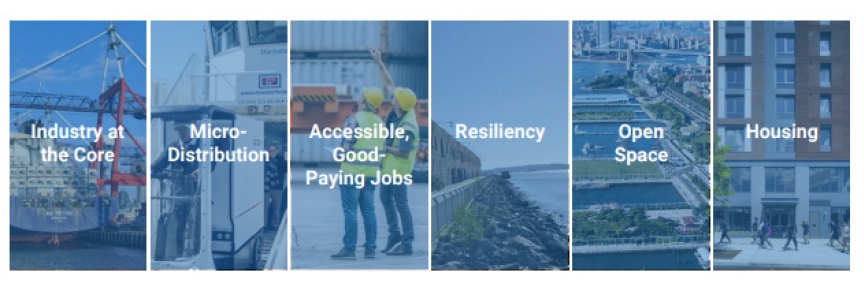
There is a website where you see what EDC’s general idea of the Master Plan is. I reprinted their vision below, which includes marine business, parks and what looks like tall residential buildings, like in Brooklyn Bridge Park. Their illustration of Open Space is actually Brooklyn Bridge Park.
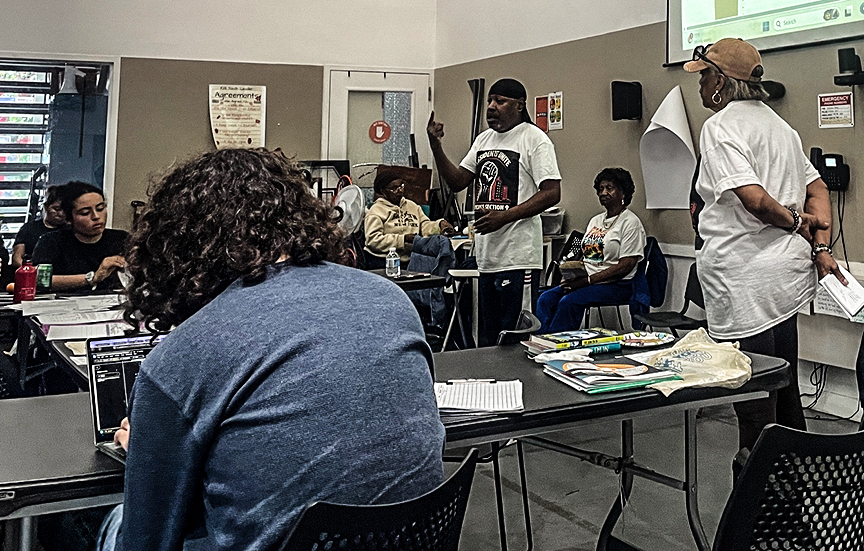
But we live in more modern times when these kinds of decisions are made somewhat less unilaterally than in the Robert Moses days. EDC has hired a consultant to manage the local community in the decisions that will shape the future of Red Hook and the Columbia Waterfront District.
I see a couple of red flags that give a hint of how much community input they are willing to allow. One is that NY State is involved. The Empire Development Corporation does real estate development – one example we all know is the Atlantic Center, which includes the Barclay Center. The state’s involvement supersedes local zoning laws, making it easier to build big.
Another red flag for me is that while they proclaim a great desire for community input, they haven’t reached out to this community newspaper (although they did answer some of my emails).
How can we all be involved?
For the community to do the best job possible, there has to be some sort of unity and consensus in developing our own community plan that makes sense and creates a viable position that EDC will have to listen to.
There are many community voices in this waterfront area, which includes more than just Red Hook. Plans are afoot to create a coalition of everyone, which will join the communities and their constituencies. At some point you will see flyers and social media inviting you to take part in some old fashioned grass roots visioning.
Do it!
Author

Discover more from Red Hook Star-Revue
Subscribe to get the latest posts sent to your email.
2 Comments
Great writeup, George. If, and when implemented I think the project will be transformational for the area and surrounding neighborhood. However, I hope part of the plan include giving residents of the NYC Housing the option to purchase their units if they can afford to.
Pingback: The community shows out at first BMT public workshop, by Oscar Fock – Red Hook Star-Revue