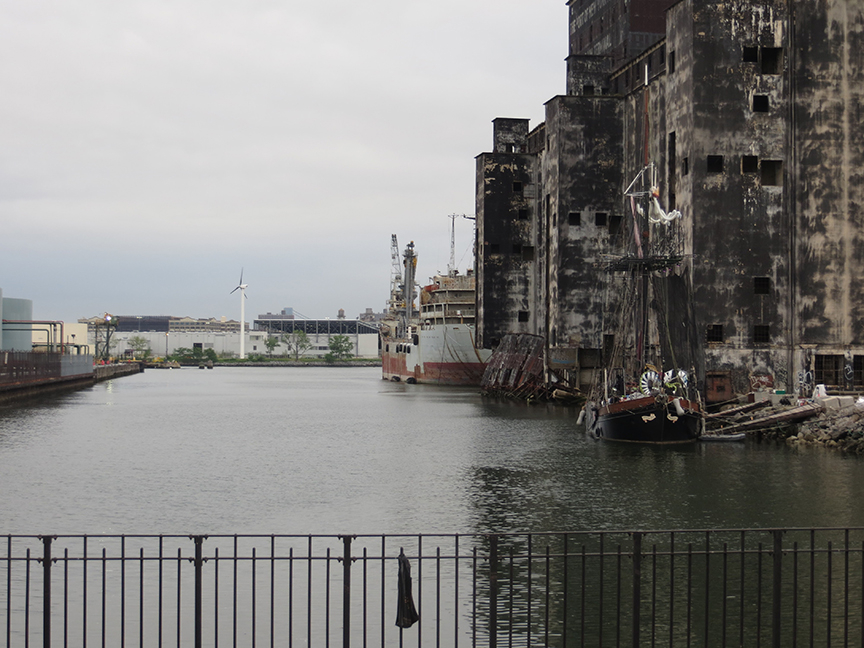
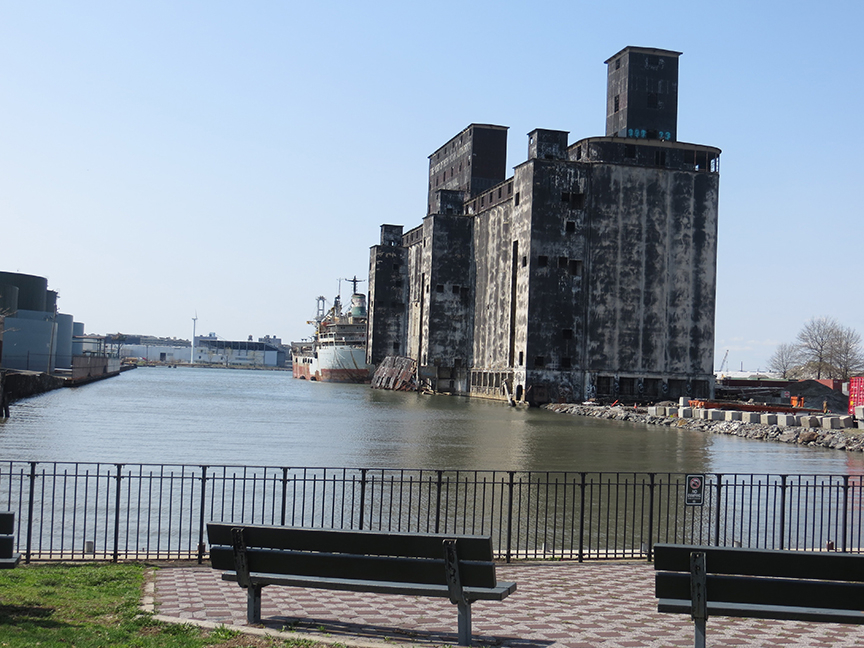
A “magnificent boondoggle” — that’s how Thomas Flagg of the Army Corps of Engineers described the Red Hook Grain Terminal in 1984. Built in 1922 as part of an extension of the New York State Canal System, the structure has never made back the $2.5 million it cost to build, equivalent to nearly fifty million dollars today, adjusted for inflation. Even at its opening, Governor Nathan L. Miller admitted that the grain terminal and adjacent canal were essentially obsolete, but could be good to have, just in case.
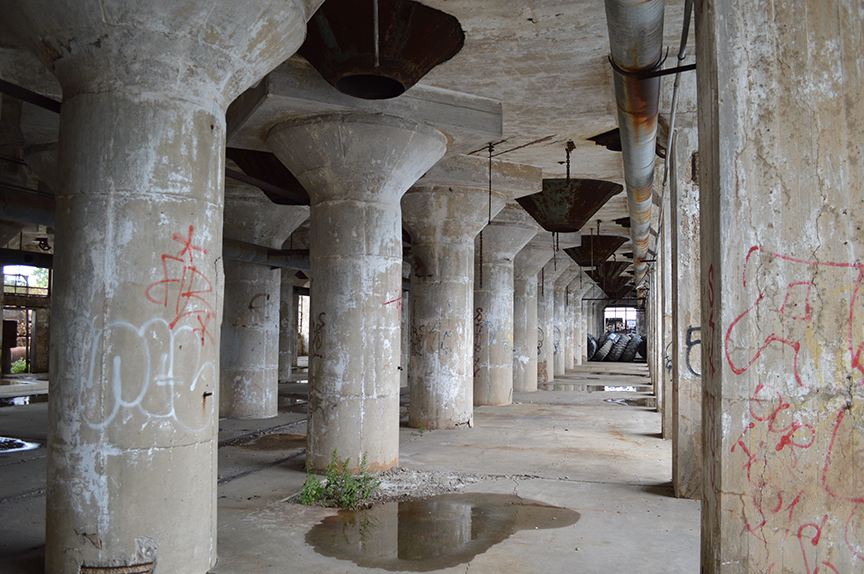
In any case, the grain terminal has stood as a prominent structure in Red Hook for over a century now, with a novel idea for its use being proposed every few years. In the interim, the terminal is most frequently used as a destination for urban explorers, like Michelle Gold and V. Reichl, who post images of their escapades in the terminal on social media.
The terminal’s fate has been tied with that of the Quadrozzi family for decades. In 1997, John Quadrozzi Sr. bought the grain terminal and the 46 acres of land surrounding it and began using it for storage. After his passing in 2004, his son, John Quadrozzi Jr., who serves as president of Maspeth Concrete Corp and as co-owner of Prospect Park Stables, took over ownership of the terminal.
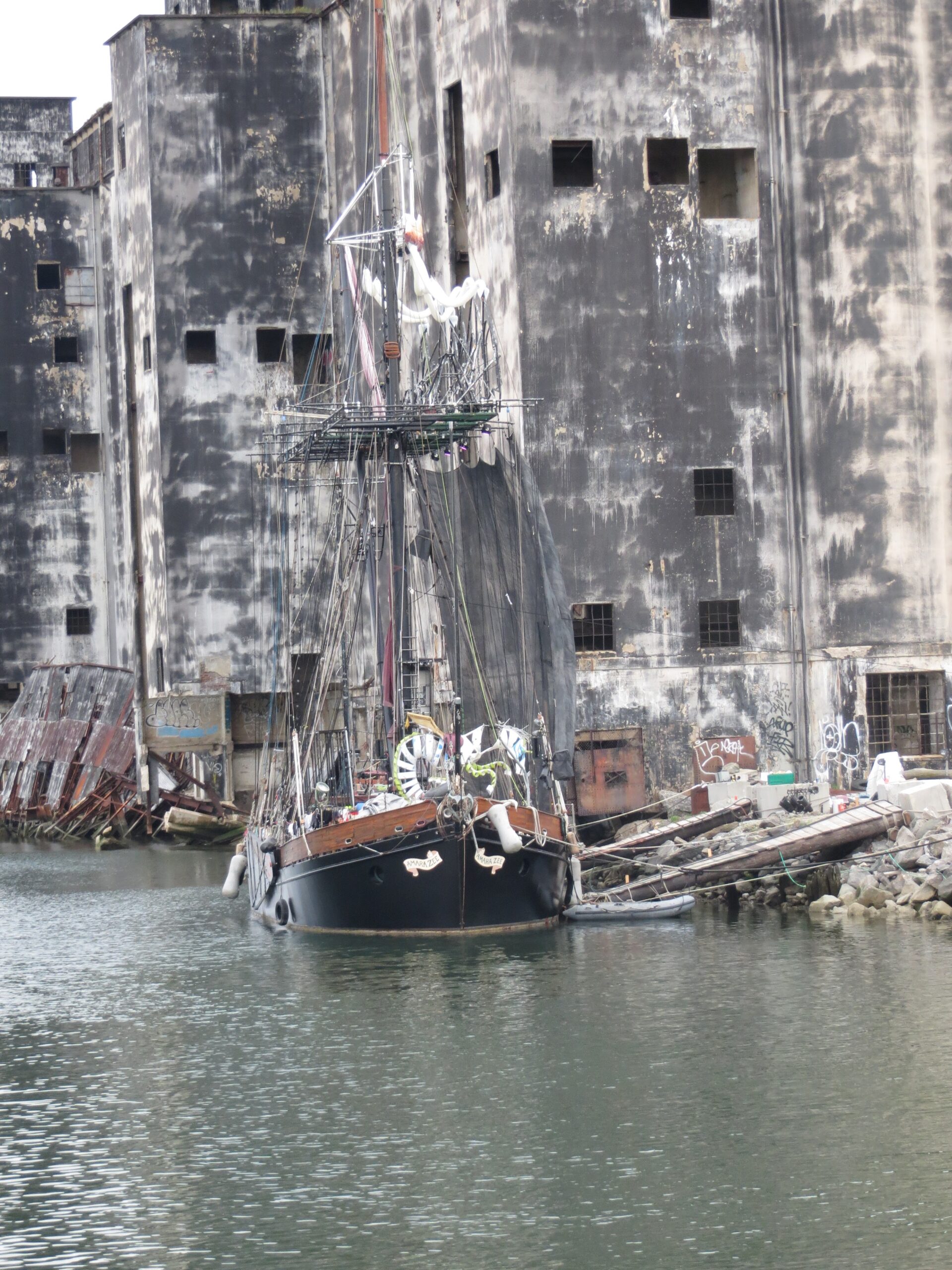
Despite ideas from investors and the public about what to do with the building, no substantive plan for its restoration has materialized. In 2007, Quadrozzi attempted to build a concrete manufacturing plant using the terminal’s silos for bulk cement storage. The plan failed to receive the required approval from the New York State’s Department of Environmental Conservation.
It was not the first or last time that one of Quadrozzi’s ambitious plans in western Brooklyn fell through. Quadrozzi later created a plan to bury toxic sludge from the Gowanus Canal in Red Hook, thus allowing him to expand his pier and dock larger ships. In 2013, the state declined to pursue the initiative, owing to a lack of public approval.
In the past, the Quadrozzi family has also been embroiled in legal troubles. In 2000, John Quadrozzi Jr. bought property in Cobble Hill’s Historic District, where owners are required to keep buildings in “good repair” as per city guidelines; this includes preserving historic facades and interiors. Ten years later, the city sued Quadrozzi, alleging he had failed to maintain his buildings, to the point that they were in danger of collapsing. Despite agreeing to repair the buildings in 2013, Quadrozzi never made the necessary alterations, resulting in fines of $150,000 from the city.
In 2006, Quadrozzi allegedly dumped a heap of toxic waste into Gowanus Bay and illegally constructed a fence along the Red Hook Recreation Area, blocking its waterfront views. The ensuing legal battle with the state’s Department of Environmental Conservation saw hundreds of thousands of dollars of fines levied against Quadrozzi. As far as can be ascertained online, those fines are still outstanding.
Another ship?
As early as 2015, Quadrozzi was interested in docking the decommissioned ocean liner, SS United States, which is owned by the S.S. United States Conservancy, at the terminal. Built from 1950-1951 for United States Lines, the SS United States is the largest ocean liner ever built entirely in the U.S., and the fastest ocean liner of its kind to cross the Atlantic Ocean in either direction, a record that remains unbroken. (The author’s grandparents once sailed on it and kept some memorabilia from their voyage, including a menu from the dining hall.) However, in the age of the airplane, the ocean liner has slipped into obsolescence, leaving the question of what to do with the ship — scrap it for parts, turn it into a museum, sink it for use as an artificial reef, or find some other use.
Quadrozzi envisioned restoring the interior and installing offices, restaurant spaces, entertainment venues, and a maritime museum in the vessel. In March 2026, a source who asked to remain anonymous stated that plans to bring the liner to the grain terminal were still in motion. However, there have been no official announcements about the plan and the ship remains slated for sinking off the coast of Florida by the Okaloosa County government.
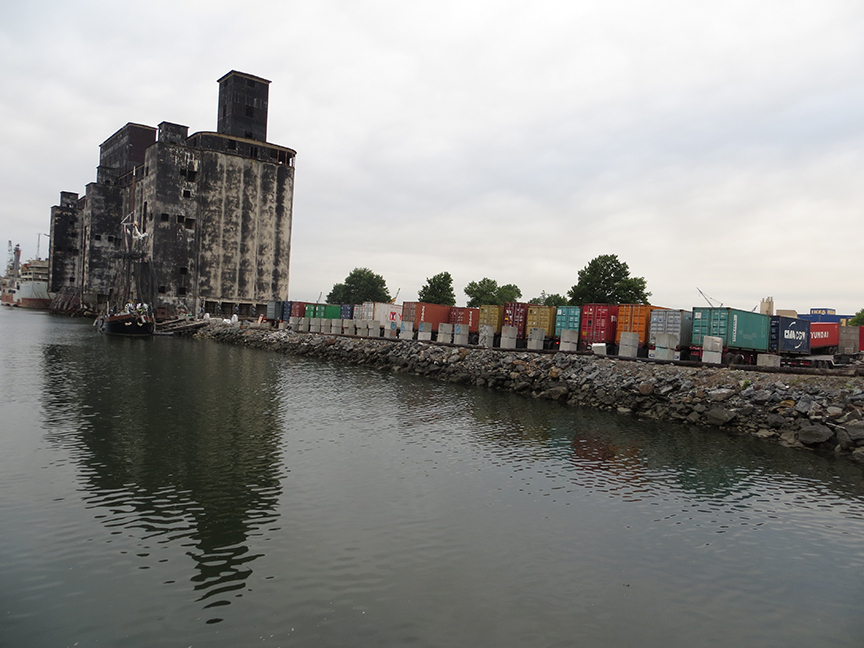
Over the years, the grain terminal has also been used by several artists. In summer 2002, Zacho Dance Theater presented a performance involving projections on the terminal’s walls and dancers scaling its sides. Music videos were filmed in the terminal for Lorde’s “Team” and David Bowie’s “Valentine’s Day,” respectively, both of which were released in 2013. In 2025, John Quadrozzi Jr. brought on a team of artists with the intent of collaborating with them on a project involving the grain terminal’s restoration; however as of January 2026, Quadrozzi had been out of contact with the artists for some time.
Of course, the people of Red Hook have their own ideas about alternative uses for the terminal At local thrift store tiburon 2 red hook, a clerk hopes that it can be converted into a public space for everybody to enjoy. A fellow reporter at the Red Hook Star-Revue would love to see it transformed into a park amidst the ruins, similar to the disused Untermeyer Gardens estate in Westchester or the plans for the Roosevelt Island Smallpox Hospital. Or, perhaps the grain terminal’s history of impasse will carry on, as at least one Red Hook resident hopes. “Keep it the way it is,” said the local, under condition of anonymity; “That way I can keep breaking in to explore it.”
Discover more from Red Hook Star-Revue
Subscribe to get the latest posts sent to your email.
One Comment
This artiicle is a hatchet job on behalf of the Okaloosa Board of Supervisoors who wish to sink the SS united States off the Coast of florida. Mr. Quadrozzi with others has the couraage to stand. up for the people of Brooklyn to potentially create one of Brooklyn’s greatest tourist attractions at the Gowanus pier. Okaloosa County is now nervous that our quixotic last ditch effort may succeed. Join with the New York City Council and thousands throughout the Cit and the country to support the poeple of Brookly, not fish off the Coast of Florida. New York Coalition to Save the SS United Statss