On Deck
Truth, Prince and the American Way. Last month, the British newspaper The Guardian proudly declared Welcome 2 America the best album of Prince’s last two decades. They’re hardly alone in praising the record Prince shelved in 2010 and, fair enough, Prince never managed to surpass his remarkable album-a-year run from 1984’s Purple Rain to 1988’s Lovesexy. But Prince’s final years (or decades) shouldn’t be dismissed so readily. That 20-year span notably includes The Rainbow Children (2001), Musicology (2004), 3121 (2006), Plectrumelectrum and Art Official Age (2014) and the two volumes, or phases, of HITnRUN (2015), all great albums by any measure.
But something else has happened in the rush to praise W2A. In June, Sony Legacy Recordings and the Prince Estate gave The Truth its first vinyl and first standalone issue as a limited Record Store Day release. The album had been buried in Crystal Ball, a ragtag box set of unreleased tracks, in 1998. It’s one of the many mysteries surrounding Prince’s release decisions (for example, not releasing Welcome 2 America when it was completed in 2010). The largely acoustic but heavily produced album could have made waves in 1998 with a proper release. He was working (if sparingly) with Kate Bush, Sheryl Crow and Joan Osborne in those years, and his smart, sweet, unplugged set could easily have found fans in those crowds. It might have made waves in 2021, too, but unfortunately, The Truth was buried again.
Nevertheless, Welcome 2 America holds its own against the best of Prince’s later works. What made his unparalleled 1980s run so amazing was that there was never a throwaway track. That rule didn’t hold in the following years, but W2A has more than its share of memorable songs: “Running Game (Son of a Slave Master),” “Born 2 Die,” “One Day We Will All B Free” and the infectiously incendiary title track make it a significant addition to the catalog. As ever, he’s a brilliant arranger, and his use of the backing vocalists—especially Liv Warfield—define the sound of the session. Both can be found on streaming services, and both are among the best albums of Prince’s last two decades.
Gang of Forever. A posh, oversize box set with a sticker price of $60 for CDs or $140 for LPs is a fine hot-do-you-do coming from a bunch of old Marxist punk rockers, but if any band from the initial explosion of British bands circa 1976 is deserving of coffee-table treatment, it’s Gang of Four. They were the smart ones, clean and chaotic, setting expectations with disco rhythms and undermining them with one of the biggest electric guitars rock has had the pleasure to know.
They were always artful, making the big 77-81 seem not utterly inappropriate. As the name implies, it only covers the band’s first four years, the two albums and two EPs made by the initial line-up, a previously unreleased live recording and 90 minutes of demos. The upsell is 100-page, hardbound book with band history and reminiscences, along with testimonials from the bands they toured and played with, all put together—down to the design and proofreading—by the band, and dedicated to guitarist Andy Gill, who died in February, 2020, as they were compiling the set.
Gang of Four has outlived in importance its wave of early 00’s imitators (cf. Bloc Party, Franz Ferdinand). Back in June, a tribute album—the industry way of monetizing homage—came out on the Gill Music imprint. The Problem of Leisure: A Celebration of Andy Gill and Gang of Four is respectable, even occasionally admirable, but it shows (like the 2005 Return the Gift remix album) that the original Gang left no room for improvement. 77-81 only has so much value-added to offer those who already albums, but it’s a great set for the fetishists and completists.
ON STAGE
Black Remembrance. I attended a Rooftop Films preview of two episodes of Spike Lee’s HBO miniseries NYC Epicenters 9/11➔2021½ and haven’t been able to bring myself to tune in for the rest. I was impressed, but it was too raw, too much emotion for me to take in. I may get back to it, but I’m planning on marking the 20th anniversary of the World Trade Center Attacks with Onyx Collective at Abrons Arts Center in lower Manhattan. The jazz-leaning aggregate first caught my ear in 2018 when they played a set at the Eldridge Street Synagogue with saxophonist Roy Nathanson and guitarist Marc Ribot in the lineup. A few months later, they crossed my radar with an inspired cover of “Within You, Without You” on the enjoyable Beatles tribute album A Day in the Life: Impressions of Pepper. They’d already been around for four years at the time, though. I’d just missed the boat. With saxophonist Isiah Barr as the only constant, it’s hard to know what to expect, but they usually work a convincing blend of r’n’b grooves and jazz in ways that Heroes Are Gang Leaders and Standing on the Corner have taken to more recently. There’s not much advance word on their Holy Ground: Land of Two Towers, but I’m putting my trust in them for a mix of perspective and diversion.

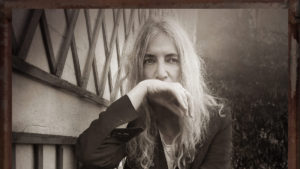
Patti Has the Power. The first time I saw Patti Smith in concert was at Central Park Summerstage in 1995. I’d known her records since adolescence but never had witnessed her force in person. I was surprised, a bit confused and more than a little disappointed by the awkward, emotional set, her first appearance in years and shortly following the loss of her brother and her husband, MC5 guitarist Fred “Sonic” Smith. I respected the turmoil, but didn’t get the Patti Smith I’d heard on record. Every time I’ve seen her since then, however, she has more than delivered, and it’s been more than a few. The fragile sincerity of that first show has proven to be part of a resiliency no less genuine, as evidenced by her 1988 song “People Have the Power” (written with her husband), a fairly trite protest anthem that becomes absolutely inspirational in concert. She and her band will be returning, in full power, to Summerstage Sept. 19.
Author

Discover more from Red Hook Star-Revue
Subscribe to get the latest posts sent to your email.