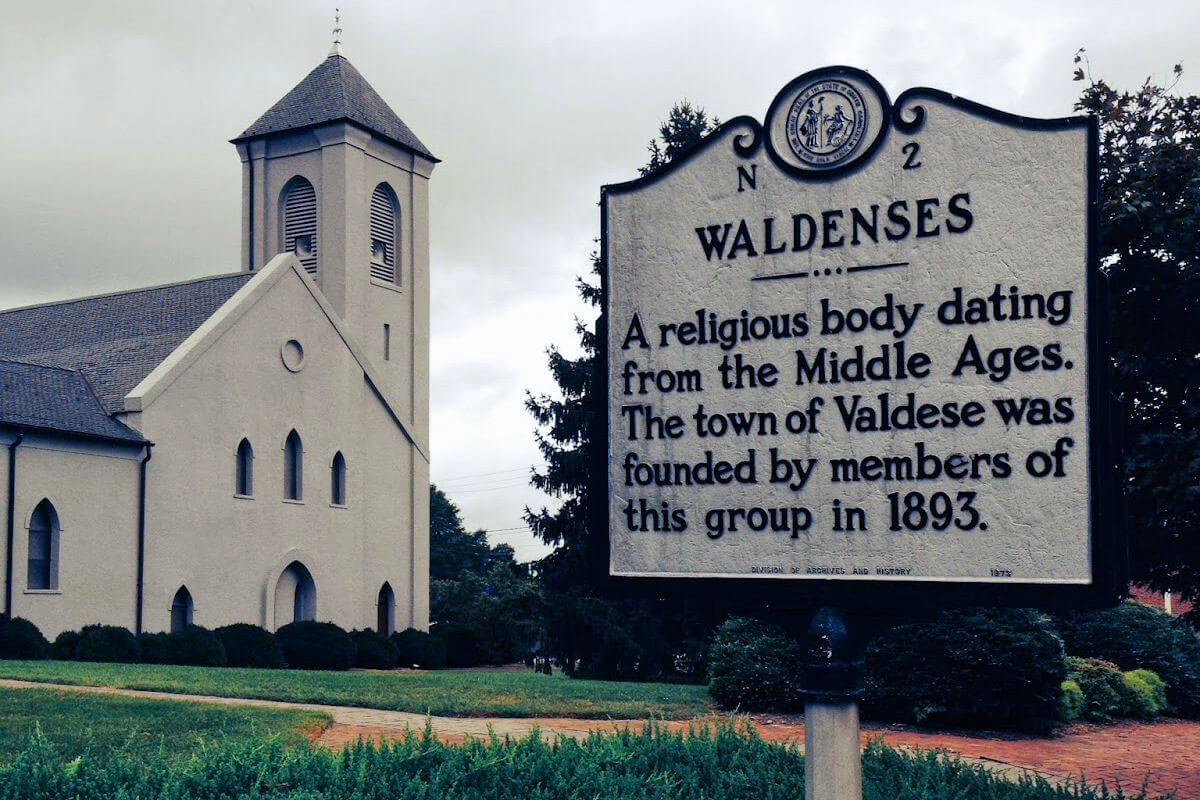
Italy has always been a Catholic country thanks to the Pope living in Rome. That being said, ever since the XII century in the boot there’s a little Protestant community, called Waldensian Evangelical Church, which makes a lot of noise in both Italian and European public debate.
The Waldensians number only 25,000 in Italy and 45,000 worldwide of which 5,000 reside in the US. The Church has succeeded in gaining interest for its very liberal beliefs about homesexual couples, abortion and immigrations.
Waldenesian pastors bless same sex couples in church, which is still not commonplace in Italy or Europe, where the Catholic Church is still against LGBT unions, calling them “devilish”.
The Waldensian Church has also taken a stand against any kind of racism and spends lots of money per year in order to house migrants coming from Africa, Asia other poorest countries.
These are the reasons why the Waldensians are today charged by many people to be liberal, or sometimes leftist.
“We don’t complain about how people define us, but what’s not fully understood is the reason why we are liberal, which lies in the Bible” said Erika Tomassone, a female pastor and deputy moderator of the Waldensian Bureau, which is the Church’s executive government.
As every protestant church, the Waldensian believes that every man has a self responsibility on its action and this led the Church to be tolerant of the differences among the civil society. “Anyone is free to do what he wants, if this does not remove him from God” remarked Tomassone.
Maybe the main reason why the Waldensian Church is so open-minded about the rights of the marginalized minorities lies in the fact that this Church had been itself a marginalized group for centuries, because of its faithfuls’ protestant beliefs.
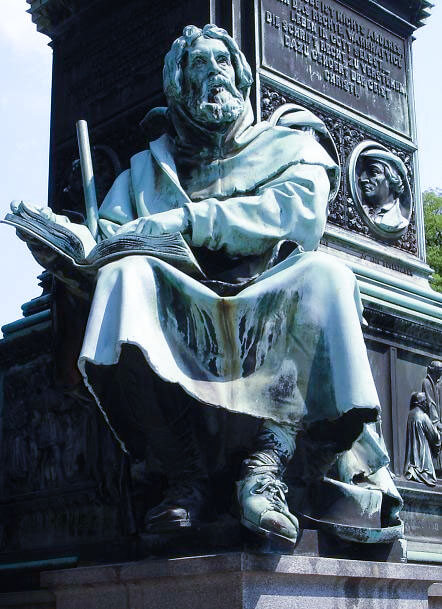
The Church was born in the XII century as a group of preachers thanks to Peter Waldo, which gave its name to the community, who wanted to preach the bible in public even if he wasn’t a priest and he did not speak latin – which had been the only language admitted by the Catholic Church to read the Bible until the 60s. Because of Waldo will of public preaching, he and his followers were declared heretics by the Rome Pope in 1184.
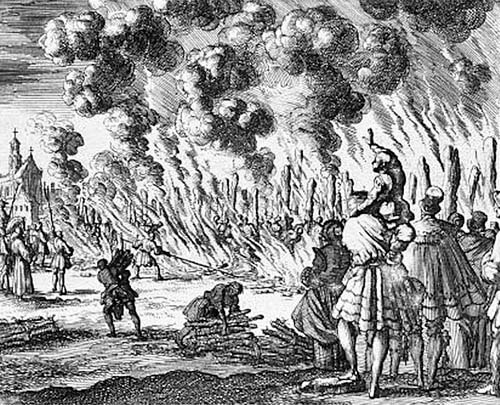
Since then the Waldensians have continued to preach alone, under the siege of the catholic discriminations and persecutions, until in the XVI century Martin Luther and John Calvin changed their history promoting the Protestant Reform. “Now we are the Church we all know thanks to the Reform, even if, after we joined it, in Italy persecutions had not stopped till the XIX century” continued the pastor Tomassone.
Even if these events seem to be far distant from today, they are still impacting on waldensian consciousness, pushing it to champion liberalism and democracy. Indeed evey stand taken by the Church is not imposed by a Pope or a Pastor, but decided amid its faithful’s assemblies.
In the past even the waldensian migrations were organized by the community of faithfuls, who emigrated to USA during the XX century creating new communities in New York, North Carolina, Michigan and Ohio, where the Waldensian American Society has today as a commitment the “Integration of and advocacy for Third World refugees and immigrants”.
Because of similar positions, one of the problem that the Waldensian Church is still facing today is that many people regard it as a political party more than a Church, because of its moral and ideological values. But yet these values are directly derived by their interpretation of the Bible, read with the awareness of the time when it was written, which is the reason why the Church is not against omosexuality, onanism or abortion.
Indeed the waldensians are mainly a religious confession, which believes that all the humans are equals careless of their origins. That’s why we could say that thanks to their religious beliefs they are liberal (or leftist), and not vice versa.
Besides waldensians are also a source of progress in Italy and Europe, because they’ve shown how the past tradition should not struggle everytime with the present. Nowadays this is a lesson that many people need in order to set up a better and more opened debate about the relationship between civil rights and traditional values.
Past and present live togheter in the Waldensian Evangelical Church, that is a good example in a time where many mass movements are now questioning the western historical background, which is not only made up of slave traders and sexist people, as there are communities, like the waldensians, who have taken from their difficult past the energy to help weakest people and to create a better world.
Dario Pio Muccilli is the Star-Revue’s European correspondent. He lives in Turin, Italy.
Author

Discover more from Red Hook Star-Revue
Subscribe to get the latest posts sent to your email.