News from the neighborhood.
Red Hook & Gowanus
Subscribe to get the Star-Revue’s newsletters throughout the month.
Sure, high school reunions can be a chance to reconnect with old friends and share some laughs over those woebegone glory days when the sun was rising on your future. But in the main, they’re bad trips down memory lane taken by people creatively curating their lives for people they probably didn’t like all that much in the first place. All those long-held animosities; all those dreams dashed; all that potential squandered.
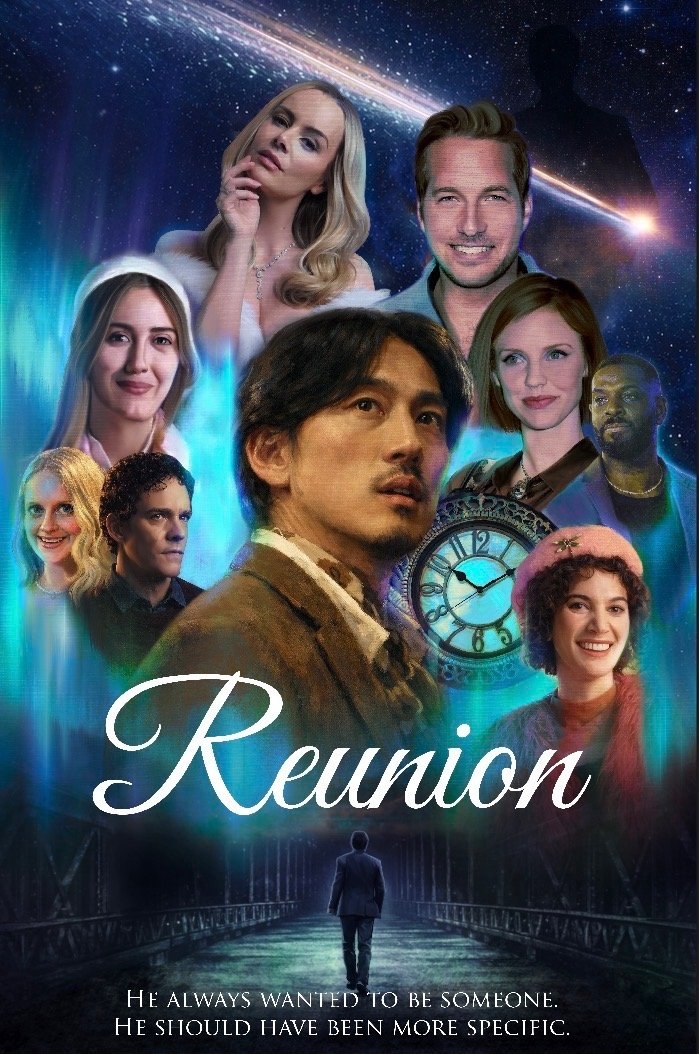
That’s the way writer-director John W. Kim sees them, anyway, in Reunion. His fish-out-of-water, mistaken-identity comedy centers on Guy (Jake Choi), a 30-something Korean American mortician who sacrificed his future and happiness to keep his family’s funeral parlor alive. An invitation to his high school’s 20th reunion, though, lures him out of the mortuary—wearing a dead man’s suit, driving his dead father’s nearly-dead Chrysler—to find some spark of who he once was.
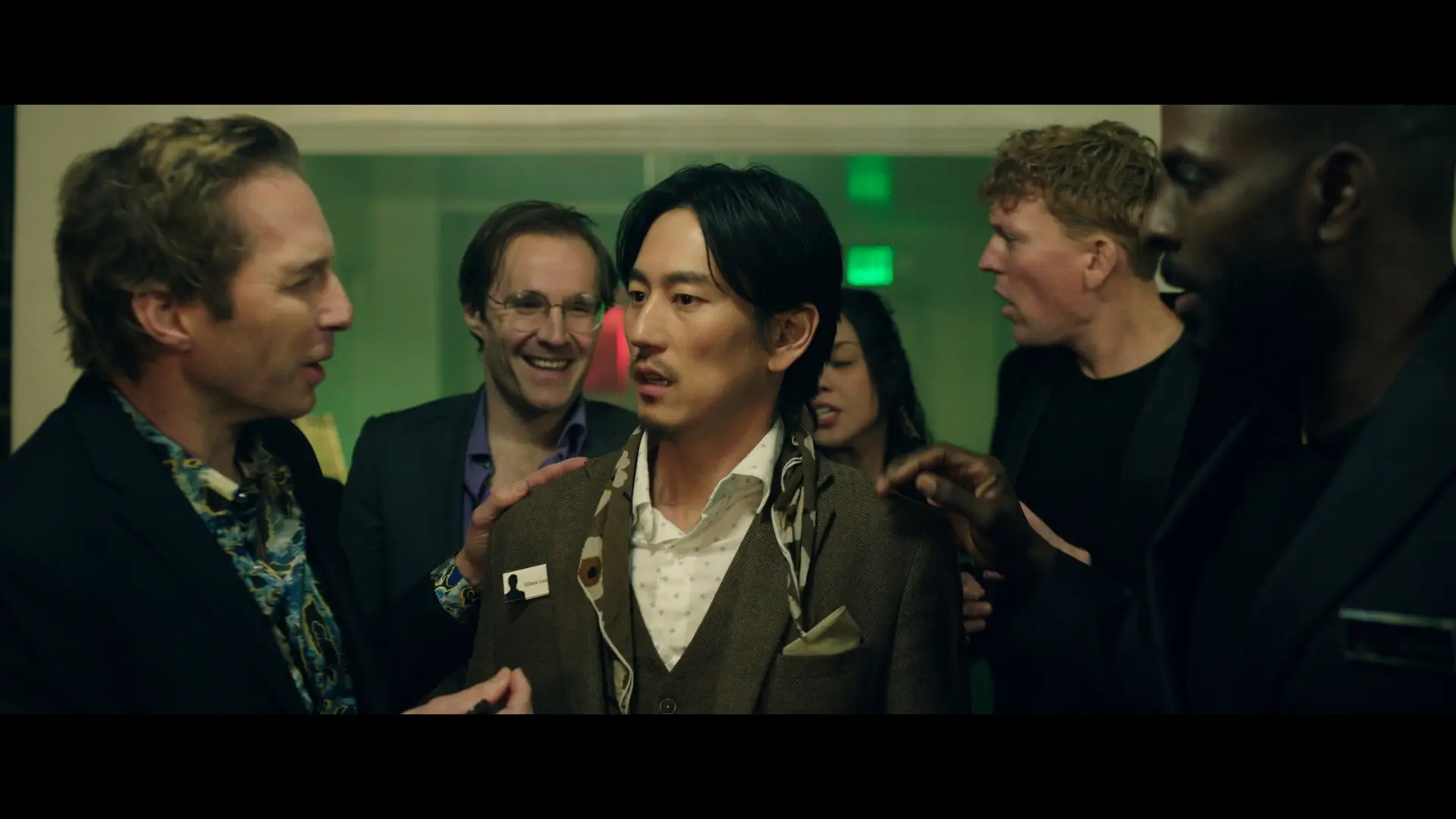
Everything goes sideways immediately. When his car breaks down, a passing motorist gives him a lift and it turns out she, too, is on her way to the reunion. Except, Guy learns when he arrives, it’s for a different party, celebrating the class of 2025 from the affluent prep school, not his lowly public school. Worse, the class president who organized the bash thinks Guy is their reclusive Bitcoin billionaire classmate Ellison Loudermilk. Worse still, everyone Guy meets—from the homecoming queen to the star quarterback to the coolest guy in the school—all want a piece of his fortune. Worst of all, so does Guy.
Shot in 20 days and edited over six months, Reunion is a shoestring indie that punches above its weight, juggling multiple characters and interlacing plot lines while balancing farce with pathos. It’s also a film that almost didn’t happen. Kim and crew began filming in Southern California just as the Eaton Fire disaster began. But the perseverance and dedication paid off. And it helped that it had a bit of Hollywood stardust in the form of executive producer Fred Roos, legendary collaborator of the Coppola clan, and Candy Clark, who made her name in films like American Graffiti and The Man Who Fell to Earth and has one memorable scene here as a repeat widow running through the casket catalogue of her deceased husbands. “After her day on the film, I asked her why she stuck with it through the delays from the fires,” Kim recalled to the Star-Revue. “She said, ‘I think the script was really good. It reminded me of American Graffiti.’ It’s like, that’s enough. I don’t need any more compliments. I got it.”
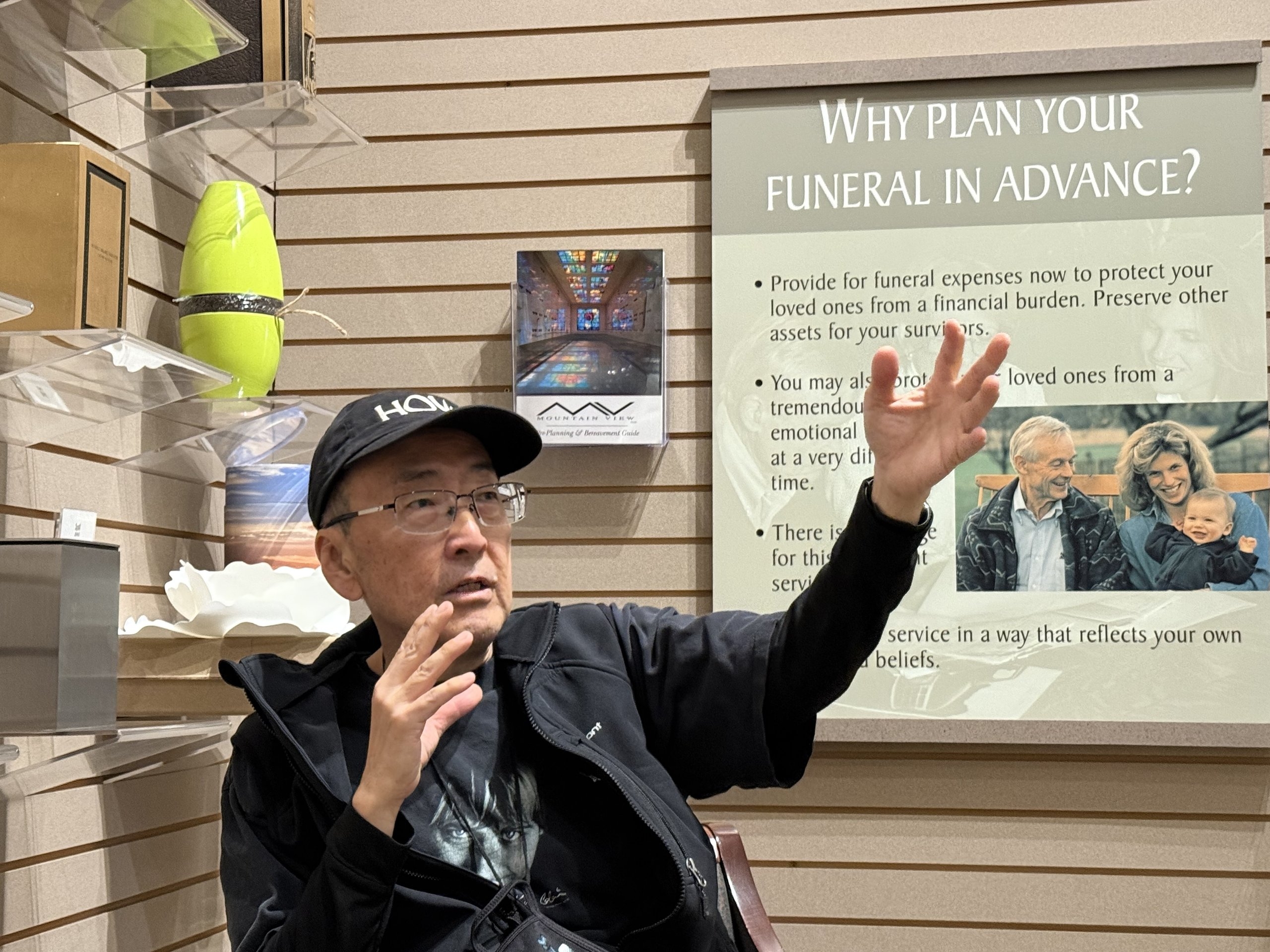
Ahead of the film’s New York premiere at the Manhattan Film Festival on June 18, Kim spoke with the Star-Revue about making Reunion, the importance of his cast, and working with Roos. Our conversation has been edited for length and clarity.
I’ve seen people say reunions are old-fashioned in this age of constant Facebook updates. How did you hit on the reunion as the vehicle for your film, as opposed to some other kind of generational gathering like a wedding?
I wanted a place where people were familiar with each other, where there was already an infrastructure in place, where there was already a pecking order, and then I wanted to show what might have been, and I think that’s what reunions do They are sort of markers because everybody is supposed to have had the same experience, they are supposed to have had the same goals, for example, and clearly that’s not the case. And that’s what is in high school, everybody’s having, for better or worse, a similar experience, even though they’re such disparate people, and the dreams sort of scatter.
And then I wanted to inject this strange dream. This man has really been asleep for a period of time. He’s tended to his family, which is a different kind of a life and an obligation. He sort of opted out. He has vague memories of the people that he used to know, but it’s been so long, and he’s going to take this one opportunity to meet friends and he’s going to see the love of his life and he’s going to see what he missed. And instead, what he does is gets thrown into this universe where he doesn’t know any of these people, so they’re literally just like figments of ideas of what could be, and they are all so desperate about their own situation that they sort of glom onto him like he is the solution, like he’s the answer to their problems without him understanding anything. And I thought that that was an interesting prism to be able to express those ideas.
You could have done it in something like a wedding, but then you have the figureheads of the wedding itself. But I thought with this you can sort of see a microcosm of the path not taken, what were all the decisions that everybody made for good or ill and how satisfied were they with those decisions. For better or worse, everyone in this movie wants to present themselves as having made the right decisions, but I would suggest, if you’ve really made the right decisions in your life, you don’t have to go to a reunion, you don’t have to show to people you’re really successful, you don’t have to give interviews about how successful you are.
Where do these characters come from? Are they reflective of people you’ve known? Are they archetypal?
That’s something that always comes up, and I try to sort of slough that off, but the reality is these are like American archetypes. Molly the class president, played by Madeline Zima, is this performative figure, she is this figurehead, and yet at the same time she is beholden to this group of people and she’s desperately trying to hold this group of misfits together to create this illusion that they’re all a part of this wonderful pursuit of this holy grail. And the reality is they’re just disasters, every single one of them. For Molly, we also put in the backstory about her having this relationship, because everybody has a high school crush, everybody has a high school relationship, and for her just to get hooked up with the worst person in that school. Dirk, played by Ryan Hansen, is this guy who is sort of the dark side, but he’s also the most ambitious person without having any actual knowledge or skill. It’s his birthright to be successful. He was the guy who was always willing to cut corners. He would always let you down, and you would always follow him right to the edge of the cliff. He would throw that party and leave, leave before the police came, and his father was probably the police chief of the town. Everybody knows who that guy was. So, they’re familiar archetypes.
But there’s something about high school as an experience in American society that stayed with me in the back of my mind. I went to a school, it was not a private school, but it might as well have been. It was in one of the wealthiest enclaves in the Bay Area. My parents were lower middle class, until they weren’t. The bonus that we got out of their having successes was we had to move, and I was completely uprooted from junior high school to high school. At that age, if you move 100 yards, it’s cataclysmic, and we moved into another school district, and I knew, like, four people out of 1,600 people who were there. It was like moving to another country. You have to learn all of the power structures in a school like that—in any school. And as an outsider, you see things in a different light if you are not a part of that power structure. I think that I became very sensitized to the people who had sort of standing in this school. There was obviously a pecking order. And then you have to find a way in any high school just to fit in, just to survive.
I think the thing about it from the reunion perspective is, you grow up with all of these rules and these goals, the things you’re supposed to be, and then you wake up and you’re 35 or 40 years old and it’s like the old Talking Heads song: this is not my beautiful life. Like, what happened? You don’t go to a reunion because you’re a failure—you go to a reunion because you want to convince yourself and other people what a great success you are. Otherwise, you don’t even show up. You get dressed up, and you lose weight, and you get your nicest car, and you bring your best girl, or whatever you do, and then you pretend for two and a half hours.
Those kinds of characters only work, and don’t fall into a kind of broad parody, with the right actors. How did you go about putting together this cast?
I wanted to invite actors who had that sense of play, who were willing to be a little bit courageous. We were lucky to get the cast that we did, and that is something that I’m really proud of. Madeline, we kept giving her things to do. We had this crazy idea about Molly just sort of being dosed, and then we have these mermaids, and when we told her this her eyes lit up, and she’s, like, “I’ve always wanted to be a mermaid,” because she grew up with The Little Mermaid and all that stuff.
And then there was Frantz Latten, who plays Brad, the one black student in this private school who was brought into the school to be a football player, and then when that didn’t work he was left behind. I wanted to have a moment in the film where you would actually understand his experience, because no one else was going to care, and there was a lot of push back. So it got left out during the edit. And as we were cutting the film together, something felt missing. He has to be able to say who he is because nobody’s going to listen to him. So we went back and shot Brad’s monologue. And I’m really proud of that segment. I want to stop the movie for two minutes, and I just want you to listen to what he has to say, and then you can go on and enjoy the rest of the film. And then Frantz is the guy, of course, who in the middle of the pool scene leaps in and does a cannonball in his underwear. You want to give people an opportunity, and then you can sneak in a little bit and say something you want to say, that’s really that’s what I’m most proud of.
You have this line near the end, where Guy says something to the effect of, “You all wanted me to be who you wanted me to be. I wasn’t allowed to be me. You never gave me that chance.” It’s a powerful line in the context of the film, but it also hits hard in our cultural moment where we live on digital platforms and we’re avatars and reflections of what others expect us to be rather than ourselves.
That’s fantastic if you got that from that moment, because the thing about that story for him, the real tragedy is nobody cares who he is. I got to that end point and thought, “What are we going to do here?” He’s going to actually tell them who he is, and they’re going to hate him. They don’t want that version, whatever he is, if he’s not what they want. They are going to destroy him. And if we had more money, that would have really been a crucifixion. That’s what people do. They don’t really want to know who you are. They just want something comfortable for themselves.
I want people to be able to decide who they would identify with. Everybody gets a piece of one person or another. Everybody knows what it’s like to fail on the biggest stage, everybody knows what it’s like to be an outsider—even the people on the inside and the strivers know what it’s like to just try and hold people together when they just won’t row in the same direction. So I’m really glad when people bring something like that, and that to me has been the most gratifying because I think in this digital world we don’t really listen to each other. We barely listen to ourselves. We’re so busy trying to figure out what is expected of us, what success is supposed to be, we barely recognize ourselves when we look in the mirror. That’s why I have those one or two moments with Guy looking in a mirror. I want him to see what he looks like when he’s being an imposter because the rest of the movie is just a mirror of, “We’ve decided who you are, so please like us.”
And you can see how intoxicating it is for someone who is a nobody and lives this life of complete rejection to find something close to acceptance.
That was the other trick. I thought wow, how are we going to do this? We’re going to ask people to root for somebody who’s a fake, and he could opt out at any time but he just doesn’t because he enjoys it. So you have to start him at the lowest point you could possibly get. And what I decided as a storyteller is, I’m going to put him in a morgue. I’m going to put him in an embalming room and I’m going to have him dancing to himself. And if that doesn’t get you, I’m going to have him talking to dead people. And if that doesn’t get you, I’m going to get him—maybe there’s too much formaldehyde, which does happen; there’s a lot of chemicals in an embalming room—where he imagines what his future is going to be. And that’s going to allow you to just give him a fighting chance. That’s why you actually can care a little bit about him.
Legendary Hollywood figure Fred Roos is an executive producer on this film, which is his last or one of his last credits. Roos worked on The Godfather, Apocalypse Now, Lost in Translation—how did he come to be involved with the film?
We work with an editorial consultant, a producing consultant that I’d known several years ago, Anne Goursaud. She was the editor for Francis Coppola’s Dracula. She edited with him for several years, and she was Fred’s protege. At a certain point in the development process, she said, “You know, I think I know somebody who would like to look at this script. Would you mind if I gave this script to read to Fred Roos?” And my brain just caught fire. I was like, “Yes, you have my permission to give our script to Fred Roos.” It took a couple days, and it went through to Fred, and he called us, which is just crazy. He said, “I really like your script. It’s great. I think I could help you. Would you like me to work on this?” It’s like, “I would like you to work.” I would like the producer of Apocalypse Now and Lost in Translation and St. Vincent to work on this film. We started talking about the script, and he understood it. He knew what it was, and he understood what a low budget film was. He knew how much money we had, and he had ideas where we could get some more money, and then he kept developing the script with us.
There are two moments I love with Fred. Early on, he came to us and said, “OK, you’ve got too many characters,” and this is a guy who cast American Graffiti. Later, we were having this discussion about the script. I like these characters. And Fred finally looked at me, said, “OK, humor me. Cut a couple.” That’s like, OK, I’m going to humor the guy who’s got an Academy Award. The other moment that I really love really taught me a lesson. We were at one of his favorite cafes, and we were talking about these troubles we were having with casting, we’re having all these issues with scheduling and the budget, and I was complaining, you know, how difficult it was. And he turned away into the light—I’ll never forget this—and he had this sort of far-away look in his eyes, and he said to me, “All movies are hard.” And it was just, like, OK, I got it. Let’s have some perspective. Let’s go ahead. You either make the film or you don’t make the film. It’s not supposed to be easy.
Reunion has its New York City premiere on June 18 at 8 p.m. at Cinema Village, TK ADDRESS, as part of the Manhattan Film Festival. Director John Kim and actor Ludi Lin will be in attendance for a post-screening Q&A. Visit manhattanfilmfestival.org/movie/reunion for more information and to purchase tickets.
Author

Discover more from Red Hook Star-Revue
Subscribe to get the latest posts sent to your email.