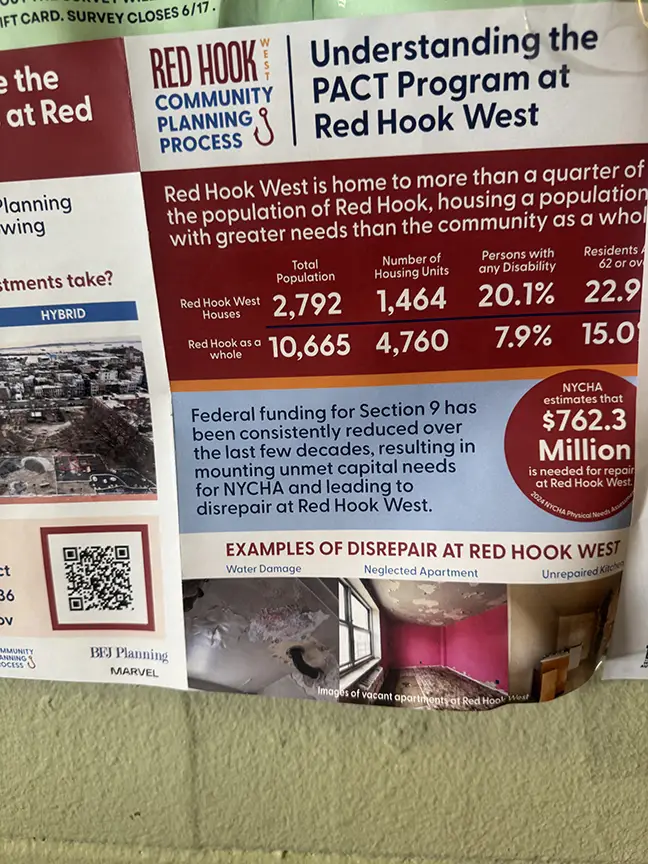
When privatization comes to public housing, tenants are told to expect repairs, investment, and better living conditions. But what many of us are not told is what we stand to lose.
Across the country, RAD/PACT converts traditional Section 9 public housing into project-based Section 8 managed by private companies. These conversions have been found to often weaken tenant protections and lead to increased evictions. That is not a small tradeoff- it is a fundamental shift in the stability our homes are supposed to provide.
Tenants in New York have been sounding the alarm. NYCHA Neighbors Helping Neighbors found that RAD brings new rules, new fees, and higher rents—without delivering faster repairs. In fact, a 2021 study found that more than half of residents saw no meaningful improvement in building maintenance after conversion.
At the same time, rents are calculated differently under Section 8. Charges for “amenities” and utilities can be separated out, increasing monthly costs in ways that many families cannot absorb. A 2018 Government Accountability Office report found that 57% of tenants in RAD-converted units experienced rent increases. For working-class families, that is the difference between stability and displacement.
And then there is the question of who we are trusting to manage our homes.
In New York City, NYCHA has partnered with private management companies—some with troubling track records. Tenants in buildings managed by companies like Wavecrest have reported neglect, unaddressed violations, and aggressive eviction filings. In some cases, residents have experienced botched renovations, unsafe conditions, and long delays in basic repairs. Families have been displaced during renovations. Tenants have faced confusion, instability, and in a few tragic cases, loss of life.
Beyond housing itself, we risk losing something even more important: our community. Section 9 public housing comes with congressionally mandated social services—programs for seniors, youth, and families that help our communities thrive. Privatization puts those at risk.
You will be told that after a year you’ll be eligible for Section 8 vouchers. But in reality, families are often placed on long waiting lists.
Public housing is not failing because it cannot work. It is failing because it has been systematically underfunded. The answer is not to hand our homes over to private companies—it is to invest in what we already know works.
Tenants and allies across New York are calling on:
- Mayor Mamdani to shift $663 million back into Section 9 public housing instead of PACT.
- City Council to pass the New York City Fair Share Act and dedicate 10% of funding to public housing.
- Albany to support the repeal of the Stock Transfer Tax rebate to generate $2 billion annually for NYCHA!
- Washington D.C. to allocate 5% from the Make Billionaires Pay Their Fair Share Act to Section 9 public housing.
You can help us by calling your elected officials and sharing these demands with them.
Section 9 public housing is not just a program—it is a promise. It provides true affordability, federal protections, and a foundation for generations to grow and succeed.
Public housing has shaped artists, leaders, and movements. It has shaped me. I have three masters degrees, attended Harvard’s Kennedy School and worked for the FBI and Department of Defense.
I achieved these things because of my grandmother’s apartment. Today I am disabled and would be homeless without NYCHA.
That is why I am fighting to preserve it.
We deserve investment without displacement. Repairs without losing our protections. Change without losing our homes.
And we only get that if we fight for it—together.
Ramona Ferreyra
Mitchel Houses Resident
Founder, Save Section 9
www.savesection9.org [email protected]
Discover more from Red Hook Star-Revue
Subscribe to get the latest posts sent to your email.