Next year will mark the 30th anniversary of drone metal pilgrim Dylan Carlson’s first release under the name Earth. In that time, countless bands from all corners of the world have emerged into the new freedom, among them iconic innovators and black copycats.
The best of what we might call the New Wave of Experimental Heavy Metal relies, in a sense, on a process of mining the ore from the rock. It’s an aesthetic and an energy born of rock, but since the emergence of Earth, some of metal’s most inventive bands haven’t felt the need to appeal to 12-bar progressions, repeated riffs or tempi anywhere near the human heartbeat. The patron saints of Black Sabbath wouldn’t exist without the masters of rock and blues that came before them and the new breed of metal experimentalists wouldn’t exist without Sabbath, but idols exist to be killed.
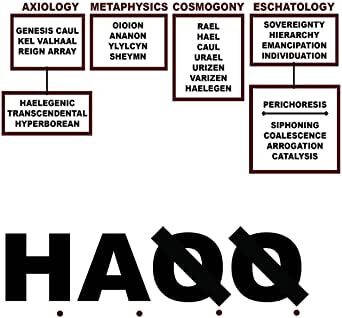
New York’s Liturgy has been a consistently reliable force in the NWOEHM, noteworthy in no small part for the extraordinary precision in their playing. But their new H.A.Ø.Ø. sets an all new standard for the band, and deserves a place on any NWOEHM essential listening list, if anyone is making such a thing. (And once they do, it will surely mark the end of the era.)
Founder and primary composer Hunter Hunt-Hendrix described the band as “transcendental black metal” in a self-published 2010 essay that led to a lot of dissension and ridicule (in no small part from sectors resistant to intellectualizing or artsying-up the form) but it’s an apt term for the band’s music. H.A.Ø.Ø. (released digitally in November, and still fully streaming on Bandcamp, and on CD and vinyl in July) is unlikely to save the band’s reputation in those guardians of the metal labyrinth, but it’s an exciting, jarring, sometimes beautiful thrill ride that wreaks havoc against more genre delineations than just the trappings of rock.
At their best, Liturgy can sting like sheets of rain, and that energy and attack are a big part of the new album. H.A.Ø.Ø. slaps again and again while the listener’s skin is still red from the pounding sleet, but wooden flutes, bell towers, digital glitches, harp, glockenspiel and piano also find their way into the mix. What’s significant, though, isn’t the presence of softer sounds. It’s long been customary for metal bands to do a little moody thing leading up to a snare crack and a rote 4/4 guitar drive. What’s significant here is how they are woven into the arc of the album. Hunt-Hendrix uses the instruments for more than just cheap effect, and employs an impressive array of guest musicians, ensuring that the non-rock elements aren’t just thin passages but rich and integral parts of the whole.
The core band is comprised of Hunt-Hendrix (vocals, guitar and electronics) and longtime second guitarist Bernard Gann, along with new members Tia Vincent-Clark on bass and Leo Didkovsky (Kayo Dot, Vomit Fist) on drums. Augmenting the lineup on various tracks are a host of MVPs from the NYC new music scene: percussionist Cory Bracken (Ashcan Orchestra, IKTUS Percussion, String Orchestra of Brooklyn); soprano Charlotte Mundy (Ekmeles, TAK Ensemble); composer/pianist Eric Wubbels (Wet Ink Ensemble); composer/performer Lucie Vítková; and a small string section. While electric guitars and pounding drums still dominate the music, they’re not the sole inhabitants. That shared occupancy is what makes H.A.Ø.Ø. essential listening for anyone interested in ambitious, poly-genre music.
It’s been four years since the last Liturgy full-length, a long time in the rock world—long enough for interests to wane. But Hunt-Hendrix has had a lot going on. While Liturgy has been quiet, an opera cycle has been in the works, furthering connections to the new music scene. And in May, the enigmatic composer came out as transgender, suggesting a period of personal as well as artistic revelation. It’s unlikely that Hunt-Hendrix will win many new fans with the fantastically eclectic new record but that’s, OK. She’s conquering new worlds.
Discover more from Red Hook Star-Revue
Subscribe to get the latest posts sent to your email.