
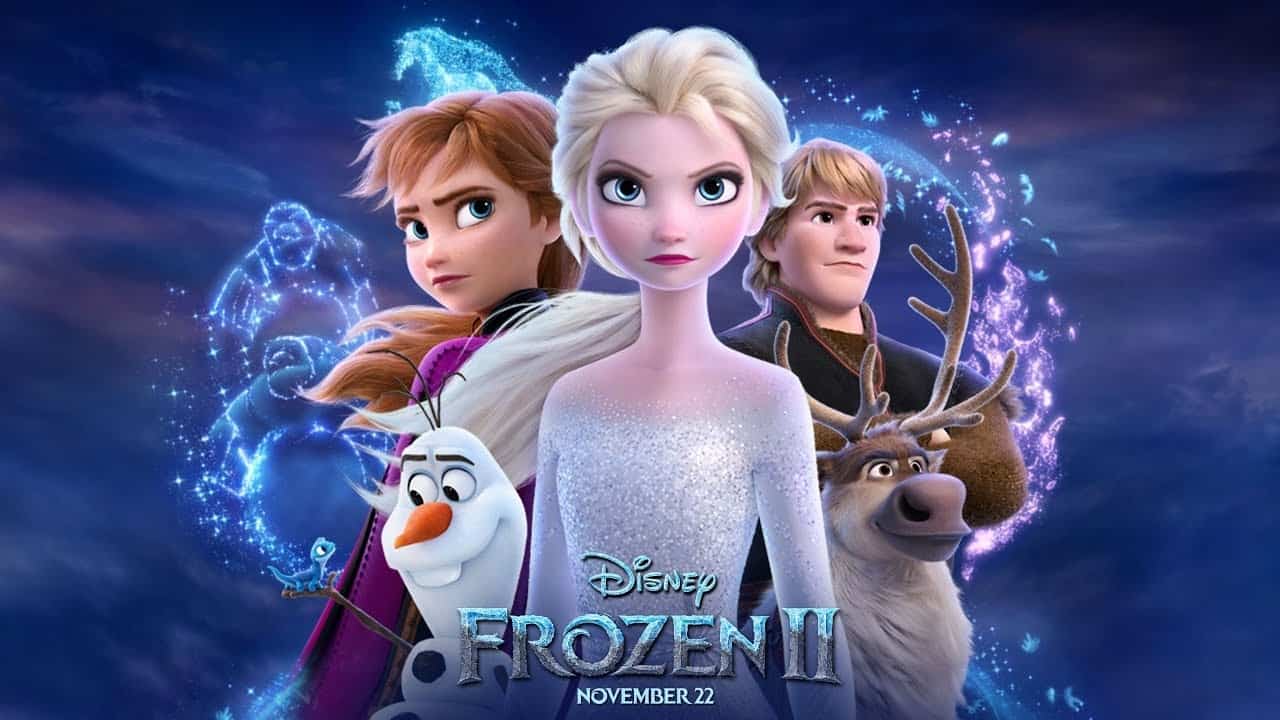
A people frozen in fear cried out, “Save us! Our kids need something to watch,” and Bob Iger listened. Disney+ released Frozen II three months in advance of its planned streaming date in response to pandemic-induced anxiety, boredom, and spiritual malaise. We streamed it the day it became available on home media from an undisclosed safe house on Long Island. What follows is a lightly edited transcript of our post-film discussion.
Jack: The people who wrote this movie are funny. I’m not sure the movie is funny, but I have a lot of admiration for their writer’s room.
Nicola: I agree, although at times I couldn’t tell if I was giving the writers a little too much credit. We were laughing hysterically the whole time while your sisters, who at 14 and 20 were probably better represented than us in Frozen II focus groups across the nation, appeared totally baffled by my mirth. The entire plot of Frozen II (although, really, “plot” might be a bit generous) revolves around Elsa’s quest to discover the truth about the past, right historical wrongs, and find herself in the process. Quite the mandate for a frigid witch!
JO: The writers were responsible for about 50 percent of everything that happens in the movie, although their influence isn’t evenly distributed. Most of the movie seems like it’s based on the Frozen II ride at Disneyworld. A song is sung. A joke is joked. Everyone smiles but none of it is related. The last twenty minutes, on the other hand, are Christian id.
NM: The movie is basically 103 minutes of incoherent stimulation. But somehow, we emerged with a fresh (if chilly) understanding of God. Do you think Disney succeeded in updating the biblical story we all know, or was it just a frosty rendering of the same old thing?
JO: I wasn’t bored. The movie holds itself to one standard: not boring. That’s what makes all the funkiness of the ending so interesting. Update isn’t the right way to think about what Disney has achieved here. Achieved! They have created a new visual language for divinity in the character of Elsa.
NM: The visual language is striking. There are a lot of sparkles and inexplicable frozen creatures that live under the sea and dramatic reindeer-riding scenes. Although I still think that the coolest visual tricks involve Olaf the snowman rearranging his body parts in creative ways, as he explores a developing sense of self-consciousness and eventually mortality.
JO: Olaf’s consciousness, which includes the classic meta-consciousness of a film within a film, is an interesting window into who Disney imagines is watching this movie. It’s as if Olaf looks at the camera and screams, “Not you! Not you!” at the two of us. You can always tell that this movie was designed in a boardroom, down to the implication for marketing purposes that Elsa isn’t gay but, like, she supports women. This makes the ending even more strange. A Christian boardroom.
NM: Not to toot a spoiler, but in the end, Elsa (i.e. Christ) basically ends up exiling herself to a faraway land (heaven?) and leaves the governance of the Kingdom of Arrendale to her sister, Anna. It’s not really so strange that the Christ figure ends up in heaven, but I wonder: is Disney trying to soften even the softer of the two testaments? Presenting Anna as an even more present, more human deity on earth?
JO: Toot toot! I want to meet the person for whom the Christ narrative is a spoiler. The “foreign land,” by the way, is the Iroquois Nation. At least, I think that’s what Disney execs are hoping is in the minds of middle-schoolers everywhere when they send their god-princess to live with the white-washed “natives,” basically a group of indigenous Swedish mountain people.
NM: If we had more time, we could also explore the reparations allegory that undergirds the whole story as well. Interestingly, both parties – oppressor and oppressed – are… white. Although to be fair, the whole thing takes place in Sweden?
JO: Untrue! The famously black character Frozone from The Incredibles franchise makes an appearance as Anna’s consigliere.
NM: Apologies. I’d be remiss to elide the appearance of Frozone. We’re running out of time, so I’m going to pivot to the crowning artistic achievement of the film: the musical number. I mean, wow. Any thoughts beyond that?
JO: Whenever I review a film (this one among thousands of others), I always like to provide stars. In lieu of stars, I’d like to use this space to recommend that you watch the Kristoff video, which is available on YouTube. I will say no more. As a piece of original work, this can be spoiled.
Now streaming on Disney+.
Author
Discover more from Red Hook Star-Revue
Subscribe to get the latest posts sent to your email.
One Comment
My children loved this one! Thanks guys!