

New York City is remaking the Brooklyn Marine Terminal into a waterfront fit for the 21st century. One plan the city has for the marine terminal is to act as a hub for its “blue highways” initiative, an effort to move some freight from the streets to the city’s waterways. 120,000 trucks pass through the city each day, with many of them going through Red Hook. The City’s Economic Development Corporation (EDC) leads the effort and plans to renovate several piers where barges can drop off packages to small vans and e-cargo bikes that do the “last mile” deliveries. The project is still in its early stages, and renovation of the piers won’t begin until late 2025.
Today, trucks move nearly 90% of all freight in New York City, according to the EDC, significantly more than the 70% national average. The Blue Highways initiative also falls short of adequately addressing the city’s issues with truck traffic, according to some experts. Yet, the fact that the city is exploring increased use of water transport could indicate that local officials are beginning to see the benefits of getting trucks off the road.
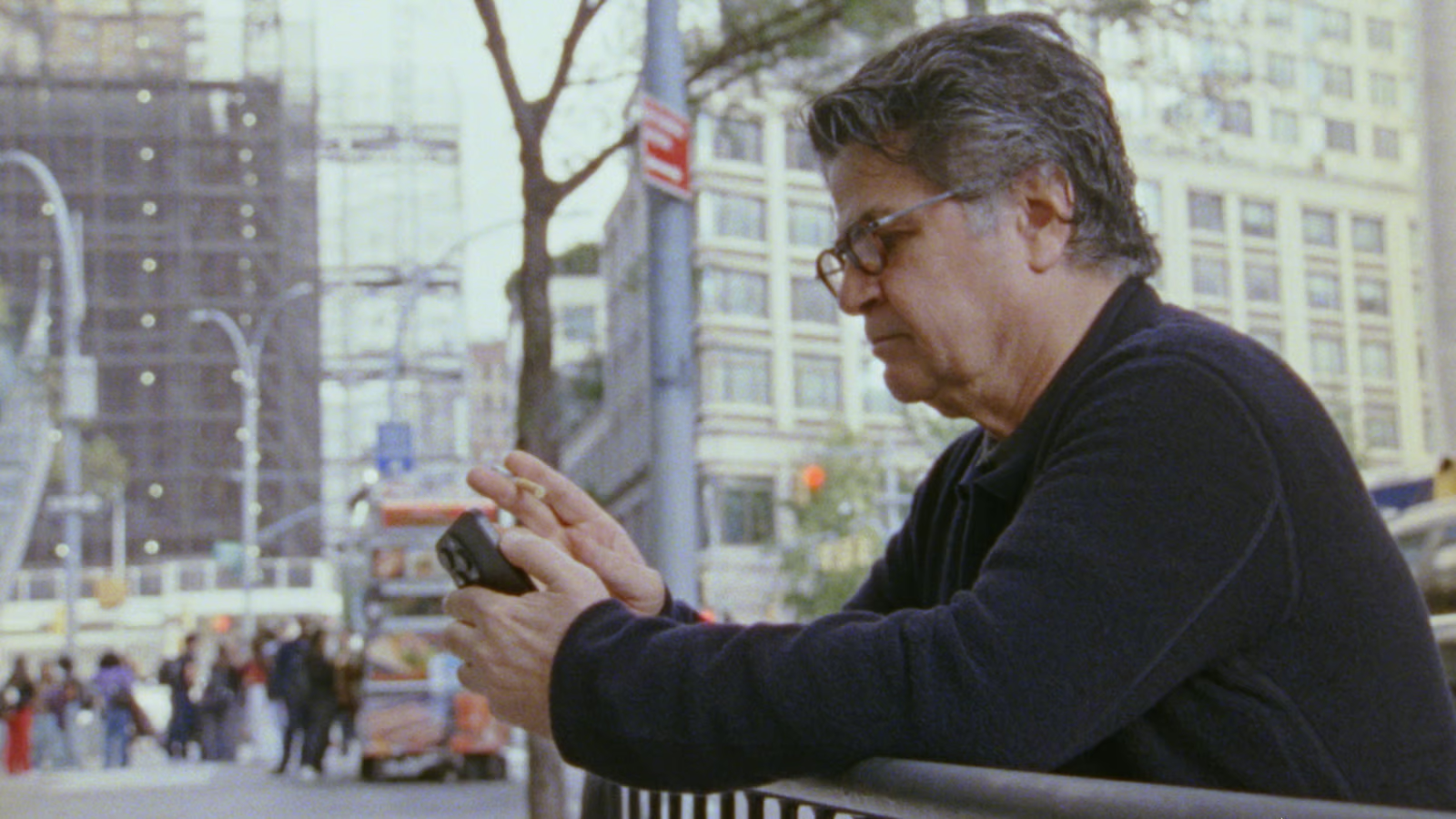
For some community members, using boats to transport Amazon packages and HelloFresh food boxes is not exactly a novel idea, however. Jim Tampakis, owner of Marine Spares International, has worked in the maritime industry for decades and advocated for increased use of the city’s waters for nearly as long.
“We would bring in the containers — let’s say from New Jersey or Pennsylvania because that’s where the majority are coming from — via water, unload them in the Red Hook marine terminals. Then, we have the freight broken down, and then it goes out again via water with smaller boats that go and do deliveries along New York City’s 520 miles of waterfront. Then they’re collected and delivered to people via bicycle,” Tampakis explained.
The city’s five boroughs receive about 2.3 million packages each day — over 3.5 million if you also count groceries and prepared food, the Rensselaer Polytechnic Institute Center of Excellence for Sustainable Urban Freight Systems revealed in 2022. That’s a lot of packages. Tampakis believes the city can take advantage of this through a package tax, as a way to fund the transition from road to water transport. Charging 25 cents per package means the city could pocket hundreds of thousands of dollars every day, he said.
“If you’re ordering your toothpaste online and it costs $6.25 to have it delivered, an additional 25 cents — is it a big killer? I don’t think so,” he said.
Tampakis is teeming with ideas for how to give Red Hook a blue — and green — future. “On the piers over here in the Red Hook harbor, when we bring in these containers, we could put in a few additional buildings because we have a lot of space there,” he said. “One building could possibly be a sorting facility. This way, a piece of it goes to Amazon, a piece of it goes to UPS, a piece of it goes here, a piece of it goes there. We can have all of this freight coming in, and it’s all concentrated, and then it can, in turn, go out via these electrified, smaller ferry boats and do the last-mile deliveries. It would come into the terminal via water and go out again via water.”
A core pillar of Tampakis’s vision is sustainability. After all, what’s the point of improving air quality by taking emission-spewing trucks off the roads if the alternative, the water transport, also runs on polluting fossil fuels?
“We don’t want to pollute,” he said. “I think all the buildings should have solar panels. Put solar panels on the roofs so that we can set up charging stations for the tugboats and the delivery boats.” There are already companies like Crowley Maritime, he continued, that have electric tugboats. (The green-transition startup Amogy, located in the Brooklyn Navy Yard, has a tugboat that runs on ammonia and is emission-free.)
“When these guys are coming alongside, and they’re unloading the containers, well, they’re there for two hours or an hour, and they can plug in and recharge from the solar panels and then just leave and not have any kind of pollution footprint. That would be a beautiful thing,” Tampakis explained.
But as a seasoned advocate for water transport in New York, Tampakis knows all too well that it is a city, despite being surrounded by water, that is wary of it.
“It’s the lack of knowledge and understanding. I spoke in 2018 or 2019 to the city council, and I explained all of this. And everybody is scratching their heads, saying,’ I don’t know about the water.’ Meanwhile, in Europe, go to France, go to Belgium, go here, go there. They use their waterways all the time, and they use them wisely. The problem that we have here is that people have to believe in the water again.”
On Sept. 19, EDC announced the members of the Brooklyn Marine Terminal Task Force — a diverse group of stakeholders, including community leaders and local business owners, elected officials and climate justice advocates — which early next year will decide on the future of the marine terminal. And Jim Tampakis is on it. Despite the city’s recent history of trepidation toward utilizing the water, he views the redevelopment as an opportunity to chart a new course.
“Right now, what we need to do is focus on the BMT for what it was and what it is — a Brooklyn maritime terminal. We’re not building something for the short term here. We’re creating a whole new network, just the way Robert Moses, 90 years ago, created the highway system, and it became part of our lives. That’s what we want to do here. This is going to be the first step for New York City to really embrace the water and a better life for everybody. That’s what it comes down to.”
Author

Discover more from Red Hook Star-Revue
Subscribe to get the latest posts sent to your email.
One Comment
This is a good plan. How do we avoid the real estate developers who control City hall?