Stay in the neighborhood.
Red Hook & Gowanus
Independent, uncensored local journalism — free to your inbox.
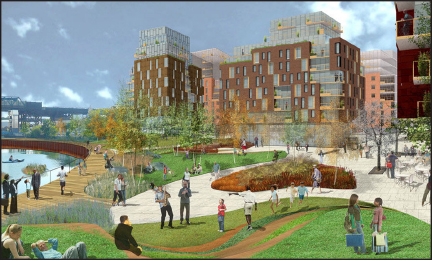
Shovels might soon hit the ground on Gowanus Green, the affordable housing complex on the Gowanus Canal’s western bank. At least according to the consortium of developers behind the project.
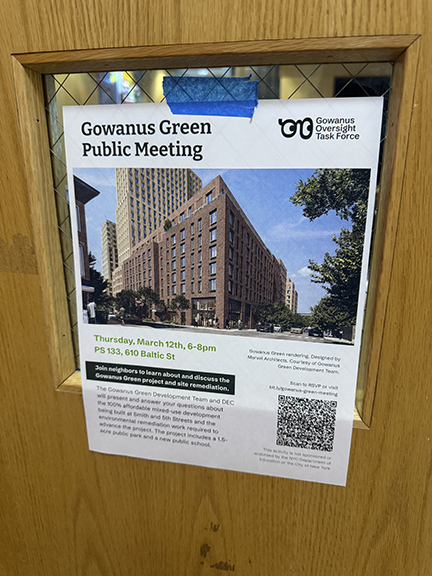
The developers and the New York State Department of Environmental Conservation (DEC) held two public meetings in March as part of a proposed amendment to the brownfield cleanup agreement for Public Place—the heavily polluted, former Citizens Manufactured Gas Plant site where Gowanus Green will be built. The first meeting, convened on March 12, focused on the status of the development, while the second, held on March 25, detailed the proposed cleanup for part of the site. The town halls delivered interesting news and eyebrow-raising comments, but also raised further questions about the cleanup plan and the viability of the current timeline for Gowanus Green.
DEC Director of the Division of Environmental Remediation Andrew Guglielmi kicked off the March 12 meeting—which also served as the first meeting of the year for the Gowanus Oversight Task Force—with a high-level overview of what DEC is doing in Gowanus. He also addressed the similarities and differences between the state’s Brownfield Cleanup Program and its superfund program, a hotly contested question in the Gowanus community due to concerns that the brownfield program—which three of four parcels at the Citizens site is in—has lower standards.
Real estate incentives
Though similar, the programs have different goals. The brownfield program is, for all intents and purposes, a real estate development program, used to incentivize developers to clean up polluted sites and build new housing in exchange for tax credits and environmental liability relief; the superfund program is for remediating heavily polluted land in cases where the property owner has no intention of building (Parcel 4 of Public Place is in the superfund program because the current owner of the site doesn’t want to build on that section of the property).
Parties can apply to the Brownfield Program as volunteers or as participants, depending on their responsibility for the pollution at the site. At the Citizens site, utility company National Grid is part of the brownfield cleanup as a participant, while the Gowanus Green developers are volunteers.
Because Public Place is deemed a “significant threat to human health and the environment,” more stringent standards have been triggered than for a standard brownfield cleanup agreement.
“I don’t want people out here thinking that National Grid is deciding what happens out at the Citizens site; we decide what happens at the Citizens site,” Guglielmi told the audience.
At the same time, Guglielmi said, the conservation department wouldn’t choose a remedy that the state itself wouldn’t complete and pay for in case the applicant is unwilling or unable to, and therefore, the plan must be financially feasible while also accomplishing the goal of remediation.
Countering criticism that there is no enforcement power in the Brownfield program, Guglielmi said that there are fines that can be levied against a party that violates a brownfield cleanup agreement. The DEC environmental remediation director gave examples of corrective measures the state can take, all of which would come after work has begun, including if work begins before DEC approval. This means that the fines may not be a safeguard against a substandard cleanup plan. (Community members both at this and in previous meetings have voiced their concerns that the chosen remedy will not be adequate to make the site safe.)
Taxpayers pay
National Grid will also recoup any remediation costs from its ratepayers. When asked about this by the Red Hook Star-Revue, Guglielmi said that DEC’s job is to address significant threats to public health and the environment, and reiterated that if the responsible party won’t pay, costs will be transferred onto taxpayers. Notably, he said in a separate comment that DEC officials don’t know who among the applicants is actually paying for the remediation.
Answering a question contending that National Grid is stalling, Guglielmi said he “certainly can relate,” seemingly expressing some frustration with the protracted cleanup process.
In his presentation Guglielmi also provided news on Parcel 4. For years, the property owner has denied the state and National Grid access to the site, but on March 11, DEC sent a letter informing the owner that the agency intends to enter the premises to sample monitoring wells sometime this summer.
He also shared that a decision had been made for the remediation of Parcel 3, the southernmost part of Public Place. (This parcel has a separate developer and is not part of Gowanus Green.) The cleanup plan involves between two and 14 feet of excavation, backfill of at least two feet where needed, and in-situ stabilization.
Finally, he provided an update on the dispute resolution process DEC is currently in with National Grid. Since the spring of 2024, the remediation of the former Citizens site has been on pause following a disagreement over cleanup requirements. According to Guglielmi, National Grid claims piles in the ground will make in-situ stabilization work impossible in certain parts of the site, and an investigation into the factuality of that assertion is ongoing. The two sides are “very, very close,” Guglielmi said.
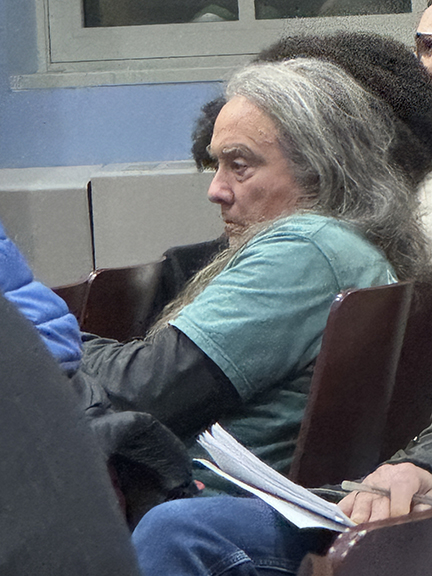
Michelle de la Uz, executive director of Fifth Avenue Committee and one of the developers of Gowanus Green, also addressed the public, focusing on the future of the development. De la Uz said that there is high demand for affordable housing, noting that over 100,000 people applied for 45 affordable apartments in the neighborhood in a recent lottery.
Developers hope to close on construction financing for Gowanus Green A, one of the six buildings that will make up the Gowanus Green complex, by June of this year, and to finish construction in the spring of 2029. However, that hope all hinges on the remediation being finished in time.
Discover more from Red Hook Star-Revue
Subscribe to get the latest posts sent to your email.
2 Comments
You might enjoy this Eric “Symbolic Icons: Conflicting Visions of the Gowanus Canal,” Special Section (Part 2): Power Games and Symbolic Icons in Evolving Urban Landscapes, Giuliana Prato Editor, Urbanities 12 (2): 62-78. https://www.anthrojournal-urbanities.com/wp-content/uploads/2022/11/8-Krase.pdf. ALSO: https://redhookwaterstories.org/items/show/2041
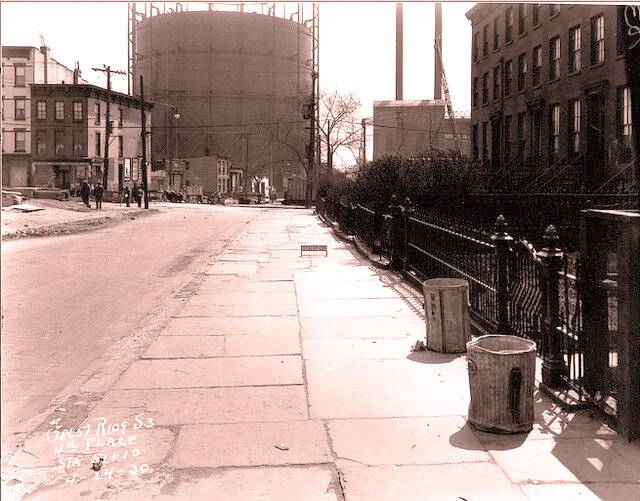
I recently discovered that as late as 1985, nobody realized that Public Place hid dangerous toxins underground, left by the gas company. The danger was thought to be a combination of the sewage infested canal alongside of it, plus neighborhood dumping of garbage, which led them to put up the fence. Before the fence, kids would play in the lot. I am working on some archival stuff, you might find this website very interesting… https://book.flipbuilder.com/gbrook8344/